

More news on this day
London Gatwick Airport has reported a fall in annual profit as weakening short-haul demand and a continent-wide shortage of aircraft combine to squeeze one of Europe’s busiest hubs, underscoring growing turbulence across the region’s aviation sector.
Get the latest news straight to your inbox!
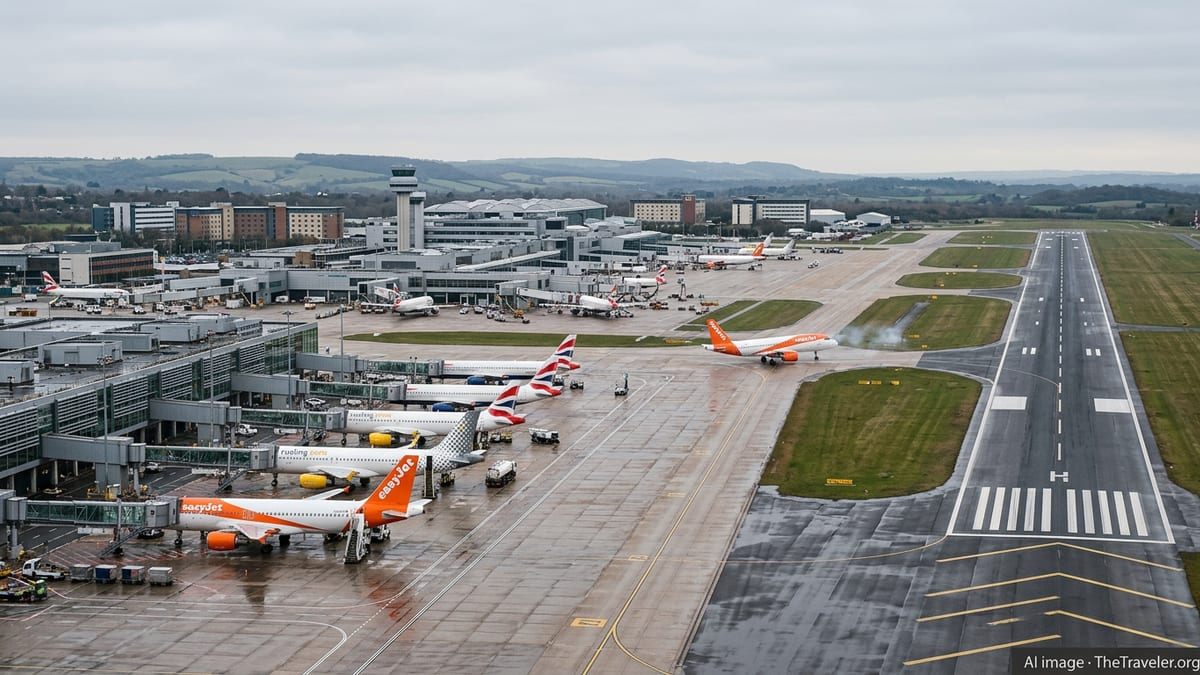
Profit Down Despite Near-Record Traffic
Gatwick’s latest financial results show pretax profit declined in 2025, even as the airport continued to handle more than 40 million passengers a year. Management cited a 1.1% drop in total passenger numbers to 42.8 million, with the weakness concentrated on short-haul European routes that traditionally underpin Gatwick’s business model.
The airport, operated by Vinci Airports and partners, stressed that the business remains solidly profitable, but the direction of travel has changed from the strong rebound seen in 2023 and 2024. Last year Gatwick posted revenue growth and higher net profit as airlines rapidly rebuilt networks and long-haul connectivity surged out of London’s second-largest hub.
Executives now face a more complex environment. While long-haul services to destinations in Asia, the Middle East and Africa continue to expand from Gatwick, softening short-haul volumes and operational constraints are eroding margins. That mix shift is reshaping how the airport earns money, with higher-spend intercontinental traffic partially offsetting a slowdown in price-sensitive European leisure flows.
The figures land as Gatwick pursues an ambitious growth plan, including bringing its existing emergency runway into routine use. The new data will likely feed into a renewed debate over whether the airport can sustain expansion while its core short-haul base is under pressure.
Short-Haul Squeeze Hits the Gatwick Model
Gatwick has long depended on dense networks of short-haul flights operated by low-cost and leisure carriers to popular destinations such as Barcelona, Malaga and Dublin. Those high-frequency services drive retail and parking revenues and provide vital feeder traffic to long-haul airlines. Any downturn in short-haul performance therefore has an outsized impact on the airport’s finances.
In 2025, that model came under strain. Airport filings and trading updates point to a slowdown in European leisure demand compared with the post-pandemic surge, along with more discerning consumers facing higher airfares and broader cost-of-living pressures. At the same time, schedule planners have been forced to trim frequencies or delay planned new routes because the aircraft simply are not available.
Industry data show that short-haul yields across Europe have come under pressure as capacity patterns become uneven. Some markets remain constrained, supporting fares, but others are seeing sharper competition as low-cost groups redeploy limited aircraft to countries offering lower taxes or more generous incentives. Gatwick competes directly with other UK and near-European airports for that scarce narrow-body capacity, and recent seasons have seen airlines shift some growth elsewhere.
The disruption is particularly acute for routes where airlines were counting on new, more efficient jets to replace older fleets. With deliveries running late, operators have had to choose between extending the life of older aircraft at higher operating cost, cutting marginal routes or consolidating services at their strongest hubs. In some cases, that has meant fewer daily departures from Gatwick on bread-and-butter short-haul sectors.
Aircraft Shortages Ripple Across European Aviation
The challenges facing Gatwick are rooted in a broader supply crunch gripping European aviation. Major manufacturers have struggled to deliver aircraft on time, a hangover from pandemic-era production cuts compounded by fresh industrial and quality-control setbacks. Airlines are also contending with chronic issues affecting certain engine types, which have forced dozens of Airbus A320neo-family jets into extended maintenance, removing capacity from the system.
Carriers such as Ryanair and others have publicly warned that they will receive fewer Boeing 737 and Airbus narrow-bodies than planned, capping growth and forcing last-minute changes to summer schedules. Industry bodies expect these constraints to persist into at least 2026, limiting the number of seats available on key European routes even as demand remains broadly robust.
For airports like Gatwick, which are highly exposed to short-haul point-to-point traffic, the impact is twofold. Fewer aircraft deliveries mean fewer opportunities to win new routes or additional frequencies, while grounded or delayed jets can result in abrupt cancellations and thinner timetables. This undermines the airport’s ability to grow aeronautical income and reduces non-aeronautical spending in terminals as passengers spend less time on site.
Analysts note that the capacity crunch is reshaping competitive dynamics across Europe. Some hub airports focused on long-haul connections are weathering the storm better, as wide-body fleets have been less affected and premium demand remains resilient. Secondary and leisure-oriented airports are more exposed, especially where their fortunes are closely tied to a small number of low-cost carriers wrestling with fleet shortages.
Operational Constraints Add to the Pressure
Beyond aircraft availability, Gatwick continues to grapple with operational headwinds. Official data have repeatedly identified the airport as among the UK’s worst for average delays, reflecting a mix of local issues and wider European air traffic control bottlenecks. While staffing problems in the control tower have eased, restrictions and congestion across the continent still feed through to Gatwick’s departure boards.
In response, the airport and its air traffic partners have deployed new tools such as time-based separation, designed to smooth landings and reduce holding times in busy periods. These measures are intended to extract more resilience and efficiency from Gatwick’s single-runway operation, which already runs at some of the highest declared movement rates in the world.
However, high utilisation cuts both ways. With minimal slack in the system, any disruption, from weather to airspace restrictions, can quickly cascade into delays and cancellations. For airlines already juggling tight fleets and maintenance windows because of aircraft shortages, Gatwick’s intense operating environment can magnify the impact of any small shock.
Passengers, meanwhile, experience the combined effect in longer journey times and reduced choice. Fewer short-haul rotations, higher load factors and greater vulnerability to disruption all risk denting Gatwick’s appeal to price-sensitive leisure travellers, particularly when rival airports can offer similar destinations with more resilient schedules.
What Travellers Should Expect in the Months Ahead
For travellers using Gatwick in 2026, the numbers point to a mixed picture. The airport is still adding new long-haul destinations and attracting more full-service carriers, which should translate into better global connectivity and more options for premium and visiting-friends-and-relatives traffic. At the same time, short-haul schedules are likely to remain tighter than before the pandemic, with fewer spare seats at peak times and less flexibility if flights are disrupted.
Fares on busy holiday routes may stay elevated relative to pre-2020 norms, not because demand is booming indiscriminately, but because aircraft are in short supply and airlines are prioritising profitability over pure volume. Advance booking and off-peak travel could become even more important strategies for securing reasonable prices from Gatwick.
Behind the scenes, airport management is betting that continued investment in terminals, security and airfield technology will help offset the pressures. Projects to streamline passenger processing and improve punctuality are pitched as essential to keeping Gatwick competitive as airlines weigh where to base their scarce aircraft.
Ultimately, the airport’s latest profit decline illustrates how exposed Europe’s busiest single-runway hub is to wider shocks in the aviation supply chain. Until manufacturers and engine suppliers can restore reliable delivery schedules, and until airlines can rebuild short-haul capacity with confidence, Gatwick’s growth story will remain constrained by factors largely beyond its control.