

More news on this day
London Gatwick is preparing for one of its most transformative years in recent memory, as Jet2, Air France, Air Arabia, Condor and a raft of other carriers unveil 29 new routes that will tighten links with France, Denmark, the United Arab Emirates, Romania, Germany, Canada and beyond while generating hundreds of new jobs across the South East of England.
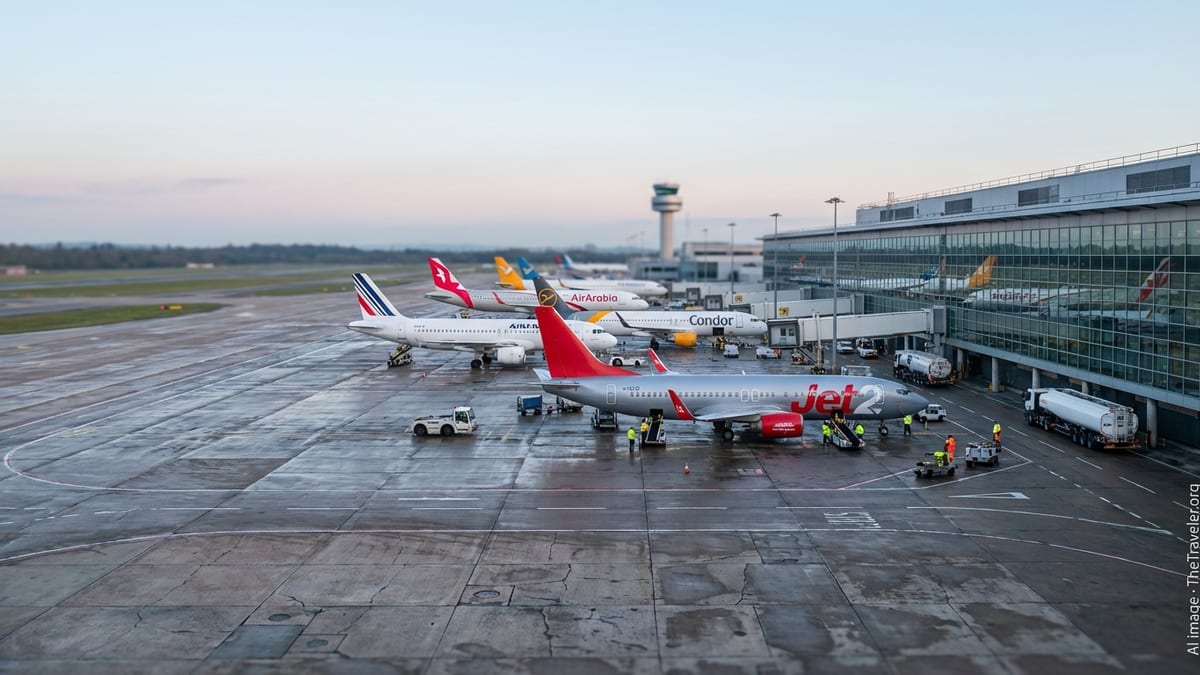
A Record-Breaking Year of Route Expansion at Gatwick
The 2026 summer season is shaping up to be a watershed moment for Gatwick, the United Kingdom’s second‑busiest airport, with a wave of new short and medium haul services that significantly expands its international footprint. Airport executives say a combination of surging leisure demand, resilient visiting friends and relatives traffic and a competitive airline landscape has created the conditions for the largest coordinated route uplift at the airport in several years.
Central to the expansion is Jet2’s decision to establish a full base at Gatwick from March 2026, introducing 29 sunshine routes and becoming the airport’s largest new based airline this century. With six aircraft operating, including five new Airbus A321neo jets, the leisure specialist will sharply increase capacity to classic Mediterranean destinations and intensify competition with incumbents on key holiday corridors.
Gatwick’s growth story, however, extends well beyond one carrier. New or expanded services involving Air France, Air Arabia, Condor, Eurowings and others will deepen links with France, Denmark, the UAE, Romania, Germany and Canada, positioning the airport as an increasingly important European gateway for both leisure and business travellers. Collectively, the new flying programme is expected to drive a substantial uplift in passenger volumes from Easter 2026 onwards.
France Steps Up: Air France and Regional Links Strengthen
France is at the heart of Gatwick’s latest growth phase, as national flag carrier Air France refines its London strategy and regional operators lean into cross‑Channel demand. While Charles de Gaulle and Heathrow remain the principal hubs for long haul connections, airlines are using Gatwick to tap into dense point‑to‑point flows between southern England and French business centres and resort regions.
Additional Air France capacity between Gatwick and Paris is set to improve connectivity for both corporate travellers and tourists, offering better schedule choice and smoother onward links to continental Europe, the Caribbean and Indian Ocean destinations via the airline’s global network. The move follows sustained load factors on existing services and a broader effort by French carriers to capture high‑yield demand from the UK capital’s southern catchment.
Alongside the flag carrier, regional services to French leisure markets are also being reinforced, supported indirectly by the presence of Jet2’s new base. The airline’s focus on Mediterranean France and neighbouring sun destinations helps to stabilise seasonal demand patterns. This, in turn, makes it easier for full service and regional carriers to maintain year‑round frequencies on key French routes by feeding a larger pool of passengers into their broader networks.
Jet2’s New Gatwick Base: 29 Sunshine Routes and 300 Jobs
Jet2’s arrival as a based carrier at Gatwick in March 2026 is the single biggest driver of the airport’s current expansion narrative. The leisure airline will launch operations with six aircraft and an initial network of 29 routes, predominantly targeting Spain, Portugal, Italy, Greece, Türkiye, Malta, Croatia, Bulgaria and Cyprus. The first Gatwick flight, to Tenerife South, is scheduled to depart on 26 March 2026, timed to capture the busy Easter getaway period.
The new base will make Jet2 Gatwick’s largest new airline presence this century, with the company planning around 79 weekly flights in the peak summer schedule. The deployment of five brand‑new Airbus A321neo aircraft, widely regarded as among the most fuel‑efficient narrowbodies in service, will allow the airline to offer more seats with lower per‑passenger emissions and a reduced noise footprint. For price‑sensitive holidaymakers, that translates into more capacity and potentially sharper fares on many of the airport’s most popular leisure routes.
Beyond the destination map, the Gatwick base brings a substantial labour market boost. Jet2 and Gatwick estimate that more than 300 direct jobs will be created across flight deck, cabin crew, engineering and ground operations, with many more roles supported in the wider tourism and airport supply chain. Travel agents across London and the South East, long vocal in calling for a full Jet2 presence at Gatwick, will gain a broader portfolio of package holidays and seat‑only options to sell into a catchment of more than 15 million people.
Gulf and Middle East Growth: Air Arabia and UAE Connectivity
The United Arab Emirates features prominently in Gatwick’s expansion, underscoring both the strength of point‑to‑point travel between Britain and the Gulf and the strategic ambitions of regional carriers. Air Arabia, the Sharjah based low cost airline, is among those building out services to and from London Gatwick, supplementing the established presence of full service Gulf airlines at London’s airports.
New and expanded UAE services are designed to serve a mix of travellers: migrant workers, families visiting relatives, business passengers commuting between major commercial centres and increasingly cost‑conscious tourists looking to access Middle Eastern and Asian destinations at competitive fares. By operating from Gatwick rather than Heathrow, airlines such as Air Arabia gain access to a large, often under‑served catchment area stretching from south London to the south coast, where passengers may be less inclined to cross the city for a flight.
For Gatwick, stronger UAE connectivity is more than a direct traffic story. The routes provide one‑stop access to a wide range of onward destinations across the Middle East, the Indian subcontinent and parts of Asia. This helps the airport diversify its route map beyond its traditional strength in European leisure markets. It also aligns with Gatwick’s long term plan to capitalise on the government’s approval of routine Northern Runway operations, which will give airlines greater flexibility to grow long haul and high frequency medium haul services over the coming decade.
Germany, Denmark and Romania: Condor, Eurowings and Nordic Links
Gatwick’s 2026 schedule gives particular emphasis to strengthening ties with Germany and the wider Nordic region. German leisure carrier Condor is part of the mix, adding capacity on routes that appeal to both British holidaymakers heading to German cities and German visitors exploring the UK. These flights complement a broader trend of carriers rebuilding and expanding city pairs that had been trimmed during earlier restructuring.
Eurowings, the Lufthansa Group’s low cost brand, is playing a pivotal role in this expansion. From 29 March 2026 it will launch a high frequency service between Cologne and Gatwick, operating 13 weekly flights that make day trips and short business visits more practical. A near daily route from Stuttgart will follow on 12 April 2026, adding six weekly flights and enhancing access to southern Germany’s industrial heartland. Both routes will be operated by Airbus A320 aircraft, contributing a meaningful increase to Gatwick’s German seat capacity.
To the north, enhanced services to Denmark, including links to Aalborg and Copenhagen via existing and expanding carriers, are steadily reinforcing Gatwick’s position in the Nordic market. These flights play an important role for both tourism and trade, given the strong ties between the UK and Denmark in sectors such as renewable energy, design and maritime services. Airlines are also eyeing opportunities in Romania, where a growing expatriate community in the UK and rising outbound tourism from Bucharest and secondary cities are supporting new and reinstated routes into Gatwick.
Canada and North America: Strengthening Transatlantic Options
While much of Gatwick’s 2026 growth is concentrated in short and medium haul markets, North America is also seeing renewed attention. Canadian carriers are increasing capacity, with new or expanded services linking Gatwick to cities such as Ottawa and other key points in eastern Canada. These flights complement existing transatlantic options and provide alternatives to Heathrow for travellers in the South East who prefer to avoid crossing central London.
The Canadian expansion reflects both growing leisure demand and resilient family and business ties between the two countries. Summer schedules are particularly strong, catering to tourists drawn to Canada’s national parks and vibrant urban centres, as well as Canadian visitors taking advantage of the UK’s cultural attractions and relatively short onward hops to mainland Europe. From Gatwick’s perspective, these routes also support its strategy of diversifying away from a purely European leisure profile.
Carriers are positioning Gatwick as a cost effective transatlantic gateway, where airport charges and operating costs can be more favourable than at Heathrow. That dynamic allows airlines to test new markets or grow secondary cities that may not yet justify daily operations at the capital’s primary hub but can sustain regular seasonal or near‑year‑round services from Gatwick.
Economic Impact and Jobs Across the South East
The surge in new routes has clear implications for employment and regional development. Jet2 alone expects to create more than 300 direct jobs at Gatwick as part of its base opening, spanning pilots, cabin crew, engineers and ground operations staff. Airlines such as Air Arabia, Condor and the expanding European and transatlantic carriers will also need additional local hires, from customer service teams to maintenance contractors and airport retail staff.
Economists note that aviation jobs tend to have a powerful multiplier effect. Each role created in the cockpit, cabin or on the ramp supports several more in the wider supply chain, including airport catering, cleaning, security, logistics and tourism services in destination markets. For the South East of England, which already relies heavily on the visitor economy, the combined effect of 29 new Gatwick routes and associated capacity increases could translate into thousands of supported jobs over time.
There are also wider productivity benefits when regional connectivity improves. Enhanced links to German industrial centres such as Cologne and Stuttgart, to French and Danish gateways and to Canadian cities give businesses in the South East more flexibility in how and where they trade, hold meetings and manage cross border operations. Better air links can encourage inward investment from international firms that see Gatwick’s catchment area as an attractive base for UK or European activities.
Gatwick’s Strategic Position in a Competitive London Market
The latest round of route announcements underscores Gatwick’s evolving role in the crowded London aviation market. While Heathrow remains the primary global hub, Gatwick is positioning itself as a nimble, growth oriented airport with a distinctive mix of low cost, leisure and full service traffic. The decision of Jet2 to designate Gatwick as its fourteenth UK base, and the willingness of carriers such as Air Arabia, Condor and Eurowings to invest in new capacity, suggest that airlines see long term potential in the airport’s catchment.
Part of that confidence stems from the UK government’s decision to approve the routine use of Gatwick’s Northern Runway, a move that will effectively increase runway capacity once the necessary infrastructure work is completed. Airlines are already planning for a future in which slot availability at Gatwick improves relative to other London airports, making it easier to secure early morning and late evening take‑off and landing times that are critical for both business and leisure itineraries.
At the same time, the new routes arriving in 2026 will intensify competition. Jet2’s extensive leisure offering pits it directly against easyJet, British Airways’ Gatwick based operation and TUI on many Mediterranean markets, while added German and Gulf services give travellers more choice than ever before. For passengers, that competitive tension is likely to manifest in attractive fares, improved onboard products and more generous schedules, further strengthening Gatwick’s appeal as a gateway for London, the South East and the wider UK.