

More news on this day
The Global Business Travel Association is calling on U.S. lawmakers to end the ongoing federal government shutdown, warning that prolonged funding lapses are putting critical aviation, security and digital infrastructure for business travelers at growing risk.
Get the latest news straight to your inbox!
Shutdown Collides With Peak Business Travel Cycle
The current budget impasse in Washington has arrived at a time when corporate travel is rebounding and many companies are ramping up in-person meetings, events and client visits across the United States. Publicly available information shows that government funding for the Department of Homeland Security and related agencies lapsed in mid February, triggering a partial shutdown that has continued into late March.
Business travel groups indicate that even a partial shutdown can quickly ripple across the system that supports corporate mobility, from aviation operations and rail networks to federal security checkpoints and the digital platforms that underpin reservations and identity verification. The Global Business Travel Association, which represents suppliers and buyers across the corporate travel sector, is emphasizing that these functions are central to keeping executives, sales teams and project staff moving safely and reliably.
GBTA’s latest U.S. policy priorities highlight how dependent business travel is on predictable federal funding for the National Airspace System, airport infrastructure, rail corridors and the agencies that secure them. In the context of a shutdown, the association argues that uncertainty over pay, staffing and long term investment threatens not only current trips but also future confidence in the system.
Key Concerns: Aviation, Security and Digital Systems
One of GBTA’s primary warnings centers on the aviation ecosystem, which relies on continuous federal oversight and staffing. Federal Aviation Administration modernization programs and air traffic control staffing pipelines are particularly vulnerable when appropriations stall. Policy documents from the association stress that upgrades to critical FAA systems are needed to improve safety, reduce delays and support new technologies in the national airspace, and that these upgrades depend on sustained funding.
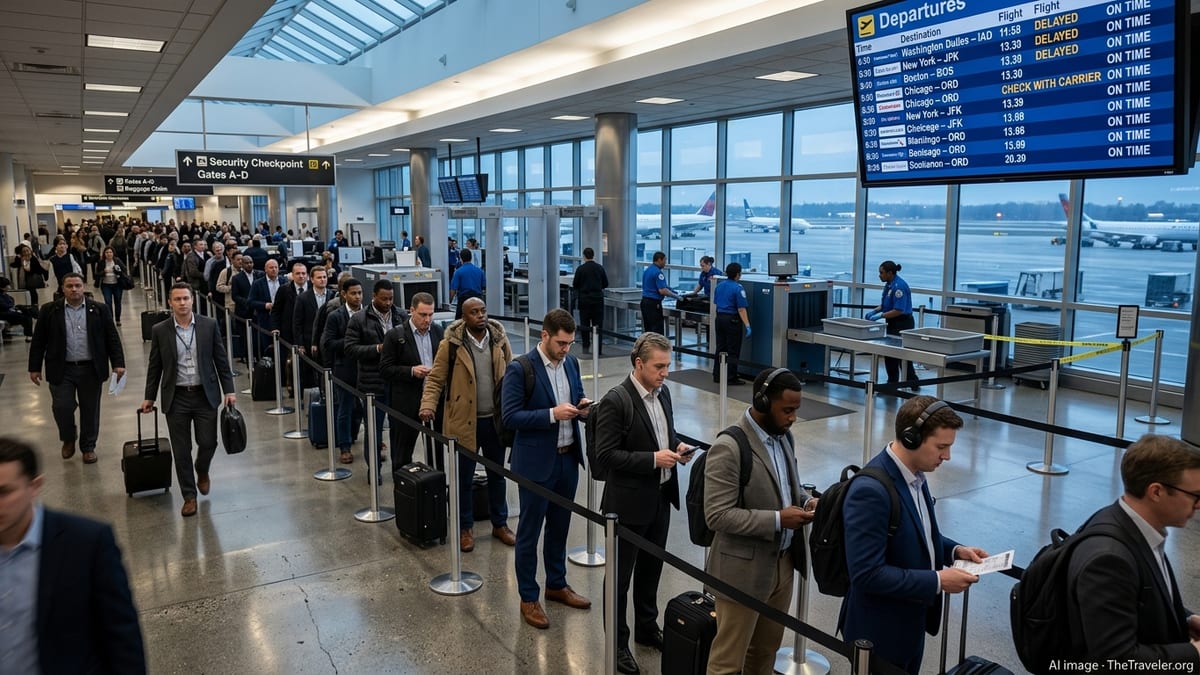
The business travel sector is also closely watching conditions at Transportation Security Administration checkpoints. During previous shutdown episodes, reports from airports indicated longer security lines, growing absenteeism among officers working without pay and occasional terminal disruptions. With corporate travelers often operating on tight schedules and complex itineraries, GBTA and other travel organizations view any erosion in checkpoint reliability as a direct threat to productivity and traveler confidence.
Digital infrastructure is another focal point. GBTA’s policy priorities underline the importance of resilient cyber and data systems that support ticketing, identity management, advanced screening and information sharing between public and private entities. A shutdown can delay upgrades, slow cybersecurity initiatives and freeze contracts needed to keep systems current, raising concerns about both operational continuity and protection against evolving cyber threats.
Economic Stakes for Companies and the Travel Sector
Industry analyses cited by travel groups suggest that protracted shutdowns extract a substantial economic toll. Previous federal funding lapses have been associated with billions of dollars in lost or deferred travel spending as trips are postponed, itineraries are shortened or meetings move online. For companies that depend on face to face engagement to close deals, manage supply chains or oversee projects, even modest disruptions can translate into delayed revenue and higher operating costs.
For the wider travel economy, business travelers play an outsized role in hotel room nights, premium air travel, rideshare usage and restaurant spending in major hubs. GBTA and other associations argue that uncertainty over government operations can chill this segment, with knock on effects for employment and investment in gateway cities and regional centers. They point to survey data indicating that many travelers are prepared to cancel or avoid air trips when a shutdown is underway.
Corporate travel managers are already reporting the need to build in additional buffer time for airport transits, review meeting locations and reassess contingency plans for key personnel. Some companies are updating internal guidance to steer travelers toward airports and routes perceived as less vulnerable to staffing or operational cutbacks while the shutdown continues.
Policy Asks: Protect Critical Functions and Restore Funding
In its U.S. policy platform, GBTA urges lawmakers to prioritize stable, long term funding for aviation and surface transportation infrastructure, with a particular focus on modernizing air traffic control systems and addressing workforce shortages. The association supports comprehensive FAA reauthorization that continues investment in trajectory based operations, information centric airspace management and accessibility improvements for passengers, including those with disabilities.
For business travel specifically, GBTA emphasizes the need for a robust talent pipeline across federal aviation and security agencies, arguing that recurring shutdowns make it harder to recruit and retain specialized personnel. The group aligns with broader business coalitions that call on Congress to avoid using critical transportation and security functions as leverage in budget disputes, and instead to ensure that key staff are paid and modernization projects proceed even during political standoffs.
GBTA also highlights the looming expiration of infrastructure programs enacted under the Infrastructure Investment and Jobs Act and the long term solvency challenges facing the Highway Trust Fund. With many business trips relying on rental cars, rideshare services and intercity ground transportation, the association links shutdown related delays in planning and permitting to a broader concern about the condition of roads, bridges and rail corridors.
What Business Travelers Should Watch Now
For corporate travelers currently on the road or preparing to travel, the immediate impact of the shutdown varies by location and timing. Most commercial flights and trains continue to operate, but staffing strains at security checkpoints and air traffic control facilities may increase the risk of delays, missed connections and occasional cancellations, particularly at busy hubs or during peak periods.
Travel managers and frequent flyers are being advised by industry groups to monitor carrier notices, airport operations updates and internal company travel alerts closely. Many organizations are encouraging employees to arrive earlier than usual at airports, allow extra time between connections and keep flexible options in place for rebooking if schedules begin to fray.
GBTA is using the current shutdown to reinforce its longstanding argument that predictable federal funding and sustained infrastructure investment are not abstract policy goals but practical requirements for the modern business travel ecosystem. As negotiations continue on Capitol Hill, the association and its partners in the broader travel and business communities are urging lawmakers to restore funding, shield critical travel related functions from future lapses and put long term modernization plans back on track.