

More news on this day
With airspace closures rippling across the Gulf and beyond after U.S. and Israeli strikes on Iran, hundreds of thousands of passengers on Emirates, Qatar Airways, Etihad, Saudia and other GCC carriers are scrambling to secure refunds, rebooking and potential compensation before fast-moving deadlines close.
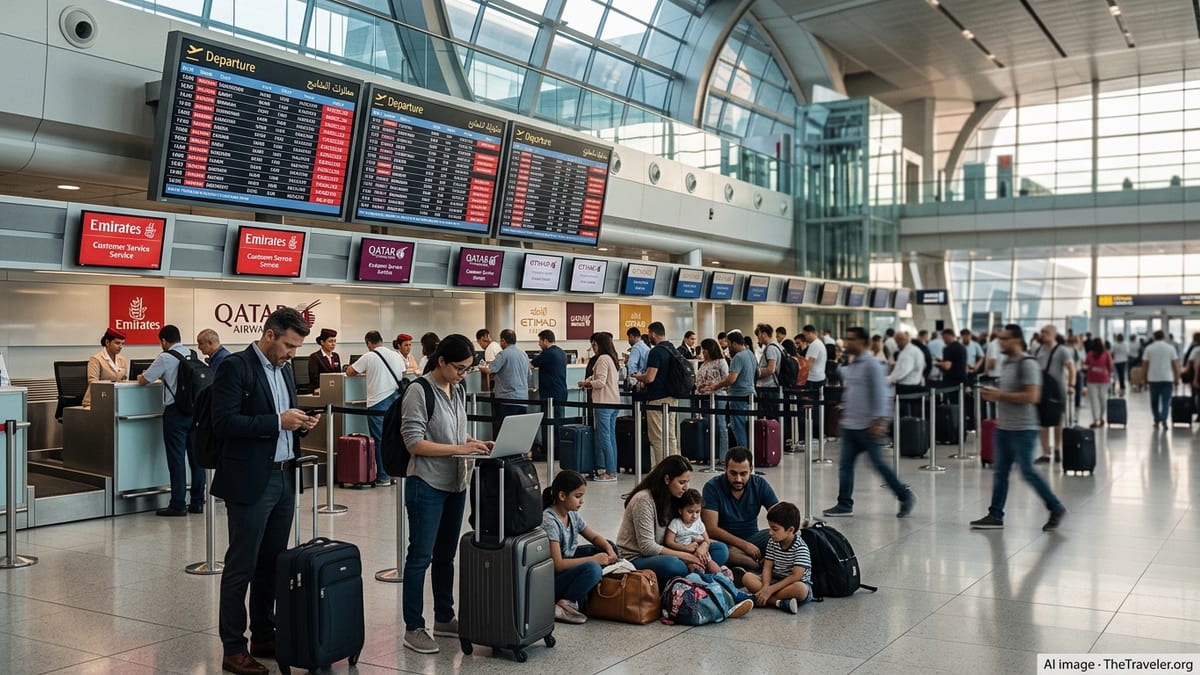
War Fallout Turns GCC Hubs Into Global Bottlenecks
From Dubai and Abu Dhabi to Doha and Riyadh, the Gulf’s super‑connector airports have been at the heart of the latest aviation turmoil, with widespread cancellations after airspace across parts of the Middle East was abruptly shut. Key hubs such as Dubai International, Abu Dhabi International and Hamad International in Doha saw much of their regular traffic suspended or sharply reduced as airlines diverted or grounded aircraft for safety reasons.
Travelers connecting between Europe, Asia, Africa and Australasia have been particularly hard hit, given how heavily global long‑haul networks rely on GCC hubs. Aviation analysts estimate that Emirates, Qatar Airways and Etihad together normally carry tens of thousands of passengers a day through their Gulf bases, amplifying the knock‑on effect when routes are disrupted.
While limited relief flights and partial resumptions are now appearing on schedules, the picture remains volatile. Airlines are repeatedly extending or revising travel waivers, often at short notice, making it essential for passengers to move quickly if they want to secure the most flexible options.
Industry experts say the scale of the disruption is testing everything from airline call centres to airport hotel capacity and insurance coverage. Yet for individual travellers, the most pressing task is tactical: understanding what each carrier is currently offering, and locking in a solution before policies tighten.
What Emirates, Etihad, Qatar Airways and Saudia Are Offering Now
Across the GCC’s biggest airlines, the immediate focus has been on fee‑free rebooking and refunds for passengers whose flights fall within specific travel windows. Emirates has told passengers booked on affected services that they can either switch to alternative dates without change penalties or request a full ticket refund, with current waivers tied to departures in early to mid‑March. Similar policies are in place for itineraries that included Dubai as a transit point but can no longer operate as booked.
Etihad has adopted a broad waiver period for tickets issued on or before late February with travel dates up to around March 10. Many of these customers are being allowed one free date change, often up to the end of March, or a refund of the unused ticket value. The Abu Dhabi‑based carrier is gradually restoring a limited schedule to key destinations, but warns that seats on near‑term flights are constrained and priority is being given to travellers whose original flights were cancelled.
Qatar Airways is running a mix of relief services and regular flights from Doha, while maintaining a disruption policy that allows affected passengers to rebook within a defined timeframe or request a refund. Travel industry advisories reviewed by TheTraveler.org indicate that the airline has been extending its waiver window in increments of several days, meaning travellers with later March bookings should monitor for fresh updates that may suddenly make them eligible for penalty‑free changes.
In Saudi Arabia, Saudia and low‑cost carrier flynas have suspended or limited some services to and from the UAE, Qatar, Bahrain, Kuwait and other countries caught up in the airspace restrictions. Both airlines are offering rebooking or refunds for cancelled flights, although specific rules depend on fare type and point of sale. Travellers connecting through Jeddah or Riyadh should expect schedules to remain fluid and check their booking status repeatedly in the days before travel.
Refund or Rebook: Deciding Your Best Move
For many passengers, the first decision is whether to hold onto their trip by rebooking, or to cancel outright and seek a refund. If the journey is essential and time‑sensitive, aviation and consumer advocates generally advise requesting rebooking at the earliest opportunity, even if it means accepting a less convenient routing or departure time. Seats on the first wave of restored flights are finite, and waiting in the hope of a more direct option later can backfire if waivers tighten.
By contrast, travellers whose plans are flexible or no longer necessary may be better served by taking a full refund while it is still on the table. Several Gulf carriers are limiting cash refunds to tickets scheduled to depart within specific date ranges, or to customers who booked directly with the airline. In some cases, passengers who delay may find that their only remaining option is a travel voucher or a change fee‑free rebooking, rather than money back to their original payment method.
Another consideration is where your ticket was purchased. Passengers who booked through online travel agencies or tour operators often need to request changes or refunds via that intermediary, even though the airline is the one operating the flight. This can add processing time and extra layers of terms and conditions, particularly for package holidays that combine flights with hotels or cruises.
Experts also note a key legal distinction: while airlines are usually obligated to refund the unused portion of a ticket when they cancel a flight, additional cash compensation for delays, hotels, meals or missed connections is rarely guaranteed in war‑related airspace closures, which are generally classified as extraordinary circumstances outside the carrier’s control. That makes it even more important to keep receipts and explore other routes to reimbursement.
How to Lock In Your Rights Fast
With call centres jammed and airport help desks overwhelmed, GCC airlines are directing most customers to manage disrupted trips online. Passengers on Emirates, Etihad, Qatar Airways, Saudia, flydubai, Air Arabia and other regional carriers can typically pull up their booking on the airline’s website or app, confirm whether their flight is cancelled or significantly delayed, and then choose from the current menu of waivers such as free date changes, alternative routings or refunds.
Travel specialists recommend acting the moment your flight status flips to cancelled or “not operating” rather than waiting for the airline to make first contact. In many cases, rebooking inventory made available for disrupted travellers is limited, and is allocated on a first‑come, first‑served basis. Updating your mobile number and email in the booking record is crucial so that automated notifications and check‑in reminders can still reach you.
It is also wise to cross‑check your carrier’s official disruption page with any alerts from your travel agent or corporate travel manager. Policies can vary subtly between direct and indirect bookings, particularly on group tickets and agency bulk fares. If you receive an offer that seems more restrictive than what is published by the airline, politely push back and reference the latest public policy.
Where multiple journeys are linked on one ticket, seek clarity on how a change will affect your onward legs. Accepting a refund for the first segment, for example, may automatically cancel the rest of the itinerary. In hub‑and‑spoke systems like those built by GCC airlines, carefully sequencing rebookings can avoid unintended cancellations and additional fare differences.
Beyond Airline Policies: Insurance, Credit Cards and Local Laws
Even when war‑related closures limit formal compensation obligations for airlines, travellers are not always left without recourse. Many comprehensive travel insurance policies offer at least some benefits for trip interruption, missed connections or unexpected accommodation costs, even in conflict scenarios. Policy wording varies widely, however, and some exclude acts of war or restrict coverage to certain regions, making it vital to read the fine print.
Credit card protections can also fill gaps. Premium cards that include built‑in travel insurance may reimburse non‑refundable hotels, tours and car rentals when a common carrier cancels or significantly delays a flight. Card issuers can sometimes assist in disputing charges if a passenger is denied a refund they are entitled to under the airline’s own rules, though this process can be slow.
Regulatory frameworks add another layer of complexity. Passengers on flights departing the European Union or United Kingdom on GCC carriers may, in some circumstances, be covered by local air passenger rights regimes, which mandate refunds and care and, in limited cases, compensation. Those rules typically carve out exemptions for extraordinary circumstances such as war, but may still require airlines to provide meals, refreshments and hotel rooms when travellers are stranded overnight.
Consumer advocates say stranded passengers should document everything, from boarding passes and cancellation notices to hotel invoices, meal receipts and taxi fares. Even when no immediate compensation is guaranteed, such records can support later claims to airlines, insurers, card companies or, in some cases, national consumer protection agencies once the immediate crisis passes and formal claims channels reopen.
Key Deadlines Travellers Cannot Afford to Miss
One consistent message from regional regulators and travel advisors is that timing is critical. Most GCC airlines have tied their latest waivers to specific booking or travel dates, such as tickets issued on or before February 28 or journeys scheduled up to March 10. These windows are being reviewed continually and, in some cases, extended by a few days at a time as the situation evolves.
Passengers whose trips fall just outside the current eligibility brackets are being urged to monitor official updates daily. As waivers shift forward, customers who were previously excluded may suddenly find themselves able to cancel for a refund or move their travel without incurring fees. Conversely, those whose travel dates sit at the end of the current window could lose out if they delay action and the airline tightens the policy once operations stabilise.
Experts stress that travellers should keep screenshots of policy pages and copies of airline emails confirming the terms in place at the time they acted. In a fast‑moving crisis, such evidence can be invaluable if a later system change appears to override earlier promises. In some past disruptions, passengers who could show contemporaneous records were able to persuade airlines to honour more generous, earlier waivers.
As the conflict‑driven aviation crisis continues to evolve, those flying with GCC carriers face an uncomfortable mix of uncertainty and limited options. Yet by understanding current airline policies, moving swiftly to rebook or refund as soon as eligibility opens, and tapping into insurance and credit card protections where possible, travellers can significantly improve their chances of escaping the worst financial and logistical fallout.