

More news on this day
Gulf states are entering a new phase of aviation and tourism expansion, as record visitor targets, massive infrastructure spending and new airline capacity converge to remake travel across the Middle East.
Get the latest news straight to your inbox!
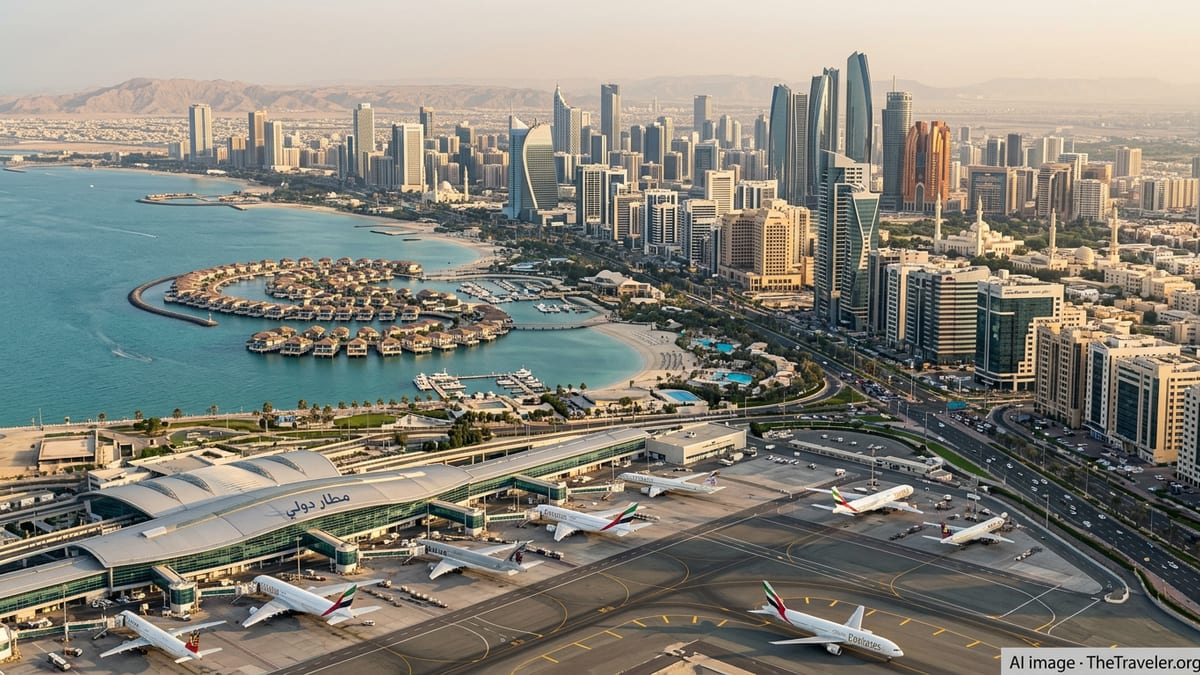
Airlines Add Capacity As Regional Fleet Poised To Double
Middle East carriers are preparing for decades of sustained growth, with Boeing forecasting that the region’s commercial fleet will more than double by 2044 as demand for international travel, tourism and trade accelerates. Industry analysts expect Gulf hubs to handle a growing share of global passenger traffic, particularly on long-haul routes linking Asia, Europe and Africa, while low-cost and hybrid carriers compete to open new secondary markets.
Saudi Arabia sits at the center of this aviation push. Under the kingdom’s National Civil Aviation Strategy, authorities aim to connect the country with 250 international destinations, handle 330 million passengers a year and attract 150 million tourists annually by 2030. Budget airline flynas has become a key vehicle for that plan, expanding its Airbus A320neo fleet and finalizing a major order for 280 aircraft over seven years to add frequencies and new routes from Riyadh, Jeddah and Dammam.
New entrants are sharpening competition. Riyadh Air, backed by Saudi Arabia’s Public Investment Fund, is preparing for a late 2025 launch after delays in widebody deliveries, with plans to rapidly expand its network by adding roughly two destinations a month. Elsewhere in the region, Gulf carriers such as Emirates, Qatar Airways and Etihad Airways continue to refresh cabins, increase capacity and introduce premium products on high-demand routes as they defend their positions as global super-connectors.
Industry consultants note that the aviation build-out is closely tied to the Gulf’s broader tourism strategies. Gulf Cooperation Council states collectively target close to 200 million annual visitors by the early 2030s, putting pressure on airlines to add both long-haul and short-haul connectivity into new tourism zones, cruise ports and desert and mountain destinations that would previously have been difficult to reach.
Saudi Giga-Projects Turn From Renderings To Reality
Saudi Arabia’s tourism transformation is most visible in a portfolio of so-called giga-projects across its western coast and interior. The combined contract value of these developments recently climbed to nearly 200 billion dollars, underscoring the scale of the kingdom’s Vision 2030 ambitions even as authorities recalibrate timelines and budgets. Officials argue that the projects will diversify the economy beyond oil, create hundreds of thousands of jobs and reposition the country as a global tourism and entertainment hub.
Red Sea Global, the flagship regenerative tourism development on the kingdom’s west coast, has begun welcoming guests at a cluster of luxury resorts on Shura Island and nearby atolls. Additional hotels are scheduled to open through 2026, bringing overwater villas, marinas and eco-focused properties that highlight coral preservation and low-impact design. Improved air links, including new services on Saudi carriers to the Red Sea International Airport, are designed to funnel international visitors directly into these remote coastal enclaves.
Inland, Qiddiya City near Riyadh is emerging as a vast entertainment and sports destination anchored by Six Flags Qiddiya City, which opened to the public at the end of 2025 as the first Six Flags park in Asia. The broader development plans stadiums, performance venues and residential districts that position the capital as a regional center for live events, motorsport and family tourism. Analysts say such anchor attractions are critical to convincing international travelers to add Riyadh to multi-stop Gulf itineraries that have long been dominated by Dubai.
Other mega-projects are advancing at varying speeds. NEOM, the 500 billion dollar smart-city development on the Red Sea, has started to phase in initial destinations such as Sindalah, a luxury island that opened in late 2024 as the brand’s first operational site. Work is progressing on the Port of NEOM, set to open its first terminal in 2026, while mountain project Soudah Peaks targets a first phase by 2026 to introduce high-altitude resorts in the Asir region. Despite periodic reports of spending cuts and scope adjustments, officials insist the core tourism components tied to marquee events such as Expo and the 2034 FIFA World Cup remain protected.
GCC Capitals Race To Hit Aggressive Visitor Targets
Beyond Saudi Arabia, every GCC state is pursuing its own version of a tourism-led growth model. The United Arab Emirates continues to set the regional pace, with Dubai and Abu Dhabi investing in new cultural districts, beachfront resorts and event infrastructure to sustain high double-digit visitor numbers. Abu Dhabi’s Tourism Strategy 2030 aims to boost annual visitors to more than 39 million and increase tourism’s direct contribution to gross domestic product to 90 billion dirhams by the end of the decade.
Smaller emirates are carving out distinctive niches. Ras Al Khaimah is marketing itself as an adventure and nature destination, targeting 3.5 million annual visitors by 2030 with a pipeline of coastal resorts and desert retreats. In Qatar, authorities are leveraging World Cup-era stadiums, cruise terminals and metro lines to push beyond the 5 million-plus visitors recorded in 2024, with a goal of drawing six million tourists a year by 2030 as the country pivots toward conferences, sports and cultural tourism.
Oman is positioning its long coastline and mountain landscapes as a quieter alternative to the region’s entertainment-heavy hubs. The sultanate attracted roughly 3.9 million foreign tourists in 2024 and has set a target of more than 11 million visitors by 2040, supported by around 31 billion dollars in tourism investment in integrated resorts, heritage sites and adventure products. Bahrain, which welcomed more than 12 million visitors in 2023, is targeting at least 14 million by 2026 through beach developments, entertainment districts and improved causeway connectivity with Saudi Arabia.
Economists say the shared emphasis on tourism reflects both opportunity and urgency. Gulf governments are under pressure to generate non-oil revenues, create private-sector jobs for young populations and demonstrate tangible benefits from large-scale public investments. Tourism, with its capacity to stimulate aviation, hospitality, retail and culture simultaneously, has become a preferred lever, although questions remain over whether all markets can reach their ambitious targets without oversupply or price competition.
Airports, Hotels And Infrastructure Strain To Keep Pace
The rapid rise in visitor targets is forcing a parallel build-out of infrastructure. Across the GCC, governments and private developers are investing in airport expansions, cruise terminals, new hotel inventory and upgraded public transport systems to handle forecast demand. Recent research on the Gulf hospitality market shows inbound arrivals recovering strongly from the pandemic and, in some hubs, already surpassing 2019 levels, prompting concerns over capacity constraints during peak seasons.
Saudi Arabia plans a new mega-hub at King Salman International Airport in Riyadh, while existing gateways in Jeddah, Dammam and Madinah undergo expansions to handle future pilgrim traffic and leisure arrivals. In the UAE, Dubai International and Al Maktoum International airports are advancing staged upgrades, and regional airports in Sharjah and Ras Al Khaimah are courting low-cost carriers with incentives and dedicated terminals.
Hotel supply is also surging. Abu Dhabi expects its room inventory to climb from about 34,000 keys to more than 50,000 by 2030, while developers across Saudi giga-projects are signing management agreements with global brands for beach resorts, lifestyle hotels and branded residences. Qatar, which added thousands of rooms for the 2022 World Cup, is repurposing part of that capacity for meetings and events, cruise passengers and stopover tourism. Industry executives say striking the right balance between luxury offerings and mid-market accommodation will be critical to sustaining occupancy and attracting a broader demographic of travelers.
Supporting infrastructure extends beyond transport and lodging. New entertainment districts, public beaches, cultural institutions and environmental conservation zones are being woven into master plans, as regulators emphasize liveability and sustainability alongside visitor numbers. Analysts warn that infrastructure rollouts must keep pace with marketing campaigns to avoid visitor bottlenecks, especially in nascent destinations where road networks and utilities are still under construction.
Sustainability And Investment Pressures Shape The Next Phase
As the Gulf’s tourism map is redrawn, sustainability and fiscal discipline are emerging as decisive themes. Several mega-projects are positioning themselves as global testbeds for regenerative tourism, pledging to power resorts with renewable energy, protect coral reefs and mangroves, and cap visitor numbers in sensitive ecosystems. Red Sea Global has committed to strict environmental standards, including limitations on coastal development and marine-lighting rules designed to protect wildlife, while Oman and the UAE highlight national decarbonization plans in their tourism pitches.
At the same time, the costs of transformation are prompting closer scrutiny from investors and ratings agencies. Saudi Arabia’s Public Investment Fund has signaled efforts to prioritize projects with clear commercial pathways and foreign investment potential, even as it continues to back showcase developments tied to sporting events and global expos. Across the region, public-private partnerships, sovereign wealth funds and international hotel operators are being enlisted to share risk and accelerate delivery.
For airlines, the sustainability challenge centers on fleet renewal and future fuels. Large orders for new-generation aircraft are designed to cut emissions per seat, while Gulf hubs experiment with sustainable aviation fuel mandates, carbon offset programs and more efficient air traffic management. Yet observers point out that the scale of planned capacity growth could still push overall emissions higher, placing the region under pressure from regulators and climate-conscious travelers.
Despite these headwinds, travel industry executives remain bullish on the Gulf’s trajectory. With visa reforms making it easier to enter, infrastructure projects moving from blueprints to opening ceremonies and airlines racing to secure aircraft and slots, the GCC is on track to become one of the most closely watched laboratories for tourism-led development in the coming decade.