

The Deep South offers a kind of hospitality and landscape variety that can surprise first-time visitors, and few neighboring states illustrate this better than Georgia and Alabama. Both promise soulful food, layered histories, and easygoing small towns, but they deliver very different experiences once you start planning day-by-day. Whether you are dreaming of misty mountains, soft Gulf sand, or a long weekend built around museums and restaurants, it is worth looking closely at what each state does best before you commit your travel budget.
Overall Travel Vibe: How Georgia and Alabama Feel on the Ground
Georgia has positioned itself as one of the most visited states in the country, with tourism numbers reaching well over 170 million visitors in 2024 and continuing to grow. That momentum reflects the state’s combination of a major global hub in Atlanta, beloved historic cities such as Savannah, and easy access to both mountains and coast. The vibe for visitors tends to be energetic and busy in the cities, softening into a slower, story-filled pace in coastal towns and mountain communities.
Alabama sees fewer visitors overall, and that relative quiet can be part of its appeal. Travelers often describe the state as feeling more low-key, with fewer crowds outside headline events like football weekends, major festivals, and peak summer on the Gulf Coast. The atmosphere leans toward relaxed beach days, scenic drives, and discovering smaller attractions rather than checking off a long list of blockbuster sights.
Because Georgia’s visitor infrastructure is more developed, you will notice more hotel choice, frequent flights, and tour options in its major destinations. Alabama, by contrast, can feel more personal and less commercial once you move beyond the shore. For some travelers that reads as limited, but for others it means easier conversations with locals, quieter trails, and sunsets that you share with a handful of people instead of hundreds.
In broad strokes, Georgia suits travelers who like a full itinerary and multiple landscape changes within a single trip, while Alabama tends to fit visitors who value slower rhythms, affordability, and a narrower but very satisfying mix of beaches, history, and outdoor time.
City Experiences: Atlanta, Savannah and Birmingham, Mobile
Atlanta is the anchor of most Georgia itineraries, and for good reason. As a major airline hub and one of the South’s largest metros, it delivers big-city cultural depth: civil rights landmarks, sports, film and music ties, and a flourishing dining scene that ranges from classic meat-and-three plates to ambitious tasting menus. Neighborhoods like Midtown, Old Fourth Ward, and the BeltLine corridor give visitors a dense concentration of museums, parks, and nightlife within a relatively compact urban core.
Savannah offers a very different city experience within the same state. Its oak-shaded squares, waterfront, and well-preserved historic district make it one of the most walkable and atmospheric small cities in the region. Travelers come as much for the mood as for specific attractions, lingering on benches, taking architecture tours, and exploring nearby Tybee Island or smaller towns that are now gaining attention for their historic charm and new creative businesses.
Alabama’s cities are less internationally famous but increasingly interesting to travelers who want to pair history with food and arts. Birmingham has evolved from its industrial past into a city known for civil rights sites, craft breweries, and chef-driven restaurants set in revived neighborhoods. Its downtown and nearby districts make a good long-weekend base, especially for visitors interested in twentieth-century history.
Mobile, on the state’s Gulf Coast, carries French and Spanish influences and a deep port-city heritage. It mixes restored historic homes and museums with the kind of seafood and seasonal festivities you would expect from a coastal city that also claims one of the earliest Mardi Gras traditions in the United States. Compared with Atlanta or Savannah, both Birmingham and Mobile feel more compact and less polished, which can be either a drawback or a refreshing change depending on how urban you want your trip to feel.
Coastline and Beaches: Atlantic vs Gulf Shores
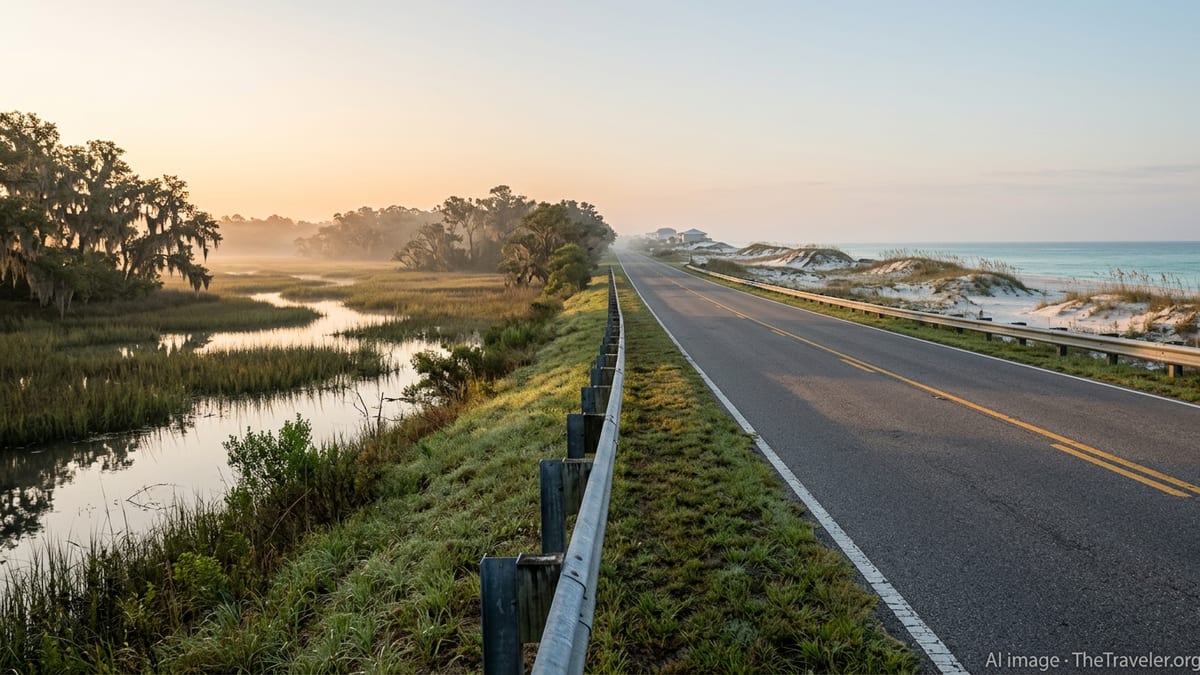
For many travelers, beaches are the deciding factor between Georgia and Alabama. Georgia’s Atlantic coastline is relatively short but distinctive, made up of barrier islands and marshlands. Destinations like Tybee Island near Savannah and the Golden Isles farther south appeal to visitors who want gentle surf, historic lighthouses, nature preserves, and a quieter, family-friendly environment rather than extensive nightlife. Much of the coastal scenery revolves around tidal creeks and salt marshes, ideal for kayaking, birdwatching, and photography in soft early-morning or evening light.
Alabama’s coast fronts the Gulf of Mexico, and although the shoreline is also limited in length, its character is very different. Gulf Shores and Orange Beach are famous for their wide sweeps of white quartz sand and warm, relatively calm waters. This is classic beach-vacation territory, with condo towers, beach bars, mini-golf, and outfitters offering fishing charters, dolphin cruises, and water sports. Yet just inland, places like Gulf State Park provide access to marshes, freshwater lakes, and pine forests, as well as a network of multiuse trails that has earned national attention for its design and scenery.
In terms of pure beach appeal, many travelers consider Alabama’s Gulf Coast more of a traditional sun-and-sand destination, especially in summer. Georgia’s coast gives you a softer, more nature-forward experience, with strands of sand framed by live oaks and marsh as often as by hotels and boardwalks. If you want to spend most of your trip in the water or on a lounge chair, Alabama has the clearer edge. If your idea of a coastal day includes biking to historic sites, exploring maritime forests, and watching dolphins from a quiet dock, Georgia’s lowcountry-style shore can be a better match.
Seasonality matters in both states. Summer brings heat and humidity to the Atlantic and Gulf coasts, with hurricane season to consider, while spring and fall often deliver the best combination of warm water and tolerable temperatures. Winter can be pleasantly mild, especially in Alabama, but some services and tours may scale back outside peak periods.
Mountains, Trails, and Outdoor Adventure
When it comes to mountain scenery, Georgia is the clear winner between the two states. The northern part of the state stretches into the southern Appalachians, giving visitors access to rolling peaks, waterfalls, and the starting point of the Appalachian Trail. Towns like Blue Ridge, Dahlonega, and Helen serve as gateways to hiking, trout fishing, vineyards, and cabin stays. The region has become a popular four-season escape for visitors from Atlanta and beyond, with autumn foliage and spring wildflowers particularly appealing.
Georgia’s state parks and national forest lands offer well-marked trails, scenic overlooks, and campgrounds at a range of comfort levels. Travelers can opt for easy waterfall walks, moderate day hikes to ridgelines, or multi-day backpacking sections for more committed adventurers. Because the mountains are only a few hours’ drive from Atlanta, it is possible to combine city time with genuine backcountry experiences in a single trip.
Alabama does not have the same extensive high-elevation terrain, but it offers its own outdoor strengths. The state’s northern and central regions feature ridges, rivers, and lakes that are popular for hiking, paddling, and rock climbing. In the south, the combination of coastal beaches and inland wetlands creates rich habitat for birdlife. The trail network around Gulf State Park, for example, runs through multiple ecosystems and has been repeatedly recognized for its quality and accessibility, drawing cyclists and walkers who want more than a simple boardwalk stroll.
If your priority is long mountain vistas and classic highland hiking, Georgia stands out. If you are more interested in a blend of flat, family-friendly paths, water-based activities, and shorter scenic trails mixed into a beach week or a city stay, Alabama can be just as rewarding. For many visitors, the deciding factor is whether they want to build their trip around the Appalachians or around the Gulf.
History, Culture, and Civil Rights Heritage
Both states play central roles in the story of the American South, particularly around the Civil War, Reconstruction, and the civil rights movement. Georgia’s historic narrative is easily accessed in cities like Savannah, with its preserved squares and antebellum architecture, and in Atlanta, where you can move from sites tied to civil rights leaders to museums that explore Black history, contemporary art, and the region’s changing identity. Smaller towns, some now recognized for their well-preserved streetscapes and historic districts, offer a slower, more contemplative window into the past.
Alabama’s contribution to civil rights history is particularly profound, and many travelers come specifically to follow that thread. Cities such as Birmingham, Montgomery, and Selma anchor itineraries centered on pivotal events, landmarks, and museums that interpret the struggle for voting rights and equality. Walking across certain bridges or standing at key street corners can be an emotionally intense experience, and guides in these communities often have personal or family stories that bring history into the present.
Beyond civil rights, both states surface layers of Indigenous, European, and African American heritage through preserved sites, battlefields, and small museums. Georgia’s coastal region adds another layer, with Gullah Geechee culture, plantation sites, and maritime history woven into tours and educational programs. Alabama, meanwhile, highlights its role in early French and Spanish colonization along the Gulf, and later in naval and industrial history, particularly around Mobile and its bay.
If your main reason for traveling is to explore civil rights sites in depth, Alabama arguably offers the more concentrated experience, with multiple key locations within a day’s drive of each other. Georgia provides a broader mix of historical eras across a wider geography, combining civil rights landmarks with colonial, Revolutionary, and architectural history in both urban and rural settings.
Food, Drink, and Nightlife
Food can easily tip the scales between two destinations, and here Georgia and Alabama both make a strong case. Georgia’s biggest culinary asset is variety. Atlanta alone has a dining scene that spans Southern comfort food, world cuisines tied to a large immigrant population, and contemporary restaurants that regularly appear in national roundups. Travelers can eat their way through neighborhoods, from classic fried chicken and barbecue joints to upscale spots serving seasonal, farm-forward menus.
Savannah extends the food story to the coast, where shrimp and grits, fresh fish, and lowcountry dishes feature heavily, while small towns and mountain communities highlight local produce, trout, and sometimes wine or cider from nearby producers. Nightlife in Atlanta and Savannah ranges from rooftop bars and cocktail lounges to live music venues that draw touring acts as well as local talent.
Alabama’s food scene is more compact but deeply rooted in tradition. Barbecue, seafood, and meat-and-three restaurants anchor many local dining experiences, especially around Birmingham, Mobile, and the Gulf Coast. In recent years, Birmingham in particular has earned attention for chefs who reinterpret Southern staples with a modern twist, often in refurbished historic buildings. Along the Gulf, visitors can dine on freshly caught seafood in settings that range from casual waterside shacks to more refined rooms overlooking the water.
Nightlife in Alabama tends to be more localized, with college towns, beach communities, and city entertainment districts offering the liveliest scenes. You are less likely to find the density of late-night options that Atlanta offers, but more likely to encounter live music in small venues, community festivals, and evenings that revolve around a single, memorable restaurant or bar rather than a long list of stops.
Getting There, Getting Around, and Trip Costs
For many visitors, the first practical question is how easy it is to arrive. Georgia has a major advantage in Atlanta’s international airport, which serves domestic and overseas routes with high frequency. That makes it straightforward for travelers from a wide range of starting points to reach Georgia non-stop or with a single connection. From Atlanta, interstates radiate outward, putting mountain towns, small cities, and parts of the coast within a half-day’s drive.
Alabama has fewer large airports, and many visitors arrive through neighboring states or via connections. However, recent expansions in service to the Gulf Coast, including additional budget airline routes into Gulf Shores, have made direct access to the beach easier for certain regions of the country. For travelers willing to rent a car and drive a few hours, Alabama’s cities and coast can be comfortably linked in a loop, especially for those starting in nearby states.
Once you are on the ground, both Georgia and Alabama are most easily explored by car. Public transit exists in major cities, but reaching parks, small towns, and beach areas typically requires driving. Road quality on main routes is generally good, with scenic byways in both states that can turn simple transfers into enjoyable parts of the trip.
In terms of costs, Alabama often comes out slightly cheaper, particularly on accommodation and dining outside peak holiday weeks and major events. Georgia’s most popular destinations, especially Atlanta and Savannah during high season, can command higher hotel rates and restaurant prices. That said, both states offer budget-friendly options, including chain hotels, short-term rentals where permitted, and simple regional eateries. Careful timing and midweek stays can make either state affordable for a wide range of travelers.
The Takeaway
Choosing between Georgia and Alabama is less about determining a single winner and more about matching your travel style to what each state naturally does best. Georgia offers variety in capital letters: international-scale city life in Atlanta, atmospheric streetscapes in Savannah and other historic towns, Appalachian foothills to the north, and salt marshes and islands to the east. It is an excellent choice for travelers who want to cover a lot of terrain and themes in one itinerary, from museums and food to hiking and coastal sunsets.
Alabama, on the other hand, excels at doing a few things exceptionally well. Its Gulf Coast delivers classic beach-vacation energy with soft sand and warm water, backed by extensive trails and nature areas just inland. Inland cities and small towns anchor some of the most important civil rights sites in the country, alongside hearty regional cooking and festivals that still feel primarily local rather than built for visitors.
If you are planning a first trip to the region and prefer a major city and multiple contrasting landscapes, Georgia likely gives you more options and easier logistics. If you have already experienced some of the South’s bigger-name destinations or simply want a quieter, more focused vacation built around the Gulf, history, and unhurried days, Alabama can offer a deeply satisfying alternative that still feels authentic and accessible.
In the end, both states reward curiosity and time. With a rental car, a flexible plan, and a willingness to explore beyond the most photographed blocks or busiest beach access points, either Georgia or Alabama can become the setting for the kind of Southern trip that stays in your memory long after the journey ends.
FAQ
Q1. Which state is better for a first-time visitor to the Deep South, Georgia or Alabama?
For a first trip, many visitors find Georgia more convenient thanks to Atlanta’s major airport and the state’s mix of big-city attractions, historic districts, mountains, and coast, all within reasonable driving distances.
Q2. If I mainly want beaches, should I choose Georgia or Alabama?
If your priority is a classic beach vacation with wide white-sand shores and warm Gulf waters, Alabama’s Gulf Shores and Orange Beach area generally offer more of what you are looking for than Georgia’s smaller Atlantic beaches.
Q3. Which state offers better mountain scenery and hiking?
Georgia is the stronger choice for mountains, with its northern region extending into the southern Appalachians and providing access to trail networks, waterfalls, and scenic overlooks.
Q4. Is one state generally more affordable for travelers than the other?
Costs vary by season and city, but Alabama often feels slightly cheaper, especially for accommodations and dining outside peak beach weeks, while Georgia’s major destinations can command higher prices.
Q5. Where will I find more civil rights history sites, Georgia or Alabama?
Both have important landmarks, but Alabama offers a denser concentration of pivotal civil rights locations in cities like Birmingham, Montgomery, and Selma, making it ideal for focused history trips.
Q6. Which state has the livelier nightlife?
Georgia, particularly Atlanta and Savannah, typically offers more varied and late-night options for bars, live music, and clubs, while Alabama’s nightlife is more localized and low-key.
Q7. Can I visit both Georgia and Alabama in one week-long trip?
Yes, many travelers combine the two, for example flying into Atlanta, spending a few days in Georgia, then driving to Alabama for beaches or civil rights sites before looping back.
Q8. Which state is better for family travel with kids?
Both work well for families, but Alabama’s beach resorts and nature trails are especially popular with children, while Georgia adds big-city attractions, aquariums, and mountain cabins into the mix.
Q9. Do I need a car to explore Georgia and Alabama properly?
In practice, a car makes exploring both states far easier, since many parks, small towns, and beach areas are not well connected by public transportation.
Q10. How should I decide between Georgia and Alabama for a long weekend?
For a long weekend built around a major city and nearby day trips, Georgia usually makes more sense, while a relaxed long weekend oriented around the beach or a focused civil rights route often points toward Alabama.