

The American South offers few rivalries as appealing to travelers as Georgia and South Carolina. These neighboring states share coastal marshes, historic cities, pine forests, and Blue Ridge foothills, yet they deliver very different travel experiences. Whether you are planning a first-time Southern escape or fine-tuning a multi-state road trip, understanding how Georgia and South Carolina compare will help you match the right destination to your travel style, budget, and season.
Overall Vibe: Two Flavors of the Modern South
Georgia and South Carolina deliver a similar mix of warm hospitality, deep history, and easy access to nature, but the feel on the ground is distinct. Georgia often feels bigger, more varied, and a bit faster paced, anchored by Atlanta’s skyline, North Georgia’s mountain towns, and a string of quiet barrier islands. South Carolina leans smaller and slower, with tidy historic towns, long resort beaches, and a strong sense of Lowcountry culture shaped by salt marshes and tidal rivers.
In Georgia, many trips orbit around contrasts: a day of museums and nightlife in Atlanta, followed by a quiet cabin in the Blue Ridge foothills or a bike ride beneath moss-draped oaks on Jekyll or St. Simons Island. The state tourism office actively promotes this diversity, from waterfalls and lake towns in the north to 100 miles of coast in the south, making it easy to design routes that change scenery every few hours of driving.
South Carolina trips tend to feel more linear and coastal. Travelers often base themselves in Charleston, Myrtle Beach, or Hilton Head Island and fan out on day trips to plantations, state parks, and small towns. Tourism growth in Charleston and along the Grand Strand has been strong in recent years, reinforcing South Carolina’s identity as a classic beach-and-history destination where many visitors return to the same stretch of coast year after year.
For travelers, this means Georgia is a strong choice if you enjoy variety, driving loops, and mixing urban and rural stops. South Carolina is ideal if you prefer to unpack once for a week on the coast, with occasional forays to historic sites and nature reserves.
Coastlines and Beaches: Golden Isles vs Grand Strand
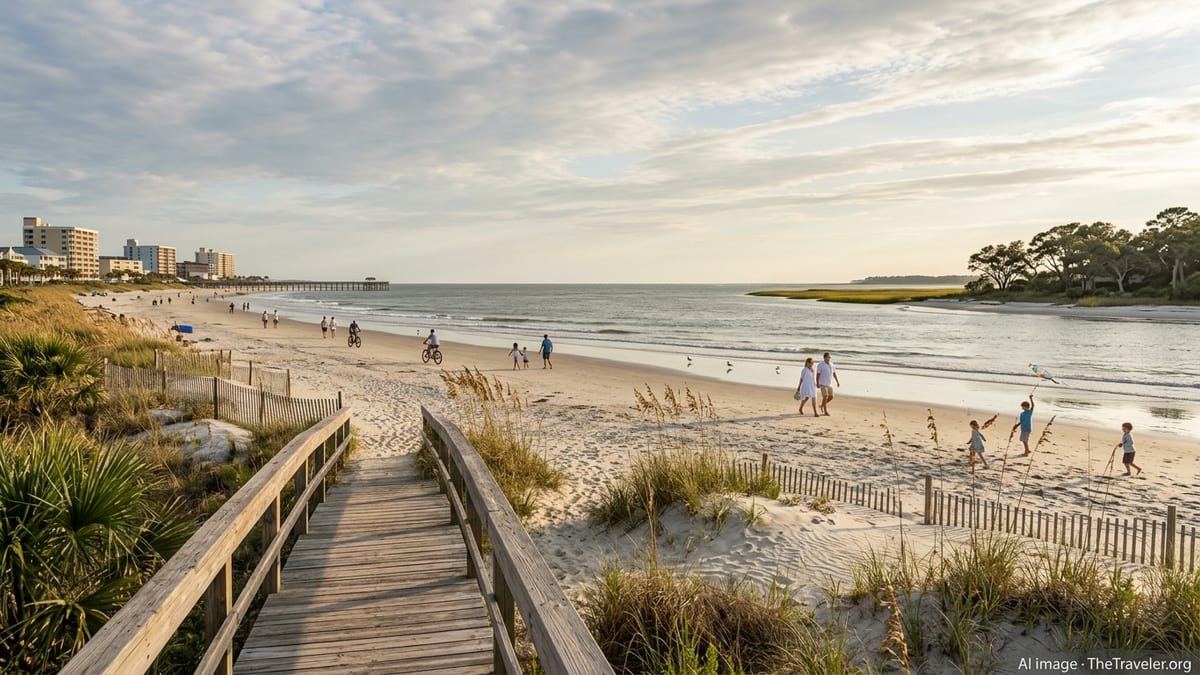
Both states offer Atlantic beaches, but their personalities differ sharply. Georgia’s coast is shorter and more protected, with barrier islands like Tybee, Jekyll, St. Simons, and Cumberland defined by broad marshes, live oaks, and relatively low-rise development. Many stretches feel quiet and natural, with long walks on wide, gently shelving sand and strong opportunities for birdwatching and kayaking.
South Carolina’s shoreline is more overtly built for vacationers. Myrtle Beach and the surrounding Grand Strand deliver about 60 miles of sandy shoreline alongside entertainment districts, high-rise resorts, boardwalks, waterparks, and more than 90 golf courses, positioning the region as a high-energy beach escape for families and groups. Farther south, Hilton Head Island and the surrounding Lowcountry blend resort comforts with bike paths, tidal creeks, and protected nature areas.
Beachgoers who like peace, bike paths beneath oaks, and a sense of seclusion may gravitate toward Georgia’s Golden Isles or the quieter corners of Tybee Island. Those who want a full-service beach holiday with live shows, mini-golf, and lively nightlife are more likely to choose Myrtle Beach or the central Grand Strand in South Carolina. Couples and food-focused travelers often split the difference by staying on or near Hilton Head or the Sea Islands and making a day trip to Charleston.
Access is another consideration. Georgia’s coastal islands often require causeway drives or, in the case of Cumberland Island, a boat ride with limited visitor numbers, which keeps crowds lower but demands more planning. South Carolina’s top beach zones are engineered for volume, with ample hotels, rentals, and direct highway access, which simplifies logistics but brings heavier peak-season traffic and denser development.
Cities and Culture: Atlanta & Savannah vs Charleston & Columbia
When it comes to cities, Georgia offers more size and variety, while South Carolina leans on charm and concentrated appeal. Atlanta sits at the center of most Georgia itineraries, with a major hub airport, a substantial roster of museums and cultural institutions, and a thriving dining and music scene. Visitors can pair big-ticket attractions with in-town neighborhoods that showcase the city’s creative and culinary energy.
Savannah offers a counterbalance to Atlanta’s modern buzz. Its walkable historic district, shaded squares, and riverside warehouses turned into hotels and restaurants create a romantic, slower-paced backdrop. The city continues to position itself internationally with new marketing efforts, often promoted alongside Georgia’s coastal and mountain regions to encourage multi-stop trips.
In South Carolina, Charleston is the undisputed star. Long ranked among the country’s favorite travel cities, it combines meticulously preserved streetscapes, a busy harbor, and nationally recognized restaurants. Recent tourism studies show that Charleston accounts for a substantial share of the state’s visitor economy, underscoring how central it is to South Carolina’s travel identity.
Columbia, the state capital, adds a different note with university energy, a growing food scene, and riverfront recreation, but most first-time visitors still aim first for Charleston and the nearby sea islands. Compared with Georgia, South Carolina’s urban options are fewer, but its flagship coastal city has an intensity of historic architecture and dining that many travelers build entire trips around.
Outdoor Adventures: Mountains, Marshes, and State Parks
Travelers who crave mountains and hiking will find a clear edge in Georgia. North Georgia’s Blue Ridge foothills offer waterfalls, state parks, and small mountain towns within a few hours’ drive of Atlanta. Trails vary from short waterfall walks suitable for families to more serious routes on the Appalachian Trail, giving visitors plenty of choice at different fitness levels.
South Carolina’s Upcountry also has lakes, foothills, and scenic drives, but for many visitors, the state’s standout landscapes are coastal. Marshes, tidal rivers, and maritime forests dominate, with state parks like Myrtle Beach State Park preserving strands of undeveloped shoreline amid surrounding resorts. These parks provide nature trails, fishing piers, and campgrounds that feel surprisingly tranquil given their proximity to busy beach communities.
On the Georgia coast, outdoor experiences often revolve around wildlife and conservation areas. Kayak tours through salt marshes, boat trips to see dolphins, and guided excursions into protected islands are common. Inland, Georgia’s lakes and reservoirs appeal to anglers and boaters looking for quieter waters than the open Atlantic.
In South Carolina, the combination of long sandy beaches, golf courses, and coastal preserves makes it easy to alternate between active days outdoors and laid-back resort time. Visitors with RVs or tents will find well-developed campground networks in both states, but South Carolina’s concentration of coastal parks gives campers unusually close contact with the ocean compared with many other East Coast destinations.
Food, Drink, and Nightlife: Lowcountry Tables and Southern Fusion
Food is a major reason many travelers choose between Georgia and South Carolina, and in practice, both deliver strongly. South Carolina’s coastal cities, especially Charleston and the Sea Islands, are synonymous with Lowcountry cuisine. Menus highlight seafood, rice-based dishes, and recipes rooted in Gullah Geechee traditions, while new restaurants layer in contemporary techniques and global influences. Annual food festivals and visiting chef events reinforce the city’s reputation as a culinary destination.
Georgia’s dining scene is more geographically dispersed. Atlanta supports a dense cluster of restaurants that range from acclaimed fine dining to neighborhood spots celebrating global and Southern flavors. Savannah, Augusta, Macon, and Athens each add their own culinary personalities, from riverfront classics to college-town experimentation. On the coast, shrimp, oysters, and seasonal local produce show up on menus similar to those in South Carolina, though the branding leans more toward “coastal Georgia” than explicitly Lowcountry.
For nightlife, Atlanta stands out with concert venues, clubs, late-night dining, and major sporting events that draw visitors from across the region. Savannah and Athens contribute more intimate live music and bar scenes. South Carolina’s nightlife centers tend to be smaller but no less lively, especially in Myrtle Beach, where boardwalk bars, live music, and family-friendly entertainment stay busy well into the evening, particularly in summer.
Travelers who build trips around food might lean slightly toward Charleston and its surroundings if they want a walkable hub with top-tier restaurants concentrated in a compact historic district. Those who enjoy hopping between varied neighborhoods and scenes over several days may find Atlanta and Savannah together create a more diverse culinary arc.
Costs, Crowds, and Practical Planning
In both states, costs vary widely by season, city, and proximity to the beach. Beachfront rooms and vacation rentals along South Carolina’s Grand Strand and on Hilton Head Island generally command peak prices during school holidays and summer, when demand surges and some beaches reach capacity at popular state parks. Georgia’s barrier islands also see price spikes in high season, though the smaller scale of development can make certain areas feel less crowded even when accommodation is tight.
Inland Georgia often proves more budget-friendly, making it attractive for travelers who want to pair a short coastal stay with time in mountain towns or small cities. Atlanta’s wide range of hotels, from major chains to boutique properties, allows some flexibility on price, especially on weekends when business travel ebbs. In South Carolina, smaller inland cities and rural areas can offer good value, but first-time visitors frequently concentrate on Charleston, Hilton Head, or Myrtle Beach, where nightly rates reflect strong ongoing demand.
In terms of crowds, both states experience their busiest periods in late spring and summer, especially around school breaks and holiday weekends. South Carolina’s most popular beaches and Charleston’s historic core can feel noticeably packed at these times, with waits for restaurants and attractions. Georgia’s coast is less dominated by a single mega-resort area, so crowding tends to be more localized, though well-known islands and downtown Savannah are far from quiet in peak season.
Transportation logistics are relatively straightforward in either state. Atlanta’s major international airport and network of interstates make Georgia especially convenient for long-haul travelers and road trippers. South Carolina has smaller but improving air service to coastal cities and is within comfortable driving distance of major population centers along the East Coast, which supports repeat visits by car-owning families.
When to Go: Seasons and Weather Compared
Georgia and South Carolina share a broadly similar climate, with hot, humid summers and mild winters along the coast. For many travelers, the best times to visit are spring and fall, when daytime temperatures are more comfortable for walking tours, outdoor dining, and hiking. Spring in both states brings flowering trees and pleasant beach weather, while autumn often offers warm days, cooler nights, and slightly thinner crowds outside of major festivals and event weekends.
Summer is peak season for beachgoers in both Georgia and South Carolina, particularly from June through August. Coastal waters are at their warmest, but humidity and midday heat can be intense, and afternoon thunderstorms are common. On the busiest stretches of South Carolina’s Grand Strand, visitors should expect crowded beaches, busy roads, and strong demand for parking, especially near popular state parks and boardwalk areas. Georgia’s islands can feel a bit more relaxed, but advance booking remains essential.
Winter conditions differ slightly depending on where you go. Along the coast, temperatures are often mild enough for beach walks, golf, and outdoor sightseeing, though swimming is mostly limited to hardy visitors or heated pools. Inland and in the mountains, cooler nights set the tone for cabin stays and small-town festivals. Off-season travel can deliver lower prices and quieter streets, but some seasonal businesses reduce hours, especially in smaller beach communities.
Both states sit within the broader Atlantic hurricane zone, with the highest likelihood of tropical systems from late summer into autumn. Travelers visiting during this period should stay aware of forecasts, choose flexible bookings where possible, and consider travel insurance that covers weather-related disruptions. In practice, most trips run as planned, but having a backup activity list for rainy days is wise, especially on family trips centered on beach time.
The Takeaway
Choosing between Georgia and South Carolina is less about which state is objectively better and more about what kind of Southern experience you want. If you picture a trip that links a major city with small mountain towns, quiet barrier islands, and a historic coastal hub like Savannah, Georgia offers a wide canvas and convenient routes. It excels at variety, making it especially appealing for road trips, multi-generational travel, and visitors who like to change scenery every few days.
If your ideal vacation means checking into a beach town and staying put, punctuating lazy days of sand and surf with excursions to a postcard-perfect historic city, South Carolina is hard to beat. Its long Grand Strand, polished resorts, and the depth of history and dining in Charleston create a compelling mix for families, couples, and repeat visitors who value familiarity.
For many travelers, the ideal answer is not Georgia or South Carolina but Georgia and South Carolina. The states share a border and similar driving distances from major East Coast cities, so it is entirely possible to pair a Georgia mountain or city stay with several days on a South Carolina beach. However you structure it, planning ahead for seasons, budgets, and preferred pace will help you turn this friendly state-to-state rivalry into a memorable Southern journey tailored to your tastes.
FAQ
Q1. Which state is better for a first-time visitor to the American South?
Both work well, but South Carolina is ideal if you want a classic mix of beaches and a historic coastal city, while Georgia suits travelers seeking both big-city energy and quieter small towns in one trip.
Q2. Where will I find the best beaches, Georgia or South Carolina?
South Carolina generally offers more extensive resort-style beaches and entertainment, especially around Myrtle Beach and Hilton Head, while Georgia’s barrier islands feel quieter and more nature-focused.
Q3. Is Georgia or South Carolina more affordable for a weeklong vacation?
Costs vary by season and location, but inland Georgia and smaller South Carolina towns often come in lower than peak-season beach resorts; beachfront stays in either state command higher prices in summer.
Q4. Which state has better food and dining experiences?
Charleston and the South Carolina Lowcountry are celebrated for concentrated, walkable fine dining, while Georgia spreads its culinary strengths across Atlanta, Savannah, college towns, and coastal communities.
Q5. Do I need a car to explore Georgia and South Carolina?
A car is strongly recommended in both states, especially if you plan to combine cities with beaches, state parks, or mountain areas where public transit is limited or nonexistent.
Q6. Which state is better for outdoor activities beyond the beach?
Georgia has an edge for mountain hiking, waterfalls, and lake recreation, while South Carolina excels in coastal marshes, tidal rivers, and oceanfront state parks with easy access from major beach towns.
Q7. How many days do I need to see the highlights of each state?
About five to seven days allows you to sample one major city and a coastal or inland area in either state; adding a second week makes it easier to pair Georgia and South Carolina in a single itinerary.
Q8. Is it realistic to visit both Georgia and South Carolina on one trip?
Yes, many travelers combine Atlanta or the North Georgia mountains with Savannah or the Golden Isles, then continue to Charleston, Hilton Head, or Myrtle Beach for a cross-border Southern route.
Q9. When is the best time of year to avoid crowds but still enjoy good weather?
Late spring and early fall typically balance comfortable temperatures with lighter crowds, although specific weeks may be busier in popular cities and beach towns due to festivals and school breaks.
Q10. Which state is better suited to family travel with children?
Both are family-friendly; South Carolina’s large beach resorts and attractions tend to appeal to families seeking convenience and built-in entertainment, while Georgia offers more varied landscapes for kids who enjoy new settings every few days.