

More news on this day
Thousands of passengers were left stranded at airports across Germany on March 12 as a fresh airline strike triggered more than 500 flight cancellations and hundreds of delays at major hubs including Frankfurt, Munich, Hamburg, Berlin and Bremen, disrupting travel plans for holidaymakers and business travellers alike.
Get the latest news straight to your inbox!
Major German Hubs Buckle Under Strike Disruption
Operations at Germany’s busiest airports descended into widespread disruption as airlines scrapped at least 521 flights and delayed a further 284, according to early tallies from airport and industry data. Frankfurt and Munich, key intercontinental gateways, were among the hardest hit, with knock-on effects quickly spreading to Hamburg, Berlin, Bremen and several regional airports.
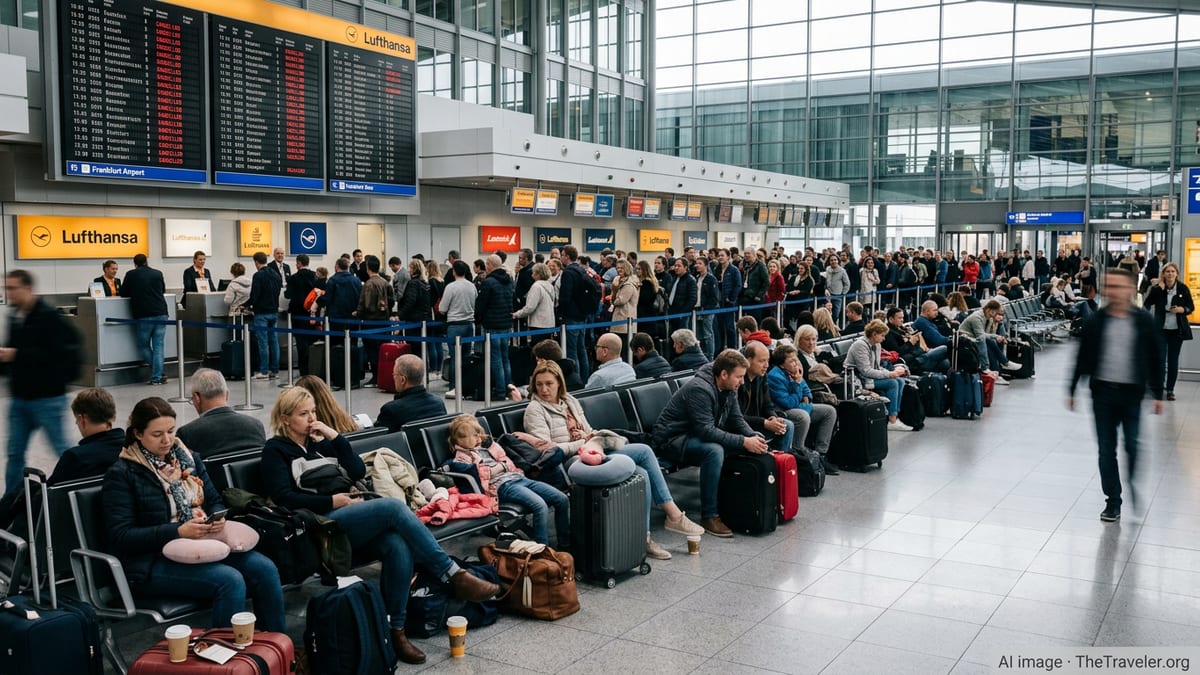
Check-in halls filled with stranded travellers sleeping on bags, queuing at information desks and refreshing airline apps in search of updates. Airport operators urged passengers to check their flight status before heading to the terminals, warning that schedules would remain volatile throughout the 48-hour strike window.
Ground handling constraints and crew shortages triggered by the industrial action meant that even flights not formally cancelled were subject to lengthy delays, missed connections and last-minute gate changes. With aircraft and staff out of position, airline planners struggled to rebuild coherent schedules while maintaining minimum staffing and safety requirements.
By late afternoon, departure boards at several airports showed more cancelled or severely delayed services than on-time departures, effectively paralysing domestic and European short-haul networks and putting pressure on remaining long-haul services to serve as lifelines for stranded passengers.
Lufthansa, Qatar Airways, KLM and Others Forced to Slash Schedules
Germany’s flag carrier Lufthansa bore the brunt of the disruption, with a significant portion of its short and medium-haul network grounded. The airline, a dominant player at Frankfurt and Munich, had already warned that only a fraction of its planned flights would operate during the strike period, as cockpit and cabin rosters were thinned by participating staff.
The spillover quickly reached foreign carriers that rely on German hubs for their European operations. Qatar Airways, which serves Frankfurt, Munich, Berlin and Hamburg, cancelled and retimed a series of flights after ground handling and turnaround operations slowed to a crawl. KLM, heavily interconnected with German feeder traffic through Amsterdam, also cut services and rebooked passengers experiencing missed connections.
Several other European and Gulf carriers followed suit, either cancelling services outright or downgrading aircraft size to match reduced demand and operational constraints. Airlines emphasised that safety would not be compromised and that only flights with adequate crew and handling support would depart, even if that meant painful last-minute cancellations for travellers.
Carriers also highlighted the difficulty of rebooking at short notice, as alternative flights across the continent filled rapidly. With school holidays approaching in parts of Europe and business travel gradually returning, remaining seats to and from Germany quickly sold out, driving up prices on unaffected routes.
Passengers Face Long Queues, Confusion and Limited Options
For travellers caught in the middle of the disruption, the strike translated into long queues, uncertain information and, in many cases, an unplanned overnight stay. Families returning from holidays, students heading back to university and business travellers connecting between continents all reported chaotic scenes at customer service counters.
Many passengers complained of difficulty reaching airline call centres or using overloaded digital channels to rebook. Chatbots and mobile apps frequently timed out or failed to display updated itineraries, leaving travellers reliant on departure boards and overstretched ground staff for basic information about their journeys.
Hotel availability around major airports tightened rapidly as cancellations mounted. Some travellers resorted to sleeping on benches or floors in transit areas, while others scrambled to secure last-minute rooms at elevated prices. Rail services into and out of major cities also saw a surge in demand as passengers abandoned air travel in favour of trains where possible.
For international travellers with complex itineraries and visa constraints, the disruption created added anxiety. Missed long-haul connections risked invalidating onward segments, while those transiting through the Schengen area were left to navigate both immigration rules and rebooking logistics during an already stressful experience.
Union Dispute Highlights Ongoing Tensions in European Aviation
The strike is the latest flashpoint in a series of labour disputes across Europe’s aviation sector, where unions have pushed for higher wages, better rostering and improved working conditions after years of intense pressure on staff. Workers argue that inflation, staff shortages and demanding schedules have eroded real incomes and work-life balance, while airlines stress the need to remain competitive in a market still recovering from the financial impact of the pandemic.
In Germany, unions have focused on core issues such as pay scales, weekend and night-shift compensation, and limits on irregular duty patterns. The current action, affecting operations over March 12 and 13, is designed to maximise leverage at key hubs while still allowing a portion of flights to operate, a strategy aimed at pressuring management without triggering a complete shutdown.
Airlines counter that they have already made significant concessions in earlier bargaining rounds and warn that excessive cost increases could push fares higher and slow investment in fleet renewal and route development. Industry analysts note that Germany, with its reliance on hub-and-spoke networks and strong unions, has been particularly vulnerable to large-scale stoppages that ripple through European and intercontinental traffic flows.
Regulators and consumer groups have urged both sides to return to the negotiating table quickly, warning that prolonged or repeated strikes risk undermining confidence in air travel reliability at a time when passengers are only just rediscovering pre-crisis travel habits.
What Stranded Travellers Can Expect in the Coming Days
With aircraft and crews out of place and airport slots tightly managed, the disruption is expected to persist even after the formal strike period ends. Airlines will need several days to realign schedules, reposition aircraft and clear backlogs of displaced passengers whose journeys were interrupted.
Travellers whose flights have been cancelled are typically entitled under European passenger rights rules to rebooking at the earliest opportunity or a refund, along with care such as meals and, where necessary, hotel accommodation. However, the practical delivery of that support will depend on seat availability and local capacity at each airport.
Passengers still scheduled to fly in the coming days are being urged to monitor flight status closely, use airline apps where possible, and arrive early at the airport to navigate longer queues at security and check-in. Those with non-essential trips are being encouraged to consider postponing travel or accepting alternative routings, including rail for domestic journeys.
While airlines and unions continue their standoff, the immediate reality for thousands of travellers across Germany is one of uncertainty, disrupted plans and anxious waits at crowded terminals, underlining once again how vulnerable modern air travel remains to industrial and operational shocks.