

More news on this day
Thousands of passengers were stranded across Germany on March 12 and 13 as strikes affecting key airports in Frankfurt, Munich, Hamburg, Berlin, Bremen and other cities forced hundreds of flight cancellations and delays by Lufthansa, Qatar Airways, KLM and several other international carriers.
Get the latest news straight to your inbox!
Major Hubs Disrupted as Strike Halts Operations
The latest round of industrial action hit Germany at the height of the spring travel period, severely disrupting operations at some of Europe’s busiest hubs. Frankfurt and Munich, Lufthansa’s primary bases, saw large parts of their schedules wiped out as ground handling and cabin crew walked off the job, forcing airlines to trim or cancel services.
By midday, flight tracking data indicated at least 521 flights cancelled and a further 284 delayed across German airports, with Frankfurt, Munich, Hamburg, Berlin and Bremen among the most affected. The impact rippled well beyond Germany, as long haul services to North America, the Middle East and Asia were cancelled or heavily delayed, triggering missed connections across airline networks.
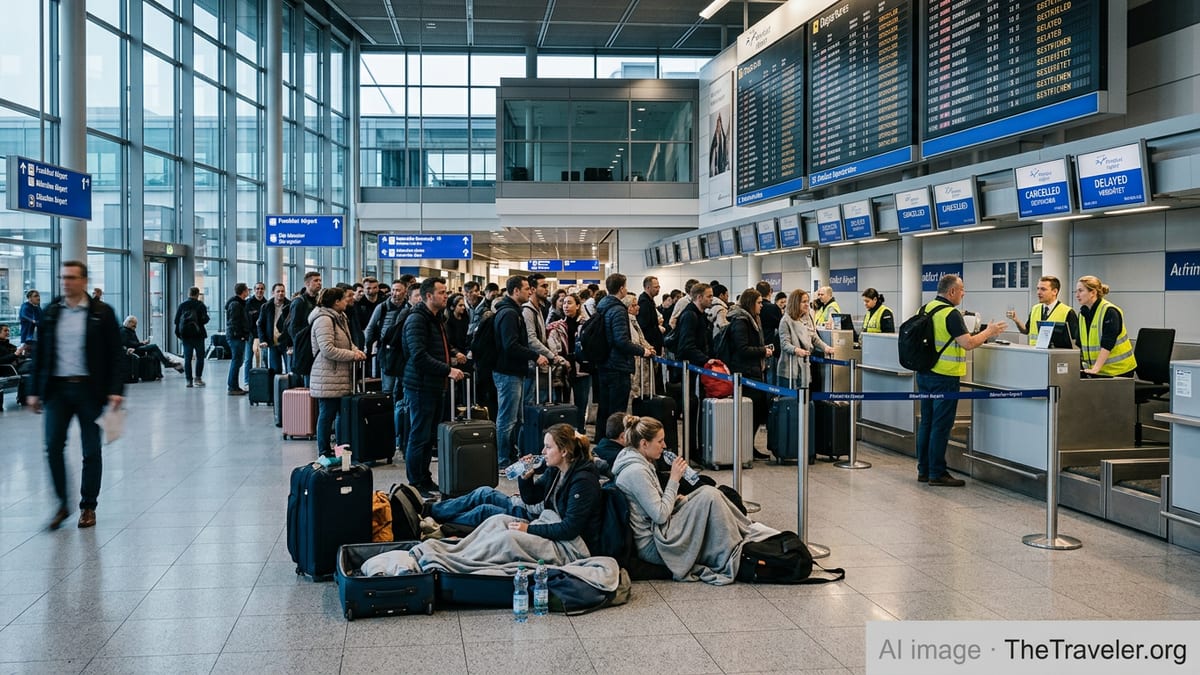
Passengers reported dense crowds in departure halls, with long queues at rebooking counters and customer service desks. In some terminals, queues for assistance stretched the length of the building as airlines struggled to cope with the sudden surge in disrupted travellers seeking alternative options.
Airport operators urged travellers not to come to the airport unless their flight was explicitly confirmed as operating, warning that many services would be grounded or subject to last minute changes. Some airports introduced access controls to manage overcrowding in departure areas.
Lufthansa at the Epicentre, Global Carriers Also Hit
Germany’s flag carrier Lufthansa sat at the centre of the disruption, with large portions of its European and domestic network cancelled as a result of the strike. The walkouts affected both short haul feeder flights and long haul services, leaving many international passengers stranded at hubs or unable to even begin their journeys.
Allied carriers and partners were also drawn into the turmoil. Flights operated by Qatar Airways, KLM and other European and Gulf airlines to and from German cities were cancelled or rescheduled as airport staffing shortages made regular operations impossible. Codeshare services were particularly affected, as passengers booked on one airline found their flight operated by another that was directly hit by the strike.
Travel agents and airline call centres across multiple time zones reported heightened call volumes as customers tried to rebook itineraries, secure refunds or find alternative routes. With seat availability tightening quickly on unaffected carriers, many travellers faced the prospect of extended delays before a replacement flight could be confirmed.
Industry analysts noted that the disruption again highlighted the vulnerability of Europe’s tightly interlinked hub system, where labour disputes in one country can swiftly cascade into global delays and missed onward connections.
Passengers Sleep in Terminals as Rebooking Backlog Grows
At Frankfurt and Munich, hundreds of travellers spent the night in terminal buildings as hotels near the airports quickly filled up. Rows of passengers lay on improvised bedding made from coats and carry on bags, while families tried to find quieter corners of the concourse to rest between announcements.
Many travellers voiced frustration at limited communication from airlines, complaining of app outages, long waits on hotlines and conflicting information between airport departure boards and carrier notifications. Some reported receiving cancellation messages only after they had already passed security, while others said their flights appeared on time until shortly before boarding was due to begin.
For international passengers without local accommodation or language skills, navigating the disruption proved especially challenging. Volunteer staff and airport information teams attempted to direct stranded travellers toward assistance desks and voucher distribution points, but bottlenecks quickly formed wherever help was available.
Consumer groups reminded affected passengers that under European air passenger rights regulations, travellers on eligible itineraries may be entitled to meals, hotel accommodation and financial compensation, depending on the circumstances of the cancellation and the length of the delay.
Knock On Effects Expected to Linger Beyond Strike Dates
Although the strike action itself was concentrated on March 12 and 13, aviation experts warned that the operational impact would likely extend through March 14 and potentially beyond. Aircraft and crews displaced by the cancellations need to be repositioned, and tightly timed schedules rebuilt to restore normal patterns.
As a result, some passengers holding tickets for the days immediately following the strike were advised to check their flight status repeatedly and be prepared for residual schedule changes. Even flights listed as on time risked late adjustments if aircraft were not in the right place or if crew had exceeded legal working hour limits.
Airlines were expected to prioritise long haul and high demand routes as they rebuilt their networks, potentially leaving thinner regional services with pared back schedules for several days. This in turn could affect onward rail and bus connections, compounding delays for travellers headed to smaller cities across Germany and neighbouring countries.
Airport authorities cautioned that security and check in queues could remain longer than normal as passengers from previously cancelled flights were re accommodated, and urged travellers to arrive earlier than usual once flying resumed in earnest.
Advice for Travellers with Upcoming German Flights
For travellers with imminent journeys involving German airports, the primary advice from both airlines and airports is to avoid heading to the terminal without a confirmed, operating flight. Digital self service tools such as airline apps and online rebooking platforms, where functioning, remain the fastest way to secure new arrangements.
Passengers already stranded in Germany were encouraged to register their situation with their airline through official channels, retain receipts for any out of pocket expenses and keep records of boarding passes and cancellation notices that may be needed for later claims. Those able to be flexible with travel dates often had better chances of finding available seats once operations begin to stabilise.
Travel experts also recommended that future travellers build additional buffer time into itineraries involving Germany in the coming days, particularly where critical connections or events are at stake. While the strike is time limited, the broader network disruption may take longer to work through.
As Germany works to restore order at its airports, the episode serves as another reminder of the fragility of global air travel in the face of labour disputes and capacity constraints, and of the importance for travellers of monitoring conditions closely right up until departure.