

More news on this day
Germany is consolidating its position as Greece’s largest tourism market in 2025, with rising arrivals and robust spending helping to propel the country’s travel revenues to fresh record levels.
Get the latest news straight to your inbox!
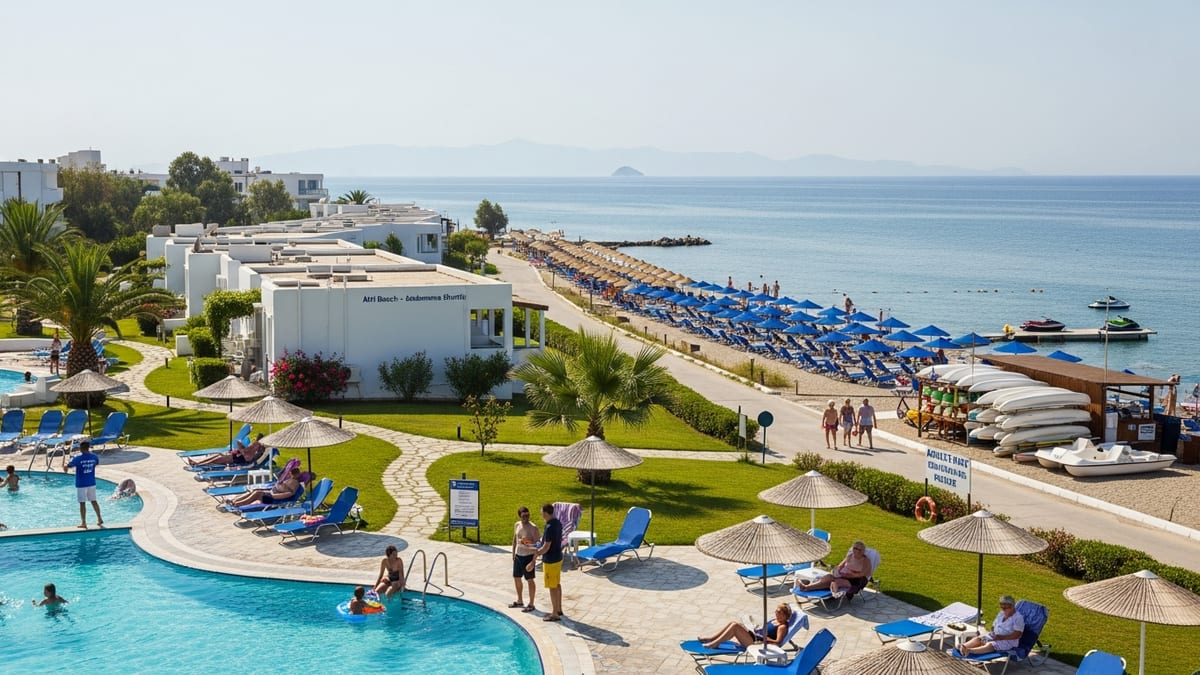
Germany Holds the Top Spot in Greece’s Visitor Rankings
Recent data for 2025 indicate that German travelers continue to form the single largest group of visitors to Greece, extending a trend that has been in place for several years. Provisional figures for the first nine months of 2025 show arrivals from Germany reaching close to 4.8 million, ahead of the United Kingdom and the United States. This follows full-year 2024 data in which Germany already led the market with more than 5.4 million visitors.
Analyses of Bank of Greece figures and sector reports suggest that Germany consistently accounts for the highest share of Greece’s inbound tourism receipts as well. For 2024, German visitors generated around 3.7 billion euros in travel receipts, more than any other single market and roughly one sixth of total tourism revenue. Early 2025 numbers point to continued strength, confirming that the German market remains central to Greece’s tourism performance.
Observers note that the German market’s resilience is especially striking given broader shifts in European travel demand, including softer trends from some other EU countries. Even as Greece sees faster percentage growth from long haul markets such as the United States, Germany’s sheer volume and stable repeat visitation keep it firmly in first place by both arrivals and receipts.
Record Revenues in 2025 Backed by Higher German Spending
Greece is on track to surpass all previous tourism revenue records in 2025, supported by both rising visitor numbers and improved per capita spending. Travel receipts had already exceeded 20 billion euros by the end of the third quarter, putting the sector well ahead of the equivalent period in 2024 and above the 21.6 billion euro level reported for the full year 2024. Sector assessments circulating in early 2026 point to total 2025 tourism revenue in the mid 20 billion euro range.
Within this broader surge, German tourists are a key driver of income growth. German-origin receipts reached approximately 3.7 billion euros in 2024 and continued to climb in 2025, with some analyses estimating an increase of around 8 to 10 percent year on year. For April 2025 alone, publicly available data show that German visitors generated more than 180 million euros in revenue, reflecting both higher arrivals and a notable rise in average spending compared with the previous year.
Industry monitoring suggests that Greece is extracting more value from each German visitor, not merely relying on volume. Average spending per trip and per overnight stay from Germany has trended upward, in part due to a stronger presence of higher category hotels, the growth of all inclusive resorts in popular islands, and greater interest in specialized experiences such as gastronomy and outdoor activities. This has helped boost receipts at a faster rate than arrivals, giving Greece an additional cushion as it works to manage rising operational and environmental costs.
New Travel Patterns Redraw the Greek Tourism Map
While German travelers have long favored destinations such as Crete, Rhodes, Kos and Corfu, recent tourism intelligence suggests that 2025 is bringing a more diversified picture. Germans are increasingly spreading their trips across a longer season, with higher numbers recorded in the shoulder months of April, May, September and October. This helps local businesses mitigate the sharp peaks and troughs that traditionally defined Greece’s summer-focused tourism calendar.
Regional data for 2023 and 2024 already showed Germany ranking first by receipts in several major Greek regions, including the South Aegean and Crete. Preliminary assessments for 2025 indicate that this dominance is being reinforced while also extending into emerging destinations. Areas such as Epirus, parts of the Peloponnese and select mainland coastal regions are seeing more German visitors attracted by hiking, nature tourism and lower crowding compared with classic island hotspots.
These shifts support Greece’s wider strategy to distribute tourism benefits more evenly across the country and the calendar. With airlines and tour operators adding capacity to secondary airports and smaller ports, German travelers are gaining easier access to lesser known islands and inland towns. The result is a more geographically balanced pattern of tourism income, with German spending reaching a wider range of local economies than in the past.
Strategic Importance for Greece’s Economy and Investment Plans
The continued strength of the German market in 2025 has significant implications for Greece’s broader economic outlook. Tourism remains one of the country’s largest export sectors by revenue, and inflows from Germany help improve the services balance, support employment and underpin investment in infrastructure. Economic studies published in 2025 highlight tourism, alongside shipping and energy, as a key contributor to Greece’s post pandemic recovery trajectory.
Investor interest in Greek tourism assets has accelerated since 2022, with new hotel openings, resort developments and upgrades of older properties targeting higher spending visitor segments. Market analyses point out that the predictable demand from Germany is a core justification for these projects, particularly in the four and five star categories. Developers and operators view the German market as both stable and responsive to quality improvements, making it a foundation for long term planning.
At the same time, the heavy reliance on a few major European source markets, led by Germany, is prompting discussion about diversification. Sector commentators underline that while Germany’s role is overwhelmingly positive, Greece also needs growth from other regions to hedge against potential economic or geopolitical shocks that could dampen German outbound travel. This has reinforced efforts to deepen ties with markets in North America, the Middle East and Asia, even as Germany remains the anchor of inbound tourism.
Challenges Ahead: Balancing Growth, Sustainability and Market Dependence
The rapid expansion of tourism in 2024 and 2025, powered in large part by German arrivals, is also sharpening focus on sustainability. Popular island destinations report pressure on water resources, waste management systems and housing availability for local workers, particularly during peak months. Analysts warn that maintaining the quality of the visitor experience is crucial if Greece wants to preserve its appeal to discerning German travelers who increasingly factor environmental and social considerations into their holiday choices.
Greek regional and municipal authorities are gradually introducing measures such as caps on certain types of short term rentals, stricter rules on coastal development and incentives for energy efficient renovations in the accommodation sector. Publicly available planning documents and expert commentary suggest that these policies aim to align tourism growth with climate and resilience goals without undermining the economic benefits brought by visitors from Germany and other key markets.
For now, all available 2025 indicators point in the same direction: German tourists are visiting Greece in record numbers, spending more than in previous years and remaining central to the country’s tourism revenue story. The challenge for Greece in the years ahead will be to maintain this strong flow of German visitors while broadening its global reach and managing the environmental footprint of a sector that continues to set new records.