

More news on this day
Escalating tensions around the Strait of Hormuz are rippling through Europe’s cruise market, with Germany and Greece contending with stranded ships in Persian Gulf ports, widespread itinerary scrambles and a wave of cancellations affecting thousands of passengers ahead of the key summer season.
Get the latest news straight to your inbox!
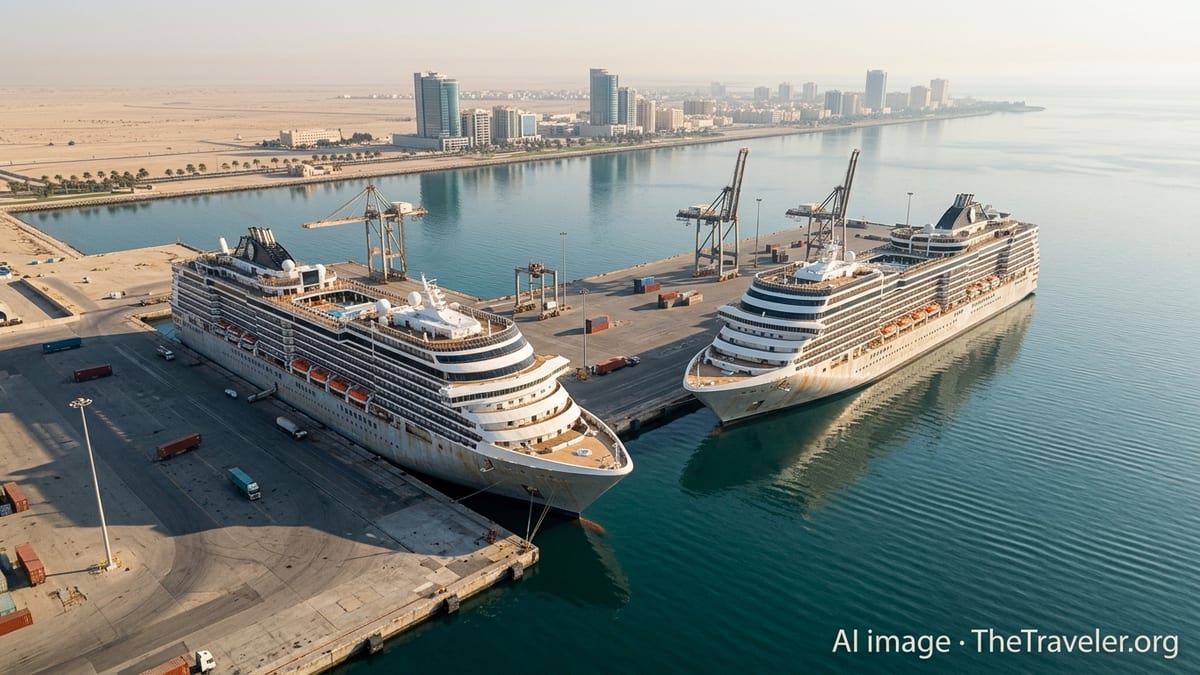
Strait of Hormuz Crisis Leaves Cruise Ships Idle
The latest phase of the Middle East crisis, triggered by large-scale strikes on Iran at the end of February 2026, has sharply curtailed commercial traffic through the Strait of Hormuz. Iranian military warnings have not resulted in a formally recognized legal closure, but radio transmissions and elevated security risks have been enough to keep many vessels, including cruise ships, in port rather than attempting the narrow passage out to the Arabian Sea.
Publicly available situational briefings describe a pattern familiar from recent tanker disruptions: cruise vessels are remaining alongside in Gulf ports such as Dubai and Doha, awaiting clarity on safe corridors and insurance coverage. Operational updates highlight severe GPS jamming, shifting naval activity and new conflict surcharges, all of which complicate route planning and increase costs for passenger lines.
Industry overviews of the Strait of Hormuz crisis note that cruise traffic in the Persian Gulf has effectively been paused, with several large ships unable to reposition to their next seasonal homes in the Mediterranean. This standstill is now feeding directly into Europe’s tourism outlook as operators based in Germany and Greece reassess the viability of advertised itineraries from spring 2026 onward.
German Cruise Brands Scrap Gulf Seasons and Reposition Plans
Germany’s cruise sector, one of Europe’s largest source markets, is feeling the impact most visibly through cancelled Gulf programs and stalled repositioning voyages. Reports on the German-language financial and travel wires in mid-March point to AIDA Cruises halting its Orient season for the ship AIDAprima for winter 2026–27, citing the deteriorating security picture and uncertainty over access to the Strait of Hormuz.
Analysts quoted in those market notes interpret AIDA’s withdrawal from Persian Gulf itineraries as part of a wider pivot away from conflict-exposed routes and toward more stable regions such as the Mediterranean, Northern Europe and the Canary Islands. For German travelers who had booked round-trips from Dubai or Abu Dhabi, this translates into cancellations, rebookings on alternative sailings and, in some cases, complicated flight changes at relatively short notice.
Discussion within the cruise community suggests that MSC Cruises, which has a strong presence in the German-speaking market, is also grappling with the problem of having one of its newest vessels, MSC Euribia, stuck in the Gulf region. With the ship unable to safely reach the Suez Canal and continue to Europe, questions are mounting over whether its planned summer program from North Sea and Baltic ports can proceed as sold, or whether those departures will be reassigned to other tonnage or removed from schedules entirely.
The commercial implications for German tour operators and travel agents are significant. Package holidays that bundled flights from Germany with Gulf cruises are being unraveled, leaving suppliers working through compensation policies while trying to preserve future bookings. The situation is further complicated by higher insurance premiums and evolving advisories from European governments about travel to parts of the Middle East.
Greek-Linked Lines Confront Stranded Ships and Passenger Backlogs
Greece, a leading cruise homeport and maritime nation, is entangled in the crisis on multiple fronts. A recent advisory from the Greek maritime administration urged Greek-flagged vessels to exercise maximum caution in high-risk Middle Eastern waters, underscoring official concern over missile and drone threats, port infrastructure damage and electronic interference in the wider Gulf and Hormuz approaches.
At the same time, Greece-based cruise operators that had embraced Gulf itineraries in recent years are now dealing with ships and guests stuck far from home waters. Coverage of the situation around Doha describes Celestyal Journey, operated by Athens-headquartered Celestyal Cruises, as remaining in Qatari waters with several hundred passengers on board after the escalation of conflict and intermittent closures of airspace in parts of the region.
Those reports indicate that the ship’s onward sailing options are constrained by both security considerations and limited port slots for unscheduled calls. With flights into and out of certain Gulf airports reduced or rerouted, arranging repatriation for passengers has become logistically complex. Travel intermediaries in Greece, Russia and other source markets have been scrambling to provide guidance to affected travelers who may be facing extended stays at sea or in local hotels until corridors reopen.
The disruption also hits Greece’s domestic cruise ambitions. Greek ports such as Piraeus and Heraklion had been marketed as convenient starting or ending points for extended “Grand Voyages” that linked the eastern Mediterranean with the Gulf. With ships unable to complete those repositioning legs, capacity forecasts for Greek homeports later in 2026 are under review, and local tourism businesses that depend on cruise calls are watching developments in the Gulf closely.
Wider Mediterranean Cruise Schedules Thrown Into Question
Although the flashpoint is thousands of kilometers away, the crisis around the Strait of Hormuz is now reshaping Mediterranean cruise offerings for 2026. Many Gulf-based ships were scheduled to sail repositioning voyages through the Red Sea and Suez Canal in spring, before dispersing to summer deployments across Spain, Italy, Greece and the Adriatic.
With multiple vessels effectively trapped inside the Gulf, cruise lines are reassessing how much capacity they can realistically field in European waters. Industry briefings compiled in early and mid-March describe scenarios in which MSC, TUI and Celestyal adjust their fleets, either by redeploying ships already in Europe or by thinning out certain itineraries to maintain others. That could mean fewer departures from secondary ports and more emphasis on high-yield homeports such as Barcelona, Civitavecchia and Piraeus.
Travel forums and booking platforms are already reflecting the uncertainty. Travelers report receiving notices of itinerary changes that replace Middle Eastern ports with additional sea days or alternative Mediterranean stops, while some departures are being removed from sale altogether pending operational decisions. For German and Greek tourists planning complex trips that mix land stays with cruises, this introduces an extra layer of risk at a time when airfares and hotel prices remain elevated.
Port authorities around the Mediterranean are monitoring the situation as they plan staffing and infrastructure needs for the high season. Some harbor bulletins continue to list normal operations, but cruise schedules may shift with little warning if ships currently berthed in the Gulf fail to arrive. For destinations that rely heavily on day-spend from cruise visitors, even a small reduction in calls can translate into noticeable declines in local revenue.
Insurance, Security Costs and Traveler Confidence
Behind the visible disruptions in port calls and itineraries lies a sharp increase in operating costs. Maritime security circulars and shipping market analyses describe rising war-risk premiums, new conflict-related surcharges and higher bunker fuel costs for routes that divert away from the Gulf and surrounding airspace. For cruise operators, these expenses are arriving just as they seek to lock in bookings for the 2026 and 2027 seasons.
German and Greek cruise lines, many of which are part of larger European groups, face difficult choices over whether to absorb these additional costs, pass them on to customers through higher fares, or scale back itineraries that cross or approach conflict zones. Analysts following the sector suggest that, in the short term, some lines may prioritize protecting brand reputation and safety records over maximizing capacity, even if that means reduced profitability.
The crisis also weighs on traveler confidence. Surveys and anecdotal evidence from online communities show that prospective passengers are increasingly scrutinizing route maps for proximity to the Middle East, and in some cases shifting bookings from repositioning voyages to more contained regional cruises. Greece and Germany, as both major source markets and home bases for significant cruise brands, are likely to see this caution reflected in booking patterns through at least the next year.
For now, the outlook hinges on whether safe, insurable passage through and around the Strait of Hormuz can be restored. Until that happens, stranded ships in the Persian Gulf will remain a potent symbol of how quickly geopolitical shocks can upend the carefully choreographed global cruise calendar.