

More news on this day
Germany and Spain are set to become the strongest engines of travel and tourism investment growth across the G20 over the next decade, with new projections indicating that sustained capital spending in both markets will play an outsized role in reshaping global competitiveness through 2035.
Get the latest news straight to your inbox!
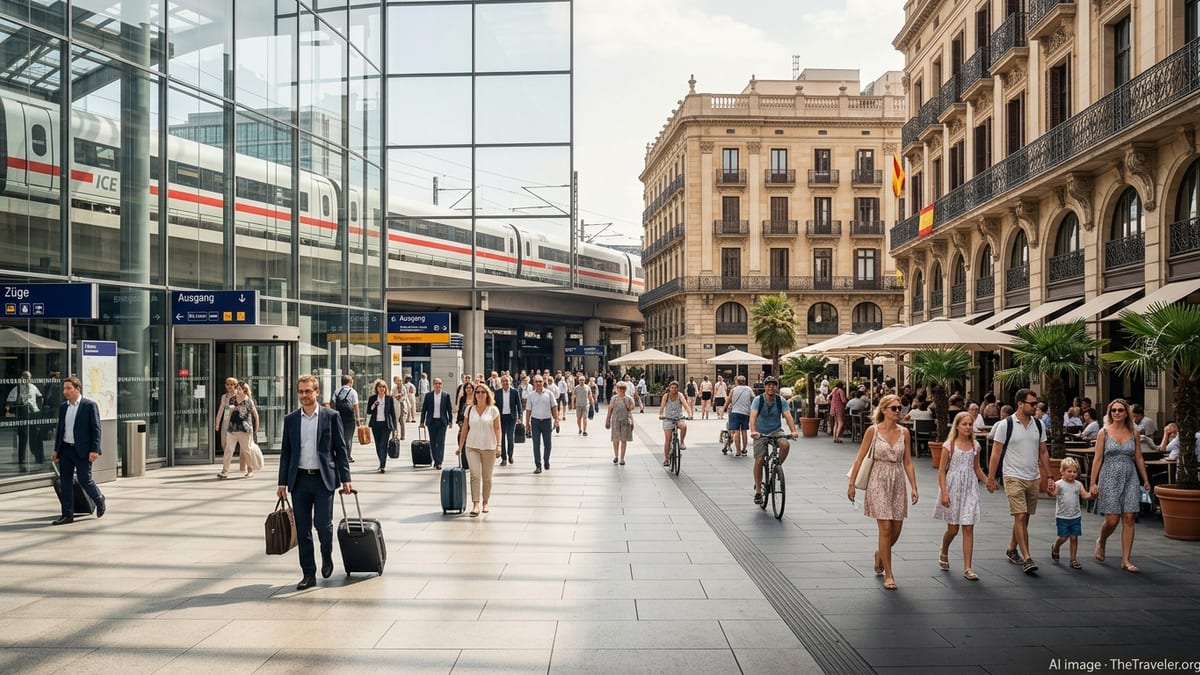
WTTC Forecasts Trillion-Dollar Investment Wave
Fresh analysis from the World Travel & Tourism Council highlights a powerful shift in long-term capital flows toward tourism infrastructure, with projected investment of around 12.5 trillion US dollars across the G20 and Spain between now and 2035. The research, produced with Oxford Economics and unveiled in Berlin in March 2026, frames investment as a core driver of future competitiveness rather than a secondary outcome of visitor growth.
Publicly available summaries of the report indicate that travel and tourism demand across the G20 and Spain is expected to expand at an average annual rate of just over 3 percent through the mid-2030s. Within that overall picture, Germany and Spain stand out for the pace and composition of capital investment, from airports and rail to hotels, cultural attractions and low-carbon technologies.
The WTTC’s long-range Economic Impact Research combines historic data from 2019 to 2024 with projections for 2025 and 2035, allowing direct comparison of countries’ capital expenditure trajectories. While total global investment in the sector surpassed 1 trillion US dollars in 2024 and is forecast to rise further, Germany and Spain are among the markets expected to increase tourism’s share of national investment most sharply over the coming decade.
The emphasis on capital formation reflects a broader trend in tourism policy debates, as governments look beyond visitor numbers to the quality, resilience and sustainability of growth. Investment in transport links, digital infrastructure and low-emission operations is increasingly seen as a prerequisite for remaining competitive in a crowded global marketplace.
Germany Emerges as a High-Value Investment Hub
Germany already ranks among the world’s most powerful travel and tourism economies in absolute terms, with WTTC trend reports placing the country in the global top tier for sector GDP contribution. Recent data show that Germany’s travel and tourism capital investment surpassed 40 billion US dollars in 2024, ranking it near the top of the G20 for annual spending on tourism-related assets.
According to available economic impact tables, Germany’s investment profile is characterized by high-value projects that integrate tourism with broader national priorities such as green mobility, rail modernization and urban regeneration. Upgrades to long-distance rail connections, expansion of regional airports and redevelopment of city districts into mixed-use neighborhoods with strong cultural and conference offerings all contribute to the sector’s capital base.
Analysts point to Germany’s strong position in foreign direct investment, diversified industrial base and focus on sustainability as reasons the country is expected to outpace many peers in tourism investment growth, even if short-term visitor numbers are growing more slowly than in some Mediterranean destinations. The sector’s resilience during recent economic headwinds, supported by domestic travel and business events, is also seen as a foundation for continued infrastructure spending.
By 2035, the WTTC’s global projections suggest that travel and tourism will represent a larger share of Germany’s overall economic activity than before the pandemic, with capital investment helping to shift the country further toward experience-based and services-led growth. That trajectory places Germany among the G20 leaders in aligning tourism investment with broader innovation and climate objectives.
Spain’s Record Tourism Boom Feeds Long-Term Spending
Spain enters the investment cycle from a position of exceptional demand strength. National statistics and recent international coverage show that the country welcomed close to 97 million foreign visitors in 2025, a new record in a sequence of post-pandemic highs. Tourism’s overall contribution to Spain’s economy has climbed to the mid-teens as a share of GDP, underscoring its role as a structural pillar rather than a niche industry.
WTTC economic impact research for Spain indicates that, looking ahead to 2035, the country’s travel and tourism sector could generate well over 300 billion euros annually in GDP terms, with jobs rising toward four million. Achieving that scale depends heavily on continued capital investment in transport, accommodation, destination management and environmental protection, areas where Spain has been accelerating spending.
Recent WTTC rankings place Spain within the G20 cohort for tourism capital investment, with annual spending in the mid-tens of billions of US dollars and a growth outlook that outperforms many advanced economies. Investment is particularly visible in airport expansions, high-speed rail links connecting interior regions with coastal hubs, and retrofitting of hotel stock to meet higher energy-efficiency standards.
Policy documents and industry commentary emphasize that Spain is using the current tourism boom to pivot toward a model that privileges value over volume, with investments targeting seasonality management, cultural offerings beyond the main beach destinations and digital systems to monitor visitor flows. These choices are expected to support the country’s projected leadership in investment growth within the wider G20 grouping.
Investment Focus Shifts to Sustainability and Resilience
The WTTC’s new capital investment report underscores that the quality of spending, not just the headline totals, will define which countries emerge strongest by 2035. Germany and Spain both feature prominently in discussions of sustainable tourism investment, with a visible tilt toward low-carbon transport, energy-efficient buildings and climate adaptation in coastal and riverine areas.
In Germany, tourism-linked investment overlaps significantly with the decarbonization of transport, including electrified rail corridors and greener airport operations. City strategies increasingly prioritize walkable historic centers, cycling infrastructure and expanded public transit, investments that serve residents as well as visitors while reducing the environmental footprint per trip.
Spain, for its part, is channeling funds into water management, renewable energy integration in hotels and resorts, and preservation of heritage sites that anchor cultural tourism. Regional authorities are deploying digital tools to manage visitor flows in popular city centers and natural parks, requiring technology upgrades and data platforms funded through a mix of public and private capital.
Both countries are also investing in workforce skills and destination management capabilities, areas that the WTTC identifies as critical to aligning long-term demand growth with community well-being. These softer forms of investment, while less visible than airport terminals or new rail lines, are expected to shape the competitiveness rankings that underlie the forecast leadership of Germany and Spain within the G20 tourism landscape.
Implications for G20 Tourism Competition
The projected leadership of Germany and Spain in travel and tourism investment growth has implications for the broader G20, where several large markets face slower expansion or constrained public budgets. Reports note that while global tourism demand is expected to keep rising, some major economies are experiencing softer growth, leaving room for strongly positioned European destinations to capture a larger share of high-spend travelers and business events.
For competitors across the G20, from North America to Asia-Pacific, the emerging picture suggests that catching up will require not only greater capital volumes but also more targeted investment strategies. These include upgrading digital border processes, adopting more ambitious sustainability standards and investing in secondary cities and regions that can relieve pressure on flagship destinations.
Germany’s and Spain’s trajectories also highlight the growing importance of coordination between tourism, transport, climate and industrial policies. By embedding travel and tourism priorities into national investment frameworks, both countries are signaling to private investors that tourism-related assets remain a long-term opportunity, even in a period of shifting global demand patterns.
As the WTTC and other observers track progress toward 2035, the performance of Germany and Spain is likely to serve as a reference point for how advanced economies can use sustained, strategic tourism investment to drive competitiveness, support jobs and accelerate the transition to more sustainable and resilient travel systems.