

More news on this day
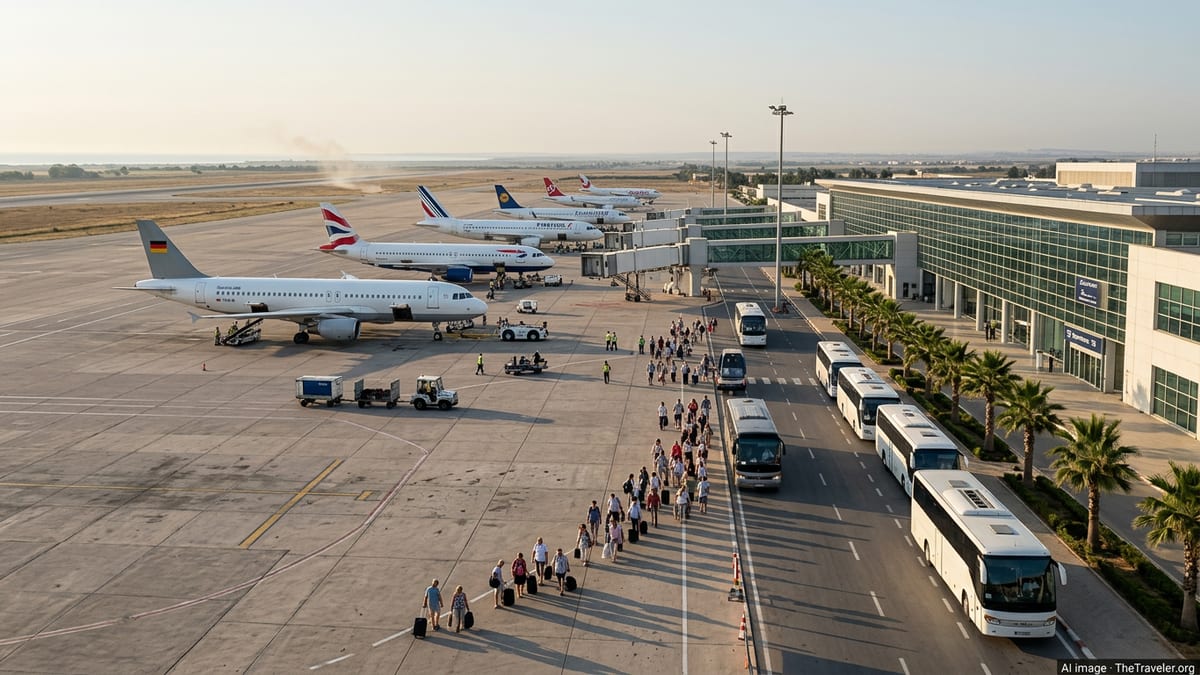
Germany is emerging as a pivotal player in Tunisia’s tourism rebound, joining the United Kingdom, France, Poland and other European markets as new and expanded air links through Enfidha-Hammamet International Airport transform connectivity, lift international arrivals and unlock faster access to the country’s resort-dotted eastern coastline.
Get the latest news straight to your inbox!
European Arrivals Power Tunisia’s Tourism Revival
Publicly available tourism data for 2025 indicate that Tunisia has moved firmly back into growth territory, with international arrivals surpassing 10 million visitors and moving toward the government’s 11 million target. Reports on sector performance show that this recovery has been largely driven by European markets, led by France, the United Kingdom, Germany, Italy and Poland, which together account for a substantial share of leisure arrivals to coastal resorts.
France remains Tunisia’s largest European source market, but the United Kingdom has registered the sharpest growth, with several outlets noting increases of about 40 percent in British arrivals compared with the previous year. Industry coverage attributes this surge to expanded air capacity and targeted promotional campaigns positioning Tunisia as a value-oriented Mediterranean alternative to higher-priced eurozone destinations.
Germany and Poland, though smaller in absolute volume than France, are highlighted as strategically important for diversifying Tunisia’s tourism base. Market reports point to consistent German demand for all-inclusive seaside stays and organized tours, while Poland’s outbound travel sector has been quick to rebuild charter programs to Tunisia’s eastern coast, often centered on Enfidha-Hammamet Airport.
Across Europe, Tunisia’s “Vivez l’instant Tunisie” promotional drive has been deployed in multiple languages, with campaigns visible in Germany, the United Kingdom, France, Poland and other key markets. The initiative is designed to reposition Tunisia as a modern, experience-driven destination a decade after the 2015 Sousse attack, with authorities seeking to highlight beach stays, cultural itineraries and emerging sustainable tourism routes.
Enfidha-Hammamet Airport Becomes a Strategic Hub
Enfidha-Hammamet International Airport, located between the historic resort city of Hammamet and the Sousse coastline, has emerged as a central gateway for Tunisia’s mass-market tourism. Airport statistics made available for 2024 show a steady rise in flight movements and passenger throughput, with charter and seasonal traffic from European leisure markets forming the bulk of operations.
The airport’s geographic position along Tunisia’s eastern seaboard allows tour operators to serve a broad cluster of resort areas within two hours by road, including Hammamet, Yasmine Hammamet, Sousse, Port El Kantaoui, Monastir and Mahdia. Travel industry commentary notes that this catchment area gives airlines and tour companies greater flexibility in combining hotels and packages for travelers from Germany, the UK, France and Central and Eastern Europe.
Operators of Enfidha-Hammamet Airport have highlighted in recent publications that 2024 traffic included a strong presence from the UK, France, Germany and Poland, with dedicated charter programs feeding into beach resorts. Reports referencing airport data indicate that Poland in particular generated significant volumes of charter flights, reflecting strong demand for packaged holidays along Tunisia’s coast.
Industry observers describe Enfidha-Hammamet as a “pure leisure” airport, with limited scheduled point-to-point traffic outside of peak season, but a dense concentration of flights on weekends and holiday periods. This model closely mirrors the operational profile of other Mediterranean tourist airports, allowing carriers and tour operators to match capacity precisely to seasonal peaks in European demand.
Germany Joins UK, France and Poland in Expanding Air Links
German tour operators and leisure airlines are increasingly using Enfidha-Hammamet as a primary entry point for package holidays to Tunisia. TUI fly Deutschland, among other carriers, maintains seasonal links between German regional airports and Tunisian coastal gateways, with publicly accessible route information listing Enfidha as one of the airline’s Tunisian destinations alongside Monastir and Djerba.
While some reports have noted short-term fluctuations in German visitor numbers linked to aircraft availability and charter scheduling, the medium-term trend points toward renewed engagement with Tunisia as a sun-and-sea destination for German travelers. Tourism analyses published in late 2025 emphasize that Germany remains among Tunisia’s top European source markets, alongside France, the UK and Italy, with particular strength in organized group and family travel.
In parallel, the United Kingdom and Poland have reinforced their presence through expanded charter programs and additional frequencies into Enfidha-Hammamet and Monastir. Sector coverage credits British low-cost carriers and integrated tour operators with adding capacity out of regional UK airports, while Polish travel companies have programmed dedicated seasonal flights for resort stays, often with guaranteed hotel allotments in Hammamet and Sousse.
France continues to underpin Tunisia’s tourist flows, supported by dense air connectivity from Paris and regional French airports to Tunis, Enfidha, Monastir and Djerba. The combination of French, British, German and Polish demand is reshaping the route map into Enfidha-Hammamet, elevating the airport from a secondary facility to a central hub in Tunisia’s tourism network.
Charter Flight Growth Supercharges Resort Access
Charter flight activity has been a defining feature of Tunisia’s recent tourism rebound. Trade publications tracking flight programs into Enfidha-Hammamet point to a busy schedule of charter arrivals from the UK, Germany, France, Poland, the Czech Republic and Scandinavian markets during the 2024 and 2025 summer seasons. Many of these operations are tied to pre-packaged holidays sold through large tour operators and online travel agencies.
The charter model allows companies to bundle flights, transfers and hotel stays into price-competitive packages, a proposition that has resonated strongly in price-sensitive markets such as Germany and Poland. Analysts note that Tunisia’s non-euro currency gives it an additional affordability edge compared with some rival Mediterranean destinations, enabling operators to market “all-inclusive” stays at comparatively lower headline prices.
For Enfidha-Hammamet Airport, the concentration of charter traffic translates into intensive peak-period operations, with clusters of arrivals and departures timed for hotel check-in windows. Airport performance summaries for 2024 highlight the importance of handling capacity, ground operations and coach logistics to ensure smooth transfers from aircraft to resorts, especially during high-season changeover days.
The growth in charter services is also reshaping traveler geography within Tunisia. Because Enfidha-Hammamet sits roughly midway along the main resort corridor, more visitors are being routed directly to Hammamet and Sousse rather than via Tunis-Carthage or Monastir alone. This has supported renewed investment interest in hotels and ancillary services across the broader Cap Bon and Sahel regions.
New Connectivity Catalyzes Investment and Diversification
The momentum at Enfidha-Hammamet Airport is feeding into wider ambitions for Tunisia’s tourism economy. National tourism strategies outlined in recent campaigns emphasize not only headline visitor numbers but also product diversification and higher value per visitor. Public communications from tourism bodies highlight new themed itineraries, including culinary, cinematic and UNESCO heritage routes designed to encourage travelers to explore beyond beach resorts.
Improved air access from Germany, the UK, France, Poland and other European markets is seen by analysts as a prerequisite for this diversification push. Easier entry via Enfidha-Hammamet lowers travel time to coastal resorts, freeing up days for excursions into the interior, including trips to Kairouan, El Jem, the Sahara gateway around Douz and the mountain oases in the south-west.
Regional data from the Sousse and Hammamet areas indicate rising hotel occupancy and a gradual lengthening of average stay compared with the immediate post-pandemic years. Industry commentary suggests that reliable weekly and biweekly flights from major European cities have given hoteliers more confidence to renovate properties, reopen previously mothballed capacity and invest in new experiences such as wellness facilities, golf, water sports and cultural programming.
Looking ahead to upcoming seasons, aviation and tourism observers anticipate continued adjustments in capacity and routing as airlines respond to demand patterns and fuel prices. However, with Germany now firmly aligned alongside the UK, France, Poland and other European markets in supporting charter growth into Enfidha-Hammamet, Tunisia’s eastern coastline appears well positioned to sustain its tourism revival and compete more directly with established Mediterranean rivals.