

More news on this day
Germany has expanded its Europe-wide travel advisory to highlight growing risks of political violence, tighter border controls and stricter airport security across Switzerland and several other popular destinations including Estonia, France, the Netherlands, Finland and Spain, as governments respond to a deteriorating regional security climate and new requirements for travelers entering and moving within the Schengen area.
Get the latest news straight to your inbox!
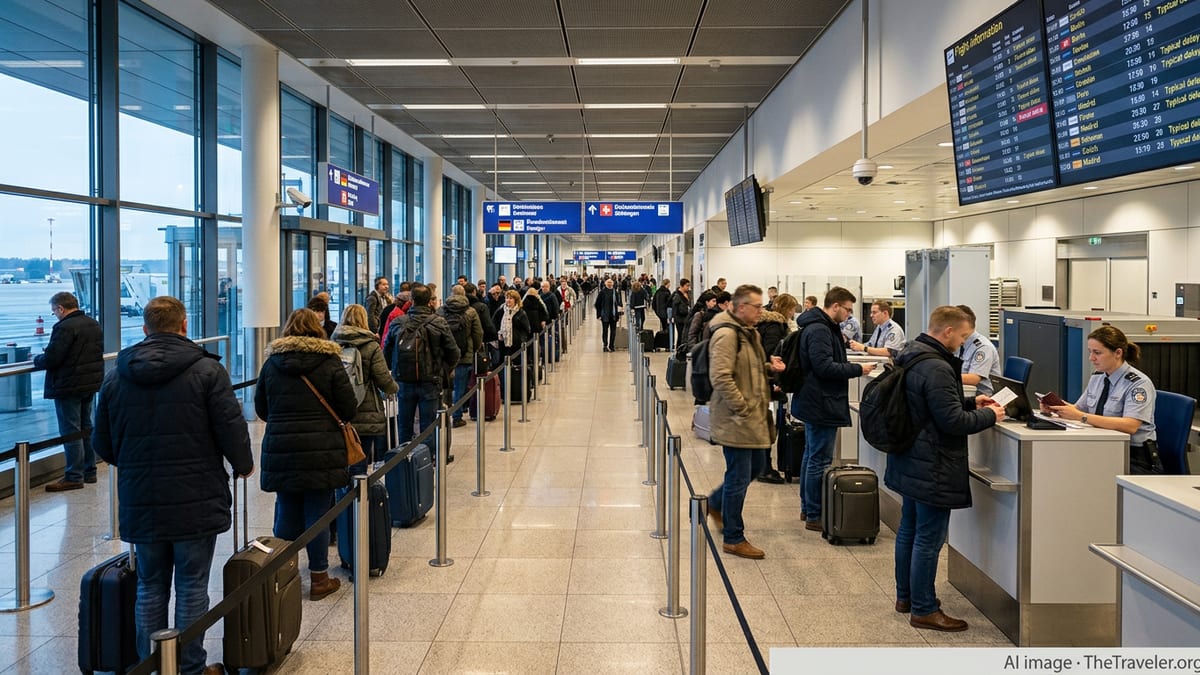
New German Advisory Highlights Shifting European Risk Landscape
The latest advisory, updated in late February 2026, underscores what Berlin characterizes as a broad worsening of the security environment across Europe, driven by persistent terrorism concerns, regional geopolitical tensions and a rise in politically motivated street violence. Publicly available information shows that German guidance now groups multiple European destinations together, cautioning that large demonstrations, counter‑protests and high‑profile political events may pose elevated risks for visitors, particularly in capital cities and major tourist hubs.
Reports indicate that Switzerland has joined a list of countries where travelers are urged to remain alert to possible unrest around rallies related to the conflicts in the Middle East and Ukraine, as well as domestic political disputes. Security analyses published in early 2026 also point to an uptick in extremist activity and hate‑motivated incidents across several Western European states, with Germany, France, the Netherlands and Spain all recording politically tinged violence and sporadic terror plots in recent years.
At the same time, commercial risk maps for 2026 continue to classify most of Western and Central Europe, including Switzerland, Finland and the Netherlands, as generally low‑risk destinations with stable institutions and relatively low overall crime rates. Travel security firms describe the current situation less as a reason to avoid these countries entirely and more as a call for visitors to adopt more structured personal risk management, particularly when attending crowded public events or moving through major transport hubs.
European‑focused travel security assessments note that Germany itself remains in the low‑to‑moderate risk band, despite a series of foiled plots and isolated attacks. Analysts point out that the region’s high baseline of policing, surveillance and emergency response capacity continues to mitigate the likelihood of mass‑casualty incidents, even as the threat environment becomes more complex.
Switzerland and Schengen Neighbors Tighten Border and Airport Controls
Germany’s advisory comes as several Schengen states, including Switzerland, maintain or reintroduce temporary internal border controls in response to security concerns and irregular migration pressures. Policy trackers show that countries such as Germany, France, Spain, the Netherlands and Switzerland have used Schengen flexibility clauses to reinstate checks at selected land and air borders into 2026, a trend that began after a series of crises but has now become more entrenched.
Travel industry bulletins describe a patchwork of measures across the bloc, with some states focusing on road and rail crossings and others emphasizing identity checks at airports and ferry terminals. For travelers, the practical impact is longer queues and more frequent document inspections on routes that once felt entirely frictionless, including between Germany and Switzerland and along key corridors linking France, Spain and the Benelux countries.
Airports in continental Europe are also preparing for additional layers of screening as new entry systems for non‑EU nationals come online. European Commission materials on upcoming travel technology changes highlight that passport scans, biometric collection and pre‑travel authorizations will play a greater role for visitors from visa‑exempt countries, including the United States, Canada and the United Kingdom. German guidance now echoes these points, advising travelers to build in more time at departure and arrival airports to accommodate extra checks.
Aviation associations have repeatedly warned that without sufficient staffing and better coordination between border agencies and airport operators, the combination of temporary border controls and new digital systems could create significant bottlenecks at peak travel times. Germany’s advisory reflects those concerns by flagging the potential for delays and missed connections at major hubs across France, Spain, the Netherlands, Germany and Switzerland, particularly during the spring and summer holiday waves.
Enhanced Travel Document Rules Catch Unprepared Visitors
The German advisory reiterates stricter expectations around travel documents that have steadily hardened across Europe in recent years. Guidance harmonized with European Union practice specifies that passports for most non‑EU visitors must typically be valid for at least three months beyond the intended departure date from the Schengen area, a rule that is increasingly being enforced at airline check‑in counters and border posts.
Travel insurance and consular briefings note that a notable proportion of passengers have been denied boarding in recent audit periods because their passports did not meet validity or blank‑page requirements, or because identity cards used by EU and Schengen‑associated citizens did not comply with newer biometric standards. German‑language advisory material now highlights these pitfalls and urges travelers to verify not only validity dates but also whether their documents meet machine‑readable and photo quality criteria.
Switzerland, although not an EU member, applies Schengen rules on external borders and has aligned many of its document requirements with its neighbors. Public information from Swiss authorities shows similar language warning that even short‑notice weekend trips to neighboring countries may be disrupted if passports or national identity cards are damaged, close to expiry or do not match airline reservations exactly.
Analysts observing these developments argue that Europe’s evolving border regime is shifting more responsibility onto individual travelers and corporate travel managers. In this environment, Germany’s advisory is seen as part of a wider movement in which states encourage citizens to treat document compliance, pre‑travel registration and flexible itineraries as integral components of safe and efficient travel, rather than administrative afterthoughts.
Political Violence, Protests and Hate‑Motivated Incidents Under Scrutiny
Beyond border and document issues, the expanded German advisory places particular emphasis on the risk of political violence and social tensions spilling into public spaces frequented by visitors. Publicly accessible incident databases and recent media coverage document a series of politically motivated attacks, threats and clashes across the continent, often linked to far‑right or extremist networks, radicalized lone actors or passions inflamed by overseas conflicts.
Germany and France have both experienced high‑profile attacks and foiled plots in recent years, including incidents targeting Christmas markets, religious communities and political events. In countries like the Netherlands, Spain and Finland, authorities and community groups have reported rising hostility toward minority populations and migrants, sometimes accompanied by street violence around demonstrations or football matches.
Switzerland, long perceived as insulated from such tensions, has also seen its social fabric tested. Recent reporting has drawn attention to an increase in antisemitic incidents since late 2023, including a violent assault on a visibly Jewish man in Zurich in February 2026. Civil society organizations in Switzerland and neighboring states have warned that such incidents, while still relatively rare, reflect a broader normalization of hate speech and conspiracy‑driven narratives that can make public life feel less predictable for visitors and residents alike.
Security analysts emphasize that statistically these countries remain among the safest in the world for tourists, with very low rates of random violent crime against visitors. However, Germany’s advisory underlines that the nature of risk is evolving, with a greater focus on being caught up in targeted events, spontaneous protests or hate‑motivated harassment rather than generalized insecurity.
What Travelers Should Expect Across Switzerland and Wider Europe
For travelers planning trips to Switzerland, Estonia, France, the Netherlands, Finland, Spain and other European destinations identified in the German advisory, the practical implications are nuanced rather than alarmist. Publicly available assessments from European and international security indexes continue to rank these states as low‑risk destinations compared with most of the world, yet they also flag rising concerns around cyber threats, disinformation, social polarization and the potential for localized unrest.
Visitors can expect more visible security at major transport hubs, tourist attractions and political venues, including armed patrols in airports and train stations, bag checks at large events and temporary closures around protests or high‑level summits. Airlines and rail operators are increasingly proactive in adjusting schedules or rerouting services in response to security alerts, storms or industrial action, which means itineraries may change at short notice even when the destination itself remains calm.
Germany’s updated guidance also implicitly acknowledges the interconnectedness of European travel. Disruptions in one country, such as border closures or airspace restrictions linked to the conflict with Iran or other regional crises, can quickly cascade across the network of connecting flights and cross‑border trains that carry millions of travelers each season. Tourists moving between Switzerland, Germany, France and Spain are therefore advised to monitor developments across the wider region, not only in their immediate destination.
Industry observers suggest that the emerging pattern is not a retreat from tourism but a recalibration of expectations. Travelers are being encouraged to build more slack into their schedules, keep digital and physical copies of key documents, stay informed via trusted news outlets and official advisories from their own governments, and exercise heightened situational awareness in crowds and politically sensitive spaces. Within this framework, the German advisory is positioned as a tool for informed decision‑making rather than a call to avoid Europe’s most visited destinations.