

More news on this day
Travelers moving between Germany, Poland and Lithuania are being warned to expect longer queues and tighter inspections at major road and rail crossings after Berlin confirmed a fresh six month extension of internal Schengen border checks, joining Warsaw and Vilnius in prolonging temporary controls that are reshaping movement across the bloc’s eastern flank.
Get the latest news straight to your inbox!
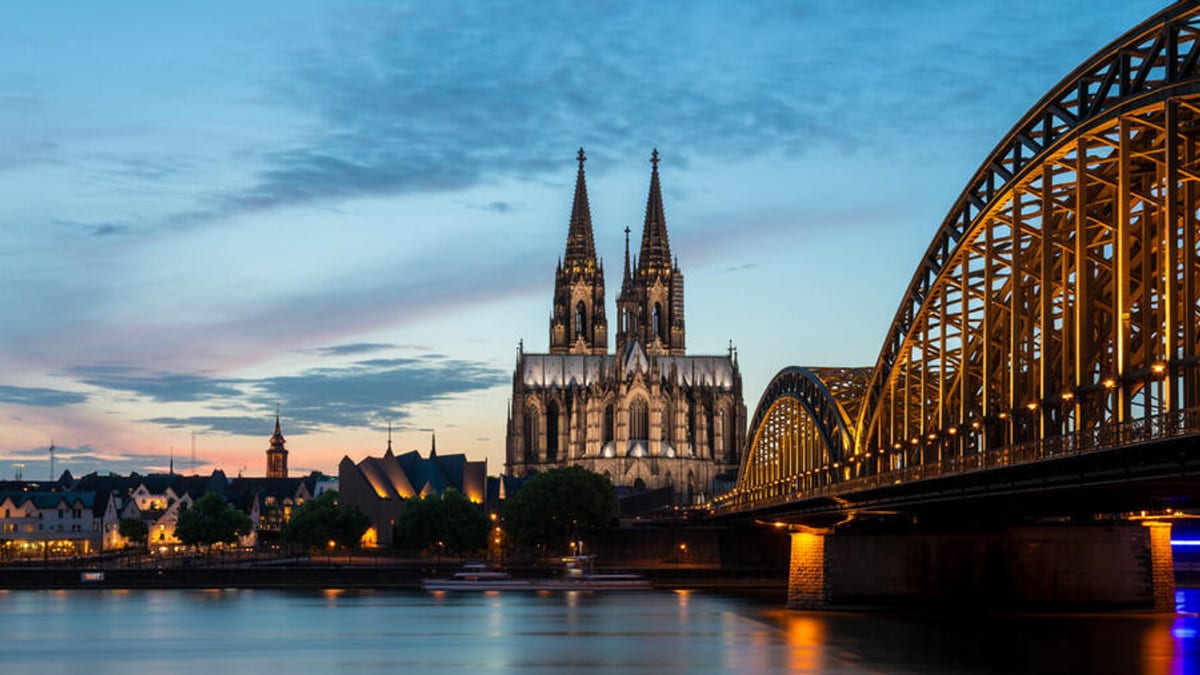
Image by Global Travel Alerts, Advisories, International Travel Alerts
Six Month Extension Puts Focus Back On Schengen’s Fragility
The latest German decision builds on a series of temporary measures first introduced in 2023 in response to rising irregular migration and concerns about cross border smuggling networks. Publicly available information shows that checks initially focused on Germany’s frontiers with Poland and Czechia before being widened to additional neighboring states in 2024 under the Schengen Borders Code provisions for serious threats to internal security.
By opting for another six month extension, Germany now aligns more closely with Poland and Lithuania, which have both maintained reinforced controls on key land corridors linking the Baltic region with the rest of the European Union. Reports indicate that Polish checks on routes from Germany and Lithuania, and Lithuanian monitoring of traffic from Belarus and Poland, have already slowed movements for commuters and freight hauliers who once relied on seamless Schengen travel.
The Schengen framework allows internal border checks only as a last resort and, in principle, for limited periods. However, successive notifications to Brussels and new security justifications have led to a patchwork of long running controls across the zone, particularly along migration routes heading from the EU’s eastern and south eastern borders toward northern and western Europe.
For travelers, the legal nuances matter less than the practical effect: more documents being inspected, more vehicles pulled aside and more time spent on approaches to crossings that, until a few years ago, were often little more than a reminder that a border existed at all.
Delays Building At Major Road And Rail Crossings
Early evidence from regional media and transport operators points to mounting congestion at several main crossing points between Germany and Poland, including busy motorway bridges and railway links used by both long distance and regional services. Publicly available coverage describes tailbacks of cars and trucks stretching for several kilometers at peak times when officers step up inspections, particularly on weekends and at the start and end of school holidays.
Long distance coach companies and freight carriers have begun updating timetables and delivery windows to factor in the new reality of unpredictable hold ups. Some logistics firms reportedly recommend that drivers add at least one extra hour to cross between Germany and Poland, with more conservative estimates during bad weather or heightened security alerts. Rail travelers are being advised to build in buffer time for connections, especially when changing from cross border trains to domestic services.
On the northern stretch of the route, where traffic flows onward to Lithuania and the Baltic ports, the combined effect of Polish and Lithuanian checks is creating a cascade of delays along vital north south supply chains. These lines are used not only for tourism but also for the movement of car parts, electronics and food products between manufacturing hubs in Germany and consumer markets in the Baltics and Scandinavia.
While airports within the Schengen Area are not directly affected by these particular land border measures, any disruption at road and rail terminals can spill over into wider travel plans as passengers miss flights or reroute through alternative hubs to avoid known bottlenecks.
Security, Migration And Geopolitics Driving Controls
The rationale behind the extended border checks blends several overlapping concerns. Governments have repeatedly cited irregular migration flows, the activities of smuggling networks and the instrumentalisation of migrants at the EU’s eastern external border as key reasons for maintaining tighter control of movements further inside the Schengen zone.
In Poland and Lithuania, the situation on the frontier with Belarus remains a central element of the security narrative, with both states investing in fences, surveillance systems and redeployed personnel. According to recent analytical briefings, these measures are framed as part of a wider response to hybrid tactics that seek to test EU cohesion by pushing vulnerable people toward its borders.
Germany’s calculus is shaped by its role as a major destination country and transit hub. National and local debates have intensified around asylum reception capacity, integration challenges and the perceived pressure on public services in border regions. Reports from think tanks and legal scholars note that Berlin has leaned increasingly on the Schengen Borders Code to justify rolling extensions of checks, while civil society groups question whether the temporary framework is being stretched beyond its original intent.
Geopolitical tensions on Europe’s eastern flank, including Russia’s ongoing war in Ukraine, also feature in official risk assessments. While there is no blanket restriction on legitimate travel, the combination of security vetting, intelligence sharing and contingency planning for population movements is creating a more controlled environment at crossings which, for years, symbolised European openness.
Wider Impact On Free Movement And Regional Economies
The knock on effects of prolonged controls are being felt most acutely in border communities where daily life often depends on effortless movement. Residents of German, Polish and Lithuanian twin towns who cross for work, shopping or social visits now face an extra layer of uncertainty every time they approach a checkpoint. Delays of even 15 to 30 minutes can add up quickly for cross border workers commuting twice a day.
Small and medium sized businesses, from logistics firms to retailers and tourism operators, are recalibrating expectations for the coming summer and autumn seasons. According to sectoral assessments, delays in just-in-time deliveries raise costs, while visitors who remember pre control conditions may opt for destinations that still offer smoother travel. Hotels, guesthouses and attractions along traditional driving routes between Germany and the Baltics are monitoring booking patterns closely for signs of changing behavior.
The Schengen system was designed to underpin not only tourism but also the integrated value chains that link factories, warehouses and ports across national borders. Any friction introduced by checks risks undermining some of those efficiencies. Analysts point out that while large multinationals can often absorb added complexity, smaller operators with thinner margins may be more exposed to recurring disruptions.
Despite these pressures, there is little indication that the affected governments are preparing to lift controls in the short term. With the current measures framed as lasting six months and tied to evolving risk assessments, travelers and businesses are being advised to plan for an extended period of heightened checks rather than a swift return to the previous status quo.
What Travelers Should Expect In The Months Ahead
For those planning trips through Germany, Poland and Lithuania, the new environment calls for more preparation. Travelers are being encouraged by tourism boards and transport providers to carry valid passports or national identity cards even on routes that, in theory, operate under Schengen’s passport free regime. Some carriers are sending reminders that boarding may be denied if documentation is not in order, as operators seek to avoid fines and additional scrutiny.
Driving routes that once functioned as simple motorway journeys now resemble more classic border crossings, with reduced speed limits, coned off inspection lanes and the visible presence of patrol vehicles. Motorists can expect random checks of identification, vehicle papers and, in some cases, questions about routes and destinations. Commercial drivers may face more detailed inspections of cargo, especially on routes historically associated with smuggling.
Rail passengers are already reporting more frequent onboard checks of identity documents near the border, sometimes accompanied by temporary stops where selected carriages are inspected. Although many services continue to operate to published timetables, travelers with tight onward connections are advised to allow extra time or choose more generous layovers at major interchange stations.
For the wider Schengen Area, the developments on the German, Polish and Lithuanian frontiers will be closely watched as a test case for how long internal checks can be sustained before they start to erode public confidence in the promise of free movement. For now, the practical reality on the ground is clear: more controls, more waiting and a more complicated travel landscape across one of Europe’s busiest cross border corridors.