

More news on this day
Germany’s main airports are facing fresh disruption as more than 15 flights operated by United Airlines, Delta Air Lines, KLM and Brussels Airlines were canceled, disrupting transatlantic and European links to Newark, Amsterdam, Brussels, London, Copenhagen and other major hubs amid ongoing weather and operational pressures.
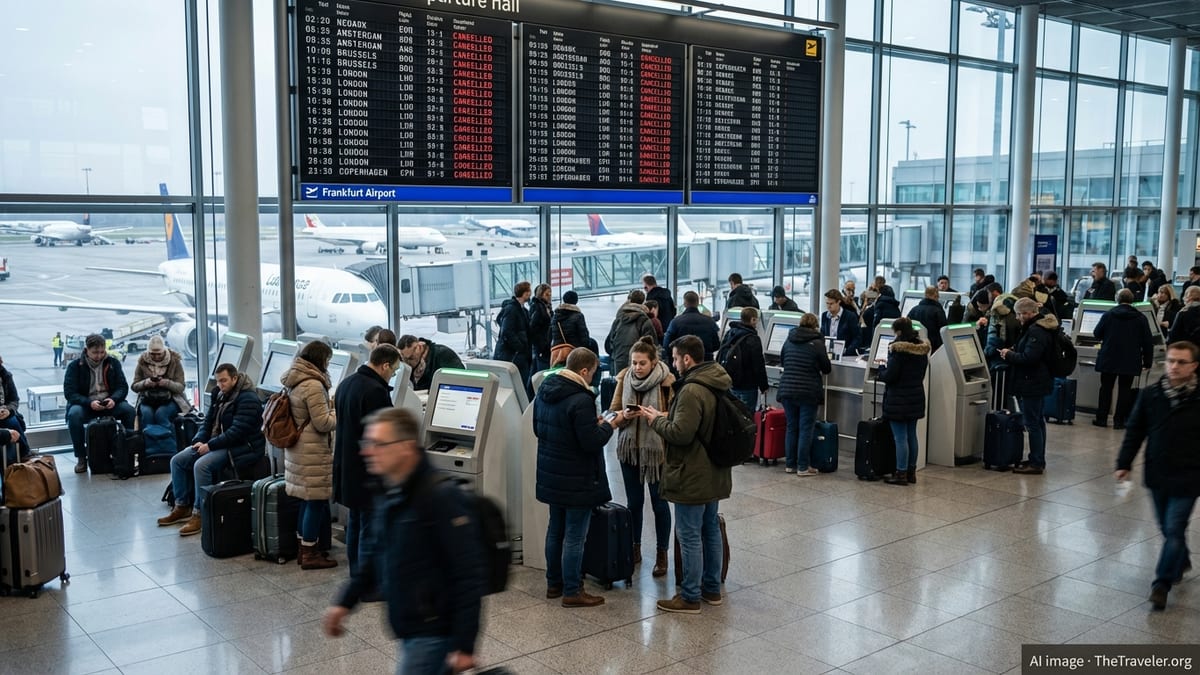
Germany’s Hubs See Wave of Cancellations
Flight tracking data and airport schedules on February 24 show at least 19 cancellations across Germany’s key gateways, with more than a dozen involving United, Delta, KLM and Brussels Airlines. The disruptions span Frankfurt, Munich, Berlin and Stuttgart, underscoring how winter weather and knock-on operational issues continue to unsettle travel at the height of the late-winter demand period.
At Frankfurt, Germany’s busiest long haul hub, multiple departures to the United States were withdrawn from the schedule. Services to Newark Liberty International and New York’s John F. Kennedy International were among the hardest hit, while additional flights to major European hubs were also removed, shrinking options for both point-to-point and connecting passengers.
The cancellations come on the heels of a powerful winter storm that swept across parts of Europe and the northeastern United States, leaving airlines with displaced aircraft and crews. Although conditions have improved in many cities, schedule recovery is still incomplete, and Germany’s central position in the continent’s aviation network means that any ripple effect is quickly felt by international travelers.
Transatlantic Links to Newark and Other US Gateways Affected
Transatlantic travelers were particularly affected as United and Delta trimmed services linking Germany with the US East Coast. From Frankfurt, United’s normally reliable links to Newark saw several departures dropped over consecutive days, while additional services between Germany and New York area airports suffered disruption as carriers adjusted their operations.
Industry data indicates that recent snow and strong winds around New York’s major airports, including Newark, LaGuardia and JFK, forced widespread cancellations on February 23. Those disruptions in turn cascaded into Europe on February 24 as aircraft and crews failed to reposition in time, leaving German departures without the necessary resources to operate.
Delta also recorded cancellations on routes connecting German hubs with key US gateways, including services that are jointly marketed with European partners. The result for passengers has been reduced same day capacity across the Atlantic, longer rebooking times and a higher likelihood of being rerouted through alternative hubs such as Paris, Amsterdam or London.
KLM and Brussels Airlines Cut Short Haul Links in Northern Europe
European connectivity also took a hit as KLM and Brussels Airlines pulled multiple departures serving nearby capitals and regional centers. Flights between Germany and Amsterdam, Brussels, London and Copenhagen saw cancellations, further constraining options for travelers relying on short haul segments to feed onward long haul journeys.
Amsterdam Schiphol, KLM’s primary hub, has been dealing with repeated bouts of winter weather and residual delays. Recent storm systems prompted more than 200 cancellations across Europe, with Schiphol among the worst affected. As the airline worked to stabilize operations at its home base, some feeder legs from Germany to Amsterdam were trimmed, affecting passengers booked on long haul connections to North America, Africa and Asia.
Brussels Airlines and other carriers operating from Belgium’s capital have likewise scaled back selected services as they juggle winter conditions and staffing constraints. With Germany one of Brussels’ key short haul markets, the cancellation of flights between German cities and Brussels reduced same day connectivity at a time when travelers are already facing a tight transatlantic schedule.
Operational Strains at London and Continental Gateways Compound Impact
Germany’s disruption has been compounded by concurrent problems at other major European hubs, notably London Heathrow. Recent data from passenger rights organizations and airport reports detail more than 40 cancellations and hundreds of delays at Heathrow in the past 48 hours, with United, Delta, KLM and Brussels Airlines among the carriers affected.
These difficulties have created additional challenges for German travelers who might otherwise reroute via London when direct flights are canceled. Instead, some are encountering secondary delays or cancellations on their alternative itineraries, particularly on busy corridors linking London to New York, Boston, Newark and continental European cities.
Across the continent, airports in Amsterdam, Frankfurt, Munich and Brussels are contending with the same cocktail of winter weather, crew availability problems and saturated customer service channels. As airlines attempt to rethread their networks following last week’s winter storm, even a small operational hiccup can push marginal flights into cancellation, especially on routes with overlapping capacity.
What Travelers Through Germany Should Expect Now
For passengers booked on United, Delta, KLM or Brussels Airlines services touching Germany over the coming days, further disruption cannot be ruled out as carriers continue schedule recovery. Travel alerts from several airlines highlight continued vulnerability on East Coast US routes and select European links, and some carriers are offering flexible rebooking policies for affected destinations.
Travel experts advise monitoring flight status closely from 24 to 26 February, particularly for itineraries connecting through Frankfurt, Munich, Berlin, Stuttgart, Amsterdam, Brussels and London. Same day reaccommodation is still possible on many city pairs, but popular transatlantic flights are filling quickly as disrupted travelers are rebooked onto later departures.
Passengers whose flights are canceled are generally being offered free date changes or refunds, in line with airline policies and European passenger rights regulations. However, customer service wait times at airports and call centers remain elevated, making digital tools such as airline apps and online rebooking portals an important first step for those needing to adjust their plans.
With winter weather still lingering in both Europe and North America, aviation officials and carriers are urging travelers to build extra time into itineraries, especially where tight connections or onward rail and cruise departures are involved. Germany’s latest wave of cancellations illustrates how quickly localized weather and staffing issues can cascade across an interconnected global network, affecting flights far beyond the airports where the disruption first appears.