

More news on this day
Germany is confronting another spell of aviation disruption as a cluster of cancellations at Lufthansa, Pegasus, Corendon and other carriers removes at least eight key flights from schedules, affecting passengers on routes linking German airports with Istanbul, Copenhagen, Nice, Bahrain and several other regional hubs.
Get the latest news straight to your inbox!
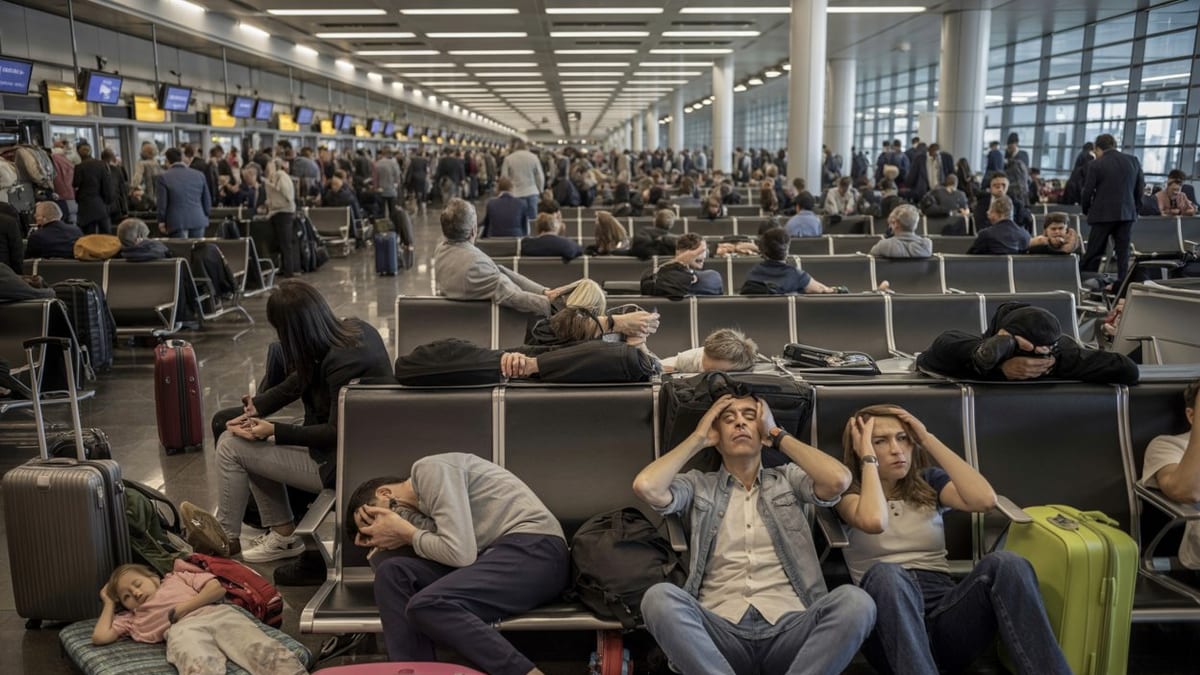
Image by Travel And Tour World
Cluster of Cancellations Compounds Existing Strain
Published reports and live schedule data indicate that a fresh round of cancellations has appeared on departure boards at major German airports, with at least eight individual services scrubbed on short notice. The affected flights span both full-service and low-cost airlines, including Lufthansa, Pegasus and Corendon, and primarily impact popular short and medium haul routes used by leisure travelers and those returning from long-haul connections.
The latest disruptions come against a backdrop of already fragile operations in parts of Europe and the Middle East, where airlines have been adjusting networks in response to airspace constraints, industrial actions and elevated security considerations. In Germany, recent labor disputes affecting cockpit and ground staff have already led to waves of cancellations and rebookings, setting a difficult stage for passengers now confronted with new last-minute changes to their itineraries.
Flight-tracking platforms show that the cancellations are scattered across several time bands rather than concentrated in a single block, which complicates planning for travelers seeking to reroute via alternative hubs. Many of the affected services were originally timed to connect with long-haul arrivals or departures, meaning that disruption on a single leg can cascade through entire journeys.
While airline websites and booking engines are gradually updated to reflect the removed services, some passengers are still finding out at the airport that their flights are no longer operating, underscoring the gap between real-time operational decisions and customer communication during periods of irregular operations.
Key Routes Affected: Istanbul, Copenhagen, Nice and Bahrain
Among the most visible impacts for Germany-based travelers are cancellations on routes to Istanbul, Copenhagen, Nice and Bahrain, all of which serve as important points in wider regional and intercontinental networks. Istanbul is a major transfer hub for both full-service and low-cost carriers, while Copenhagen and Nice are core intra-European destinations for business and leisure traffic. Bahrain, meanwhile, is an essential link to the broader Gulf region and onward connections into Asia and Africa.
On the Germany to Istanbul corridor, low-cost operations appear particularly exposed. Pegasus and other budget carriers have been adjusting timetables in recent weeks, and schedule data now shows several Germany–Istanbul services removed on specific days. For travelers relying on these flights to connect onto destinations in the Caucasus, the Middle East or Central Asia, a missed Istanbul link can mean a forced overnight stay or complete re-routing through alternative hubs such as Doha, Abu Dhabi or Athens.
Germany’s northbound connection to Copenhagen has also seen scattered cancellations, intersecting with a wider pattern of adjustments involving Scandinavian and Baltic routes. Copenhagen functions as both a destination in its own right and as a transfer point into the Nordic region, so even a small number of cancellations can leave passengers with significantly fewer same-day alternatives, particularly outside peak travel hours.
Nice and Bahrain highlight how disruptions are not limited to purely regional traffic. Nice is a heavily booked leisure destination and part of broader Mediterranean travel flows, while Bahrain sits close to conflict-affected airspace that has already led several airlines to revise or suspend selected services. When individual links between Germany and these cities are dropped, travelers can be pushed onto already busy remaining flights or encouraged to connect through secondary gateways, adding time and complexity to travel plans.
Lufthansa Adjustments Intertwine With Wider Operational Pressures
Lufthansa’s role in the current wave of cancellations is particularly significant, given its status as Germany’s flagship carrier and the anchor airline at hubs such as Frankfurt and Munich. In recent weeks, Lufthansa has already adjusted parts of its network in reaction to labor tensions and evolving risk assessments for certain Middle Eastern destinations, including earlier suspensions and reductions on routes to cities such as Dubai, Abu Dhabi, Beirut and Tel Aviv.
These structural adjustments mean there is less slack in the system when further cancellations arise, even if the immediate cause relates to separate operational constraints, aircraft rotations or short-notice staffing shortages. Passengers whose flights have now been removed from the schedule are in many cases being offered rebooking options on later Lufthansa services or on partner airlines within existing alliance and codeshare frameworks, but availability is tightening rapidly around peak travel dates.
Germany’s recent experience with strike-related disruption has also influenced traveler behavior. Social media posts and online travel forums show more passengers booking backup tickets on alternative carriers or via different hubs when there is any hint of industrial action or schedule instability. This preemptive hedging can further distort demand patterns, leaving some flights overbooked while capacity on others remains unexpectedly underused until close to departure.
The cumulative effect for Lufthansa and other German carriers is an operational environment where every additional cancellation, including those affecting the eight highlighted flights, carries knock-on implications for network reliability, customer perception and future booking patterns, especially among travelers with flexibility to choose non-German hubs.
Impact on Travelers and Practical Options for Rebooking
For travelers already en route or scheduled to depart in the coming days, the immediate concern is how to salvage itineraries involving Istanbul, Copenhagen, Nice, Bahrain and the other affected destinations. Publicly available information from airline websites, airport departure boards and online booking tools suggests that some replacement options exist, but often at less convenient times or via longer routings.
Passengers booked on the canceled services are generally being offered a mix of free rebooking within a defined travel window, refunds of the unused portion of their ticket, or rerouting via alternate hubs. In practice, the usefulness of these options depends on remaining seat availability and on the complexity of each journey. Travelers with separate tickets on different airlines, a common scenario when combining low-cost and full-service segments, may face additional challenges coordinating changes across multiple reservations.
Consumer advocates and travel commentators are emphasizing the importance of monitoring booking pages and mobile apps frequently, rather than relying solely on email notifications. In several recent cases, travelers have reported that flights showed as canceled or re-timed in airline apps before formal cancellation messages arrived, giving those who checked early a better chance of securing scarce seats on alternative departures.
At the same time, travel insurance policies with disruption coverage and credit card protections can play a notable role in mitigating costs such as extra hotel nights or last-minute one-way tickets through other hubs. Policy terms vary widely, so experts advise checking coverage conditions carefully before incurring additional expenses in response to the Germany-centered cancellations now unfolding.
Outlook for Germany’s Spring Travel Season
The latest cluster of eight canceled flights is modest in absolute numbers compared with major strike days or large-scale weather events, but it lands at a sensitive moment for Germany’s spring travel season. Airlines are attempting to rebuild confidence after earlier disruptions, while also responding to a shifting geopolitical environment that has placed fresh pressures on select routes in and around the Middle East.
Forward-looking commentary from aviation analysts suggests that capacity between Germany and certain hubs, including those in the Gulf and Eastern Mediterranean, may remain more volatile than on core intra-European city pairs. Carriers are keeping a close watch on fuel prices, airspace restrictions and evolving demand patterns, factors that together influence whether marginal flights remain in the schedule or are cut at short notice.
For the average traveler planning trips from Germany to Istanbul, Copenhagen, Nice, Bahrain or neighboring gateways over the coming weeks, the practical takeaway is to expect more moving parts than in pre-crisis periods. Flexible itineraries, longer connection windows and careful attention to airline communications can reduce exposure to last-minute changes, even if they cannot eliminate the risk entirely.
As airlines such as Lufthansa, Pegasus and Corendon continue to revise their timetables, the situation remains fluid. Additional cancellations or restorations of service are likely, making continuous monitoring essential for anyone whose plans hinge on specific Germany-linked flights across this part of the spring timetable.