

More news on this day
Hundreds of travellers across Germany faced long queues, missed connections and unexpected overnight stays this weekend as Frankfurt, Munich and Berlin airports recorded 214 flight delays and 26 cancellations, disrupting operations for Qatar Airways, German Airways, United Airlines and a string of other international and European carriers.
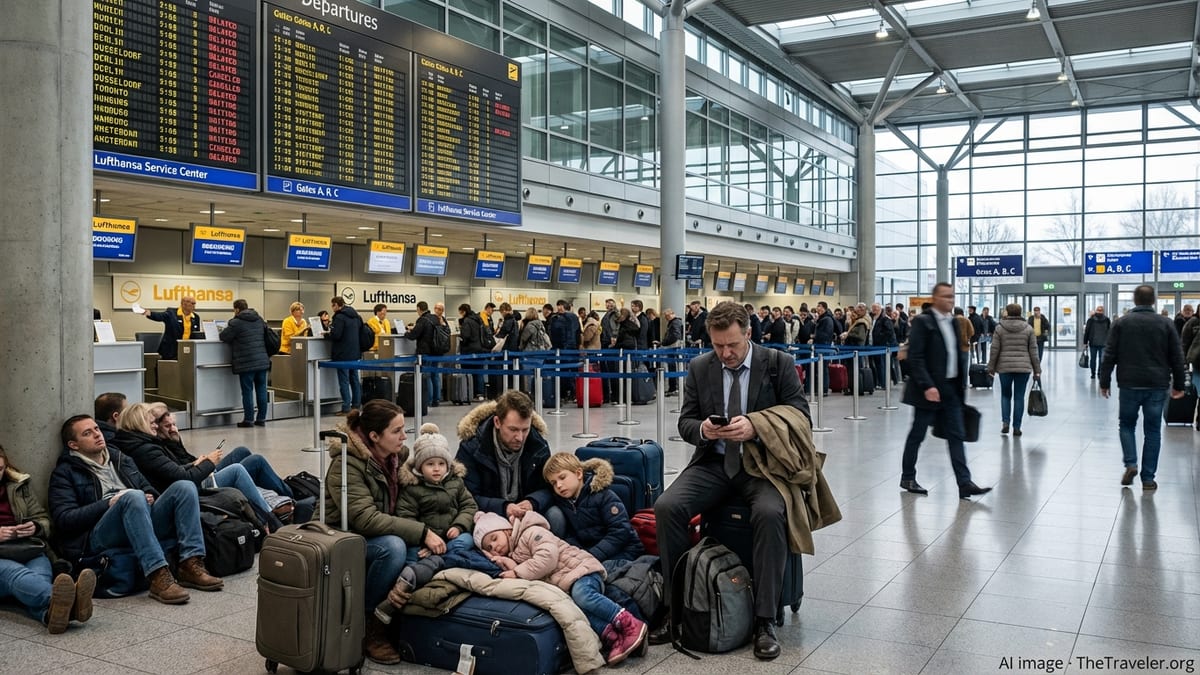
German Hubs Struggle Under Wave of Disruptions
The latest disruption hit Germany’s three key international gateways on Saturday, 8 March 2026, as adverse weather, tight airspace restrictions linked to Middle East tensions and stretched staffing levels combined to push already fragile schedules over the brink. Aviation data from the day shows 214 delayed departures and arrivals and 26 outright cancellations across Frankfurt, Munich and Berlin, with knock-on effects on connecting traffic throughout Europe, the Gulf and North America.
Frankfurt Airport, Germany’s busiest hub, bore the brunt of the chaos, with ground handling bottlenecks and aircraft rotation issues contributing to extended turnaround times. Munich, a major transfer point for Southern and Eastern Europe, struggled to absorb diverted and late-running aircraft, while Berlin saw a cascade of delays as airlines attempted to reposition planes and crew.
Passengers reported waits of several hours at check-in and security, with many learning of cancellations only shortly before boarding. Airport authorities urged travellers to arrive early and remain in close contact with their airlines, but the sheer volume of disrupted flights meant many were forced into last-minute rebookings or overnight accommodation.
Operational planners noted that a series of powerful weather systems over Western Europe compounded existing constraints triggered by the ongoing closure of Qatari airspace, which has already led to reroutes and schedule reductions for long-haul carriers using Germany as a key European gateway.
Qatar Airways and German Airways Among Most Visible Casualties
Qatar Airways, already operating a sharply reduced network after the closure of its home airspace, saw several Germany-linked services heavily delayed and at least one rotation cancelled, according to passenger accounts and industry tracking data. Connections between Doha and Frankfurt and Berlin were particularly vulnerable, with flights forced into longer routings and narrower operational windows.
The Gulf carrier has been running a limited corridor of flights to and from European hubs including Berlin and Frankfurt in recent days, prioritising repatriation and essential travel. The pressure of the German disruptions added another layer of complexity, as late-arriving aircraft from other European airports cascaded into delays at German hubs and beyond, leaving some passengers stranded mid-journey while they awaited rebooking options.
German Airways, a regional operator that feeds major hubs such as Frankfurt and Munich, also reported multiple delays and several cancelled sectors, particularly on shorter intra-European routes. With aircraft and crew tightly scheduled, the operator struggled to realign rotations once early-morning services ran late, eroding buffer times and triggering rolling delays into the afternoon.
Industry observers said smaller and mid-sized carriers are especially exposed in such situations, as they lack spare aircraft and crews to quickly recover from a series of disruptions. The cancellations recorded in Germany on Saturday reflected a strategic choice by airlines to consolidate frequencies in order to stabilise the remainder of their schedules.
United Airlines and Transatlantic Passengers Face Missed Connections
United Airlines, which operates multiple daily services between Germany and the United States, was also hit by Saturday’s disruption, with delayed departures from Frankfurt and Munich rippling into late arrivals at key US hubs. The combination of tight transatlantic curfews, aircraft rotations and crew duty limits meant that even moderate delays on the ground in Germany translated into significant schedule shifts across the Atlantic.
Passengers heading to and from US cities such as Newark, Chicago and Washington experienced extended waits at departure gates and, in some cases, missed onward domestic connections on arrival. Social media posts from travellers described long lines at customer service desks as staff attempted to reroute passengers and arrange hotel vouchers for those forced to overnight.
Because many transatlantic flights operate close to night-flight curfews at European airports, airlines have limited flexibility to push departures deeper into the evening. When weather and operational constraints collide, carriers are often forced to either cancel a rotation outright or accept substantial delays that then disrupt the following day’s schedule. That dynamic was visible in Germany, where late-running aircraft on Saturday threatened to start Sunday’s operations already behind schedule.
While United and other long-haul airlines stressed that safety remained the overriding priority, travellers voiced frustration at what they described as sparse and sometimes inconsistent communication from both airport and airline staff about changing departure times and rebooking options.
Knock-on Effects Across Europe and the Gulf
The disruption in Germany did not occur in isolation. It followed days of mounting operational strain across European and Middle Eastern air corridors linked to the closure of Qatari airspace and ongoing adjustments by Gulf carriers. Earlier in the week, Amsterdam Schiphol and Paris Charles de Gaulle grappled with hundreds of delays and dozens of cancellations, sending late-running flights into Frankfurt and Munich and tightening aircraft availability there.
Aviation analysts say the extensive rerouting now required for flights that would normally cross Qatari airspace has lengthened many long-haul sectors by up to an hour, reducing schedule resilience. When these longer flights arrive even slightly late into busy hubs such as Frankfurt, there is often little slack to recover before the next departure, especially at peak times.
The result is a network effect in which weather at one airport, airspace restrictions in another region and staffing constraints at a third location combine to produce large clusters of delays and cancellations in seemingly distant markets. Germany’s 214 delays and 26 cancellations on Saturday illustrated how quickly operational stress can spread once several major hubs are affected at the same time.
Carriers are now reviewing their near-term schedules for the coming days, with some expected to trim frequencies or swap larger aircraft onto select routes in an effort to accommodate displaced passengers and rebuild punctuality.
What Affected Travellers Should Do Next
Travel rights experts advise passengers whose flights were delayed or cancelled in Germany on 8 March 2026 to keep all documentation, including boarding passes, booking confirmations and any written notices from airlines. Under European passenger rights rules, travellers departing from EU airports may be entitled to care, assistance and, in some circumstances, financial compensation, depending on the cause and length of the disruption.
Airlines are urging customers to check the status of their flights on official channels before travelling to the airport, and to make use of mobile apps for rebooking where possible. For those already in transit, staff at transfer desks in Frankfurt, Munich and Berlin have been prioritising passengers with imminent long-haul or once-daily onward connections, although limited seat availability has meant some travellers must wait days for an alternative.
Airports, meanwhile, are reinforcing staffing at information counters and security checkpoints to handle surges of delayed passengers and to prepare for potential follow-on disruption if aircraft and crews remain out of position. While there are tentative signs that operations may stabilise in the coming days, much will depend on weather patterns, airspace access and the ability of airlines to gradually realign their networks.
For now, travellers planning to pass through Germany’s major hubs are being warned to build extra buffer time into their journeys, to monitor flight information closely and to be prepared for last-minute gate or schedule changes as airlines work to absorb the aftermath of one of the most challenging operational weekends of the year so far.