

More news on this day
Germany’s aviation system has been hit by another devastating wave of disruption, with fresh data showing 506 flights cancelled and 255 delayed across major hubs, snarling routes that link Frankfurt with cities from London and Oslo to Barcelona, Doha and Boston, and dragging carriers including Lufthansa, KLM, easyJet, Qatar Airways and United into a widening operational crisis.
Get the latest news straight to your inbox!
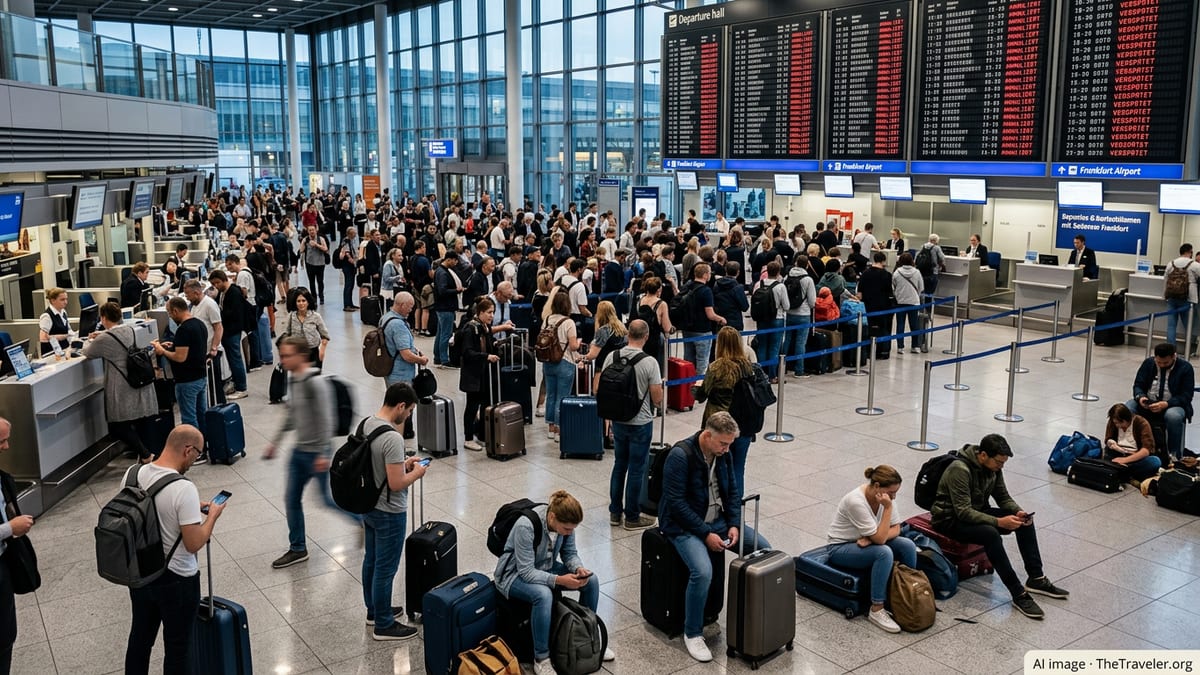
Fresh Disruptions Hit Frankfurt and Munich as Strikes and Airspace Squeeze Bite
The latest turmoil comes as German airports reel from a confluence of pressures, including a two day strike by Lufthansa pilots on 12 and 13 March and ongoing airspace restrictions tied to the Middle East crisis, which have forced longer routings and tighter aircraft rotations. Operational updates from carriers and airport authorities indicate that Frankfurt and Munich once again bore the brunt of the disruption, with more than a hundred flights axed in a single day and only a modest share of services departing on time.
On Thursday 12 March alone, airport monitoring feeds showed Frankfurt and Munich cancelling at least 115 scheduled departures and arrivals and delaying additional services, affecting passengers bound for Doha, Barcelona, Rome, Marseille, Dublin, Houston, Geneva, Boston and Newark among other destinations. The pattern mirrors recent days in which Germany’s busiest hubs have consistently ranked among Europe’s worst performers for punctuality, with cancellations and late departures cascading through domestic and long haul networks.
The strike by members of Vereinigung Cockpit has forced Lufthansa to pare back its timetable at short notice, while partners and competitors scramble to adjust their own operations around lost slots, diverted aircraft and crew shortages. For travelers, that has meant abrupt changes to itineraries that were already strained by weeks of uneven operations across European and Gulf corridors.
Flight tracking and passenger reports point to a cumulative tally of 506 cancellations and 255 delays over the latest multi day disruption window affecting Germany’s main hubs and their outbound routes, a figure that underscores how quickly localized strikes and sector specific constraints can ripple across the continent’s crowded skies.
Major Airlines Caught in the Turmoil
Germany’s flag carrier Lufthansa has again been at the epicenter of the shock, with its mainline and CityLine operations cancelling scores of flights as pilots walked out over pay and working conditions. The airline has been forced to ground large portions of its short and medium haul network from German airports, while also trimming long haul departures to North America, the Middle East and Asia, including connections to Boston, Houston and Doha.
Allied and rival airlines have not escaped the fallout. Qatar Airways, which relies heavily on Frankfurt and Munich as key gateways feeding its Doha hub, has already cancelled or reshaped several links between Germany and Southeast Asia in recent weeks, and has now pulled additional services as airport disruption spills into its global timetable. Passengers booked on itineraries via Doha have reported last minute cancellations and limited rerouting options as the Gulf carrier grapples with both airspace restrictions and bottlenecks in Germany.
Low cost operators have also come under pressure. easyJet, which maintains an extensive network between German airports and cities such as London, Barcelona and Amsterdam, has seen multiple departures grounded or heavily delayed, particularly on routes touching Frankfurt, Berlin Brandenburg and Düsseldorf. KLM and other European network carriers have faced knock on delays on services linking Amsterdam and other hubs to German cities, as late arriving aircraft, crew duty limits and congested airspace upend carefully choreographed schedules.
United and other transatlantic carriers operating to Frankfurt and Munich have been drawn into the disruption as well, with passengers on joint itineraries and codeshares facing cancellations on German domestic legs and onward European connections. Even when long haul flights have departed broadly on time, missed feeder services and tight minimum connection times have stranded travelers in Germany and at outstations across Europe and North America.
Passengers Stranded Across Europe and the Gulf
The human impact of the latest disruption has been stark. At Frankfurt and Munich, departure halls and transfer corridors filled with passengers forced to queue for hours at rebooking counters, customer service desks and baggage claims. Many travelers reported sleeping in terminal seating or on thin airport mats after hotel allocations quickly ran out near the hubs, particularly for those arriving late at night from long haul flights and finding their onward legs cancelled.
Routes to and from secondary European cities have been among the hardest hit, with travelers bound for Oslo, Barcelona, Dublin and Geneva reporting multiple cancellations within a matter of days. In some cases, passengers reaching Doha, London or Boston on long haul flights have found their connecting services into Germany disrupted, forcing unplanned overnight stays or complex rerouting through alternative hubs such as Amsterdam, Paris or Istanbul.
Travelers attempting to return to Germany from Southeast Asia via Doha and other Gulf gateways have described a pattern of last minute messaging from airlines, in which confirmed tickets are abruptly cancelled and rebooking options are scarce or involve long detours. Some have opted to buy entirely new tickets on alternative carriers simply to secure a way back to Europe before work and family commitments resume next week.
Airport staff and ground handling teams, already stretched by months of irregular operations, have struggled to keep up with the volume of disrupted passengers. Baggage misrouting has become a recurrent complaint, with bags left behind at origin airports during tight turnarounds or stuck at transfer points when passengers are rebooked on different routings.
Knock On Effects Across Rail, Road and Secondary Airports
The crisis in the air has spilled onto Germany’s ground transport network. With flights cancelled or heavily delayed, many passengers have turned to Deutsche Bahn long distance and regional rail services in search of alternative routes. That surge in demand has packed trains departing from Frankfurt, Munich and other major stations, leaving travelers standing in aisles on long journeys and scrambling for last minute seat reservations.
Car rental desks at airports and city locations have reported spikes in same day bookings as stranded travelers piece together overland connections to secondary airports still operating a semblance of normal schedules. Some have driven hundreds of kilometers overnight to catch early morning departures from cities less affected by the chaos, including smaller hubs in neighboring countries.
Secondary airports in Germany and across nearby nations have, in turn, experienced a bump in demand as passengers and airlines dodge the most congested hubs. Cities such as Berlin, Düsseldorf and Hamburg have absorbed some of the diverted traffic, though they have also faced their own bouts of delay and cancellation as the knock on effects of crew and aircraft shortages filter through the system.
Travel agents and online platforms report a surge in last minute searches for alternative routings that avoid Frankfurt and Munich altogether, with some customers choosing to connect through Scandinavian or Southern European gateways rather than risk further disruption at Germany’s primary hubs.
What Travelers Can Do Now
With the situation still fluid and further schedule changes likely over the coming days, airlines are urging passengers to check the status of their flights frequently and to avoid arriving at the airport before their flight has been confirmed as operating. Most major carriers involved in the disruption are allowing affected customers to rebook without change fees within defined travel windows, though fare differences may still apply on some routes.
Travel rights experts are reminding passengers that flights departing from German and other European airports are covered by EU Regulation 261, which in many cases entitles travelers to care such as meals, refreshments and hotel accommodation during long disruptions, and in certain circumstances financial compensation when cancellations or long delays are within the airline’s control. Industrial action by airline staff can fall into a grey area, but courts in Germany and elsewhere have often taken a strict line when carriers fail to take reasonable measures to limit the impact on customers.
For those with imminent trips, flexibility remains crucial. Travelers are being advised to build in longer connection times, consider routing through alternative hubs if practical, and keep digital copies of all receipts related to extra costs such as accommodation, meals and transport, in case claims must be filed later. Insurance providers are also fielding an uptick in calls from policyholders seeking to understand what disruption benefits their coverage includes and how to document their claims.
Industry analysts warn that unless labor disputes are resolved quickly and airspace constraints ease, Europe’s aviation network may face a stop start recovery throughout the spring, with Germany’s key hubs and their far reaching connections among the most vulnerable to renewed waves of cancellations and delays.