

More news on this day
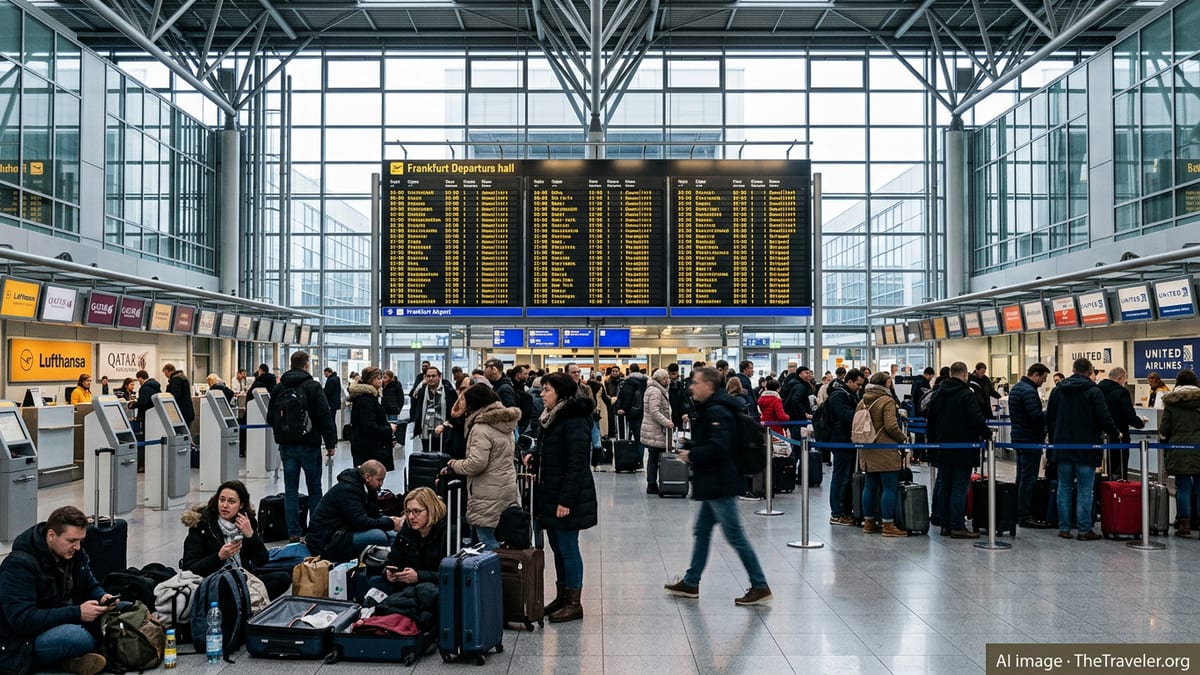
Travellers across Germany faced fresh disruption on March 9 as a cluster of international carriers including Qatar Airways, United Airlines, Gulf Air, El Al and Lufthansa suspended 34 flights and reported multiple delays at the country’s three busiest hubs in Frankfurt, Berlin and Munich, compounding a week of mounting turmoil linked to Middle East airspace closures and strained airline operations.
Major Hubs Struggle as Cancellations Mount
Operational data compiled on Monday showed 34 outright cancellations alongside scores of delays across Frankfurt Airport, Berlin Brandenburg and Munich Airport, affecting a mix of long haul and regional services. The bulk of the disruption hit wide body routes connecting Germany with the Middle East, North America and key European capitals, with knock on effects for onward connections to Asia and Africa.
Lufthansa and its partners bore a significant share of the pain, trimming services as the German group continued to adjust schedules in response to closed and restricted airspace on routes to the Gulf and eastern Mediterranean. Qatar Airways, Gulf Air and El Al were among the non European carriers forced to pull selected rotations to and from Germany, while United Airlines cut at least one Germany bound transatlantic service, leaving passengers scrambling for alternatives.
The latest wave of cancellations comes on the heels of earlier weather related disruption in Frankfurt and reflects the compounding impact of multiple stress factors on Europe’s already stretched aviation system. Airport operators warned that even flights still scheduled to depart on time were at heightened risk of departure slot restrictions and last minute rescheduling as airlines attempted to re thread aircraft and crew across their networks.
Airspace Closures and Security Concerns Ripple Into Germany
The immediate trigger for many of Monday’s suspensions remained the unstable security situation in the broader Middle East, which has led to the closure or partial closure of key airspace corridors used by Gulf carriers and European airlines alike. Qatar’s airspace, in particular, has been subject to strict limitations in recent days, forcing Qatar Airways to suspend regular schedules and operate only a handful of relief and repatriation flights into Europe.
Lufthansa, already operating under an extended suspension of direct flights to several Middle Eastern destinations, has continued to reroute traffic away from affected areas, adding time and cost to long haul services. The carrier confirmed that connections to cities such as Amman and Erbil remain off the board for now, while services to other regional hubs like Dubai and Abu Dhabi are operating on a reduced or heavily adjusted basis.
For Gulf Air and El Al, the challenge has been balancing demand from stranded passengers with the operational risks and regulatory constraints tied to overflight permissions. Both airlines trimmed their German operations to a skeleton schedule, focusing on preserving connectivity on core routes while relying on partner airlines and interline agreements to move disrupted passengers onward where possible.
Passengers Face Long Queues, Missed Connections and Uncertain Plans
For travellers on the ground in Frankfurt, Berlin and Munich, the numbers translated into long check in queues, crowded rebooking counters and a familiar sense of uncertainty about when they might actually depart. With Qatar Airways, United, Gulf Air, El Al and Lufthansa all adjusting schedules in parallel, many passengers found that their original itineraries via Middle Eastern hubs or direct transatlantic services simply no longer existed.
Agents at Germany’s major airports reported a surge in rebooking requests as travellers sought to switch from cancelled services to any remaining seats on alternative routings via European hubs such as Amsterdam, Paris, London or Zurich. Some long haul passengers were offered circuitous journeys involving overnight stops or extended layovers, while others were told that the next available departure on their preferred route could be days away.
Airport staff urged passengers to make use of airline apps and online self service tools where possible, noting that digital rebooking systems were often updated faster than departure boards or staffed counters. Even so, congested call centres and overloaded mobile apps left many stranded travellers relying on in person assistance at already crowded terminals, particularly those with complex multi segment itineraries or special service needs.
Airlines Adjust Networks as Operational Pressures Grow
Behind the scenes, airline operations teams spent the day juggling aircraft rotations, crew duty limits and regulatory constraints in an attempt to stabilise their schedules. For Lufthansa, the network disruption collided with simmering labour tensions and the residue of earlier strikes at subsidiaries, shrinking the buffer of spare capacity normally available to absorb unexpected shocks.
United Airlines trimmed select Germany bound flights in coordination with its Star Alliance partner Lufthansa, prioritising routes with the highest load factors and corporate demand while consolidating weaker services onto remaining departures. Industry analysts noted that even a limited number of long haul cancellations can cascade through a global network, stranding aircraft and crews far from their home bases and forcing further schedule cuts in subsequent days.
Qatar Airways and Gulf Air focused on repositioning aircraft to airports still reachable within revised airspace corridors, concentrating on a small number of high priority routes to Germany and other European markets. El Al, operating under its own tight security protocols, maintained limited connectivity while warning passengers that further short notice changes were possible depending on evolving risk assessments.
What Travellers Flying via Germany Should Do Next
With disruption likely to persist at least through the coming days, travel experts advised anyone booked to travel via Frankfurt, Berlin or Munich to treat scheduled departure times as provisional. Passengers were urged to check flight status repeatedly before leaving for the airport, allow extra time for security and transfer formalities, and consider building in longer connection windows or overnight stays where routings involve multiple carriers or hubs.
Those whose flights have already been cancelled were reminded that, under European air passenger protection rules, airlines are generally required to offer rebooking at the earliest opportunity or a refund, though the precise entitlements depend on the carrier and the cause of the disruption. In practice, however, limited spare capacity on alternative flights means that same day or next day rebooking may not always be feasible on heavily affected routes.
Corporate travel managers and tour operators with groups in transit through Germany spent the day scrambling to update itineraries, arrange emergency accommodation and provide real time communication to clients. With the situation evolving by the hour, many signalled that they expect to maintain elevated monitoring of German and Middle Eastern airspace conditions for the rest of the week, and recommended that discretionary travel through the region be postponed wherever possible until airline schedules normalise.