

More news on this day
Travelers across Germany faced renewed disruption on Thursday as Lufthansa, Air Canada, Brussels Airlines, Air Baltic, KLM and other carriers logged at least 14 cancellations and more than 200 delays, snarling traffic through major hubs in Frankfurt, Munich, Düsseldorf and Berlin and leaving passengers scrambling for alternative routes.
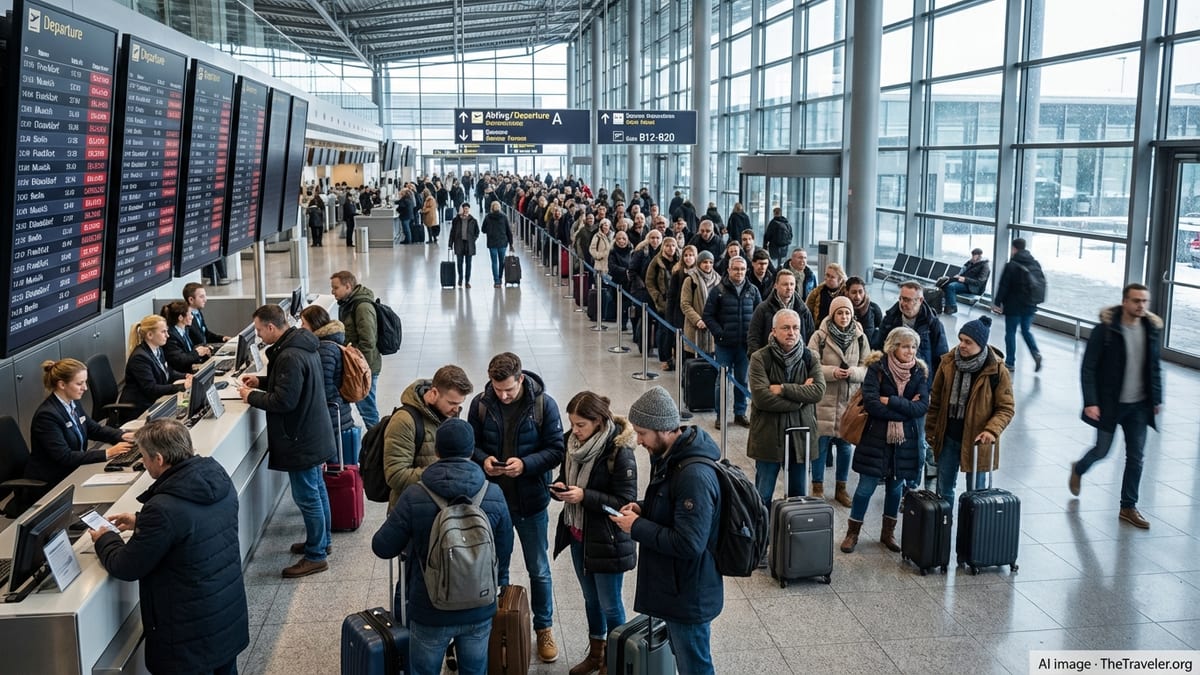
Fresh Disruptions Hit Already Weary German Air Travelers
The latest wave of disruption comes at a sensitive moment for Germany’s aviation sector, which is still recovering from a string of strikes, winter weather issues and earlier technology failures that have repeatedly pushed operations to the brink. Airline and airport data from Thursday showed a concentration of late departures and arrivals on short haul European services, with knock-on effects for long haul connections, especially through Frankfurt and Munich.
While the total of 14 cancellations is modest compared with the mass groundings seen during recent strike days, the volume and spread of delays have had an outsized impact on travelers. Delayed departures in the morning ripple through the day, leaving crews and aircraft out of position and eroding already tight connection times. For passengers, that has meant missed onward flights, last minute overnight stays, and hours spent in customer service queues at some of Europe’s busiest terminals.
At Frankfurt, Europe’s fourth largest hub and Lufthansa’s main base, disruption has centered on intra European links to hubs such as Amsterdam, Brussels, Zurich and the Nordic capitals. Munich, Lufthansa’s second hub, has experienced similar turbulence, particularly on routes feeding the airline’s long haul network. Berlin Brandenburg and Düsseldorf have been hit more unevenly, with delays clustered around select services operated by partner and codeshare carriers.
Which Airlines Are Most Affected
Operational statistics from Thursday’s schedules indicate that Lufthansa once again features prominently in the disruption picture, with a double digit number of cancellations and a far higher number of late departures, particularly out of Frankfurt. KLM, Air Canada, Brussels Airlines and Air Baltic have all reported pockets of delays on services to and from German airports, while additional snags have been logged on flights operated by other European carriers feeding traffic into the country’s hubs.
Travel data compiled in recent weeks shows that Lufthansa’s German operations have repeatedly come under pressure from a combination of staffing constraints, aircraft availability issues and the lingering effects of industrial action. Even on days without strikes, the carrier’s tight schedules and high aircraft utilization leave little margin for error when problems arise elsewhere in the system. As a result, a relatively small number of outright cancellations, such as those seen on Thursday, can coincide with several hundred late flights when recovery efforts are slow to take hold.
For travelers booked on Air Canada, Brussels Airlines, Air Baltic and KLM, Thursday’s difficulties have been especially acute on services linking Frankfurt, Munich and Düsseldorf with key North American and European gateways. Late arriving aircraft from earlier legs have forced departure time revisions, squeezing minimum connection windows and prompting airlines to rebook passengers onto later flights or alternative routings. Some regional partners and franchise operators have also been affected, amplifying the overall disruption picture without always being visible in headline statistics.
Frankfurt and Munich Bear the Brunt
Frankfurt Airport has once again found itself at the epicenter of Germany’s travel turmoil. On Thursday, its tightly choreographed operations, which on a normal day handle more than a thousand movements, were strained by rolling delays across both Schengen and non Schengen departures. Long queues built up at security and border control during peak morning and early afternoon waves, as passengers whose flights were late sought to salvage connecting itineraries.
Ground handlers at Frankfurt reported extended turnaround times for several carriers, as late incoming flights collided with the need to offload bags, refuel, and complete safety checks for the next leg. Even a delay of 30 to 45 minutes per flight, repeated across dozens of services, quickly erodes schedule resilience. For hub carriers like Lufthansa and their partners, that erodes the integrity of carefully constructed banks of arrivals and departures designed to funnel passengers between European feeders and long haul departures.
Munich, Lufthansa’s southern hub, has mirrored many of Frankfurt’s difficulties, albeit at a smaller scale. Delays on intra European services to cities such as Brussels, Amsterdam and Scandinavian capitals have disrupted connections onto transatlantic, Middle Eastern and Asian flights. Travelers connecting through Munich on Air Canada and other Star Alliance partners have reported last minute gate changes, extended tarmac waits and occasional missed connections when tight layovers collided with late inbound aircraft.
Berlin and Düsseldorf See Patchier but Painful Delays
While Frankfurt and Munich have shouldered much of Thursday’s disruption, Berlin Brandenburg and Düsseldorf have hardly been spared. Berlin, where Lufthansa and several low cost and hybrid carriers operate busy schedules to European capitals, has seen clusters of delays on flights linking to alliance hubs in Western and Northern Europe. That has caused particular headaches for travelers relying on Berlin as the first leg of longer itineraries that then connect through Frankfurt, Munich or foreign hubs such as Amsterdam and Brussels.
Düsseldorf, a key airport for both business and leisure traffic in western Germany, has been hit by a mix of late running arrivals and departures on services operated by Lufthansa, KLM, Air Baltic and other carriers. Earlier this winter, travel data highlighted Air Baltic’s operations at Düsseldorf as especially prone to delays during bouts of poor weather and congestion. On Thursday, passengers again reported late boarding calls, extended waits at the gate and occasional returns to the stand for additional checks once on board.
The pattern at both Berlin and Düsseldorf has been patchy rather than uniformly chaotic. Some flights have left on time or with only minor delays, while services on parallel routes have run significantly late. That inconsistency has made it harder for passengers to judge risk and has added to the sense of unpredictability around Germany’s air travel environment in recent weeks.
Weather, Strikes and System Strain in the Background
The immediate trigger for Thursday’s cluster of delays and cancellations has not been a single dramatic incident such as a nationwide strike or a severe storm. Instead, aviation analysts point to the cumulative strain of a difficult winter season in Europe, marked by periodic storms, freezing conditions, and industrial disputes that have knocked schedules off balance. Earlier in January, German airports saw major disruption as a combination of airline strikes and bad weather led to dozens of cancellations and well over a thousand delays across Frankfurt, Munich, Berlin, Hamburg and other cities.
Separate events elsewhere in Europe have also reverberated through German hubs. A prolonged de icing shortage and severe snowstorms at Amsterdam’s Schiphol in early January, for example, forced KLM to cancel hundreds of flights and disrupted the wider Air France KLM network. Those problems, combined with peak season demand and constrained aircraft availability, have left many carriers with thinner buffers to absorb new shocks. When a busy hub such as Frankfurt experiences even modest schedule slippage, the effects can quickly spread through alliance partners and codeshare routes.
Labor relations remain tense across the European aviation sector, including at Lufthansa. The German flag carrier has recently faced strikes by pilots and cabin crew that triggered hundreds of cancellations and affected well over 100,000 passengers in a single day. Although operations have largely returned to normal since those walkouts, airlines and airports are still working through backlogs of rebooked passengers and repositioned aircraft. That fragile equilibrium has made Thursday’s fresh wave of delays feel particularly disruptive to travelers who have already endured multiple schedule changes this season.
How the Disruptions Are Affecting Passengers on the Ground
For travelers on the ground, Thursday’s statistics translate into long queues, tense conversations and a scramble for information. At Frankfurt and Munich, passengers reported waiting more than an hour at customer service desks to secure rebookings after missing onward connections. Some were given hotel vouchers and rescheduled for flights the following day when later services were already fully booked or when crew duty time limits prevented additional departures.
Families traveling with children and elderly passengers have found the drawn out delays especially challenging, as airport seating, food options and quiet spaces come under pressure during prolonged disruption. Business travelers heading to conferences or meetings in North America and Asia have also borne significant costs, with missed appointments and last minute itinerary changes affecting their plans. For tourists, itineraries compressed into a few days in cities such as Berlin, Munich or Vienna have been curtailed when arrival was pushed back by many hours.
Some travelers have taken to social media to express frustration at what they see as poor communication from airlines during irregular operations. Complaints have focused less on the fact of delays, which are often accepted as an occasional reality of air travel, and more on a perceived lack of timely updates, proactive rebooking offers, and clear guidance on compensation rights under European air passenger regulations. Others have praised airline and airport staff for trying to manage a difficult situation with limited resources, particularly during peak departure banks.
What Airlines and Airports Are Doing to Recover
Airlines affected by Thursday’s disruption have activated standard recovery playbooks, including tactical schedule adjustments, aircraft swaps and crew reassignments. Hub carriers are attempting to consolidate lightly booked services, freeing up capacity to move stranded passengers on routes with the highest demand. In some cases, long haul departures have been held at the gate to protect a critical mass of incoming connections from delayed feeders, although that approach can in turn generate new late arrivals at destination airports.
Airport operators at Frankfurt, Munich, Düsseldorf and Berlin have redeployed staff to congested checkpoints and transfer desks, seeking to keep queues flowing and to prioritize passengers with imminent departures. Additional communication through terminal announcements and display boards has been used to flag significant delays and gate changes. Ground handling companies, which play a pivotal role in turning aircraft around quickly, are working overtime, though they too are subject to staffing limits and maximum working hour regulations.
Germany’s air navigation service provider and Eurocontrol, the pan European air traffic manager, have coordinated route adjustments and departure slots in a bid to smooth flow into and out of the most congested hubs. However, with much of Europe’s winter traffic already running close to capacity on peak days, there is only so much slack in the system to absorb exceptions. Industry observers say that as long as airlines run dense schedules with minimal buffer, even localized issues at one or two hubs are likely to produce widespread knock on effects for travelers.
Advice for Travelers Facing or Anticipating Delays
Passenger rights advocates say the current pattern of disruption in Germany underscores the importance of proactive planning for anyone traveling through the country’s major hubs in the coming days. Travelers are being urged to build extra time into itineraries that rely on tight connections at Frankfurt, Munich, Düsseldorf or Berlin, and to consider scheduling critical meetings or events at least a day after planned arrival in case of further delays.
Experts recommend that passengers monitor their flight status through both airline apps and airport information channels, as gate changes and revised departure times can occur multiple times in a single day during irregular operations. Where possible, travelers are advised to check in online, arrive at the airport earlier than usual, and keep essential medications, chargers, and a change of clothes in hand luggage in case of unexpected overnight stays.
Under European air passenger protections, travelers whose flights are significantly delayed or canceled may be entitled to meals, accommodation and, in some cases, financial compensation, depending on the cause of disruption and the length of delay. Advocates encourage passengers to keep boarding passes, receipts and written confirmation of new bookings, as these documents can be important when filing claims later. With Germany’s aviation network likely to remain under strain through the rest of the winter season, such precautions may make the difference between an inconvenience and a travel ordeal.