

More news on this day
Germany’s already strained aviation network is facing another turbulent spell as strikes and operational disruptions around key Lufthansa hubs in Frankfurt and Munich trigger a cascade of delays and cancellations at major European airports, grounding thousands of passengers at the height of the busy April travel period.
Get the latest news straight to your inbox!
Strikes Converge With Peak Easter and Spring Travel
The latest wave of disruption has built steadily through March and into April 2026, as a succession of strikes involving Lufthansa pilots and cabin crew intersected with the Easter return rush and early spring holiday traffic. Publicly available schedules and airline notices indicate that Frankfurt and Munich, the carrier’s main intercontinental gateways, have repeatedly operated on reduced timetables while unions pressed for improved pay and working conditions.
Reports from aviation monitoring services and European travel outlets describe hundreds of cancellations and delays clustered around Germany’s largest hubs in recent days, with knock-on effects for feeder flights serving Hamburg, Berlin and Düsseldorf. Passengers booked on multi-leg itineraries have been particularly exposed, with missed connections turning what were meant to be short hops into overnight odysseys across the continent.
The concentration of long haul and intra European traffic through Frankfurt and Munich has amplified the chaos. When staffing levels or rosters are disrupted at those airports, aircraft and crews that normally fan out to London, Amsterdam, Copenhagen, Madrid and other regional centers fail to reach their next starting points, causing additional cancellations far beyond Germany’s borders.
Industry data for early April indicates that major hubs including London Heathrow, Amsterdam Schiphol and Copenhagen have all recorded elevated levels of delayed and cancelled flights, with German based operators among the most heavily affected. These patterns suggest that disruption in Germany is increasingly a catalyst for broader European network instability rather than an isolated national problem.
Grounded Passengers Face Long Queues and Limited Options
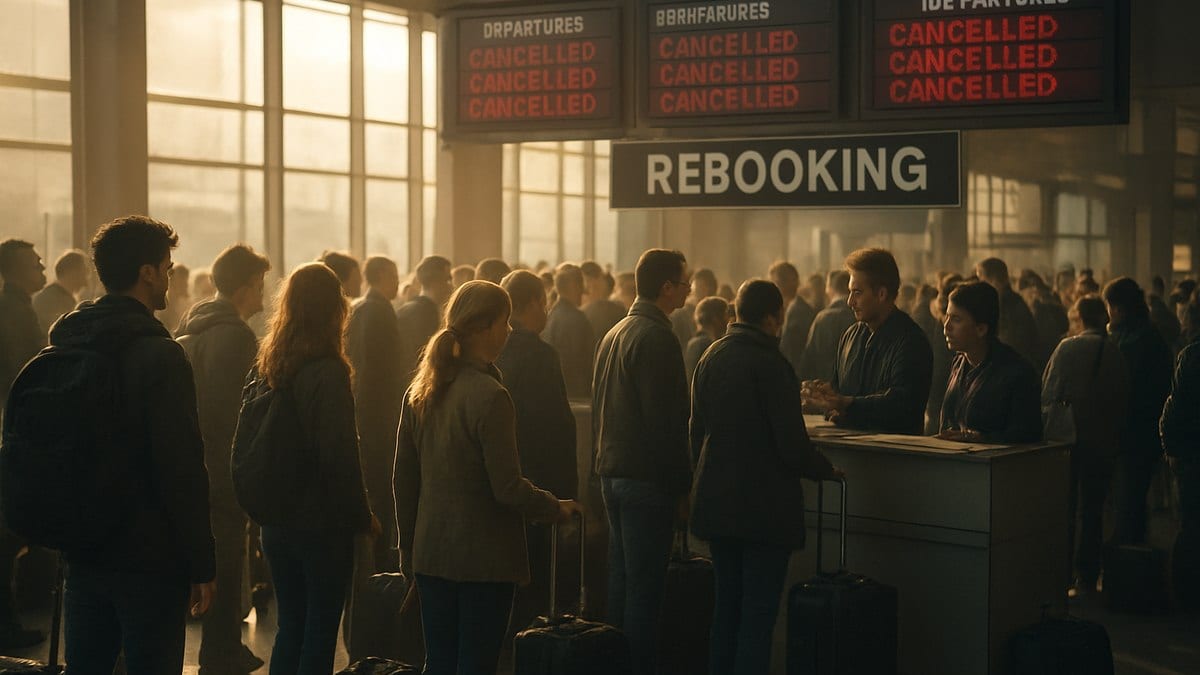
For travelers, the most visible impact of Germany’s flight chaos has been the sudden appearance of densely packed departure halls, long queues at airline service desks and crowded rail platforms as passengers search for last minute alternatives. Social media posts and passenger forums over the weekend of April 11 to 12 describe cancelled Lufthansa departures from cities such as Budapest and Hamburg, with replacement flights offered many hours or even days later.
Publicly shared accounts from affected travelers suggest that rebooking options through airline apps and websites have often been constrained or temporarily unavailable, pushing more people to airport counters already under pressure. Some passengers have reported purchasing seats on other European carriers, including regional and low cost airlines, in order to reach key hubs like Berlin and then reconnect onward to Munich or Frankfurt once Lufthansa frequencies resume.
Rail and coach operators within Germany and neighboring countries have also felt the surge as stranded flyers look to complete at least part of their journeys on the ground. With many German cities linked by high speed trains to Frankfurt and Munich airports, same day rail transfers have become a common fallback for those still hoping to catch long haul departures that remain in operation.
Travel advocacy groups and consumer organizations continue to remind passengers that European air passenger rights regulations remain in force even during widespread disruption. Under these rules, airlines operating from European airports are obliged to provide care such as meals, refreshments and accommodation in the event of significant delays or overnight stays, as well as compensation in many cases of short notice cancellations.
Ripple Effects Across Europe’s Major Hubs
The interconnected nature of European aviation means that operational shocks inside Germany rarely stay local for long. Flight tracking data and airport statistics from early April show that days of intense disruption in Frankfurt and Munich have coincided with spikes in delays at Heathrow, Amsterdam Schiphol, Copenhagen, Madrid, Barcelona and Istanbul, with secondary German airports like Berlin Brandenburg also seeing elevated irregular operations.
According to published coverage by specialist travel outlets, more than 1,600 delays and dozens of cancellations were recorded in a single day across multiple European hubs in early April, with Germany listed among the primary hotspots. Lufthansa and other full service carriers have featured prominently in the disruption figures, although low cost operators such as Ryanair and Vueling have also logged significant delay totals on affected days.
The current situation has been compounded by lingering structural challenges in European airspace. Industry analyses from airline associations highlight that air traffic control capacity constraints and staffing shortfalls in a small number of key countries continue to generate a disproportionate share of en route delays. When these systemic bottlenecks combine with local strikes or ground handling issues at major airports, schedules can unravel quickly.
Germany’s role as both an origin of these delays and a vital transit corridor for north south and east west traffic in Europe means that turbulence in its aviation sector tends to propagate widely. As a result, travelers with no direct connection to Germany are increasingly finding their journeys affected by aircraft or crews that should have started their day in Frankfurt or Munich but never departed.
Lufthansa Group Responses and Rebooking Policies
In response to the recent chaos, Lufthansa Group has issued a series of travel advisories and special rebooking policies for affected dates. Public information on the airline’s website indicates that passengers holding tickets issued on or before mid April for flights scheduled during specific strike windows are being offered complimentary changes to alternative Lufthansa Group services within defined periods.
These measures, which have applied at various points to Lufthansa, Lufthansa CityLine and occasionally selected routes within the group’s wider network, are intended to give customers flexibility to avoid known strike days or heavily curtailed schedules. However, traveler reports suggest that high demand for alternative seats and the limited number of unaffected flights at peak times mean that not all passengers can be accommodated on their preferred dates or routes.
To reduce congestion at airport counters, Lufthansa has urged customers through its public updates to make use of self service tools for rebooking and to monitor flight status closely before setting out for the airport. Despite these efforts, call centers and digital channels have struggled to keep up with the surge in inquiries, and some passengers have described spending hours refreshing apps or waiting on hold while trying to secure new itineraries.
Other Lufthansa Group carriers such as SWISS, Austrian Airlines, Brussels Airlines and Eurowings have in some cases been used to backfill capacity or provide alternative routings for stranded travelers, according to industry coverage. Nonetheless, because many of these airlines operate their own busy schedules at the height of the Easter and spring holiday period, spare capacity has been limited.
What Travelers Can Expect In The Coming Days
With the April holiday period still under way and several German labor disputes not yet fully resolved, analysts warn that Europe’s aviation network is likely to remain fragile in the near term. Operational planners are working to restore aircraft rotations and crew rosters after each strike day, but the knock on effects can take several cycles to unwind, particularly when aircraft and staff are left out of position across multiple countries.
Forecasts from European aviation agencies suggest that traffic volumes will continue to ramp up through late April and into May as business travel and early summer tourism gather pace. In this context, any further industrial action or localized technical problems at air traffic control centers could rapidly reignite the sort of system wide congestion currently being felt around Germany’s hubs.
Travel experts therefore advise that anyone transiting Frankfurt, Munich or other major European hubs in the coming days build additional buffer time into their itineraries, avoid tight connections where possible and keep digital notifications enabled for real time schedule updates. Flexible tickets and travel insurance products that cover missed connections may also prove valuable for those with critical long haul or event dependent journeys.
While there are signs that airlines and infrastructure providers have become more adept at managing large scale disruption compared with the immediate post pandemic years, the events of March and April 2026 underline how quickly Europe’s dense air network can seize up when multiple stress factors converge. For now, Germany’s flight chaos serves as a stark reminder that the continent’s aviation recovery remains a work in progress.