

More news on this day
Air travellers across Germany faced a fresh wave of disruption on March 6, as more than 150 flight delays and at least 12 cancellations involving Lufthansa, Eurowings and several partner carriers rippled through key routes linking Berlin and Munich with London and Paris.
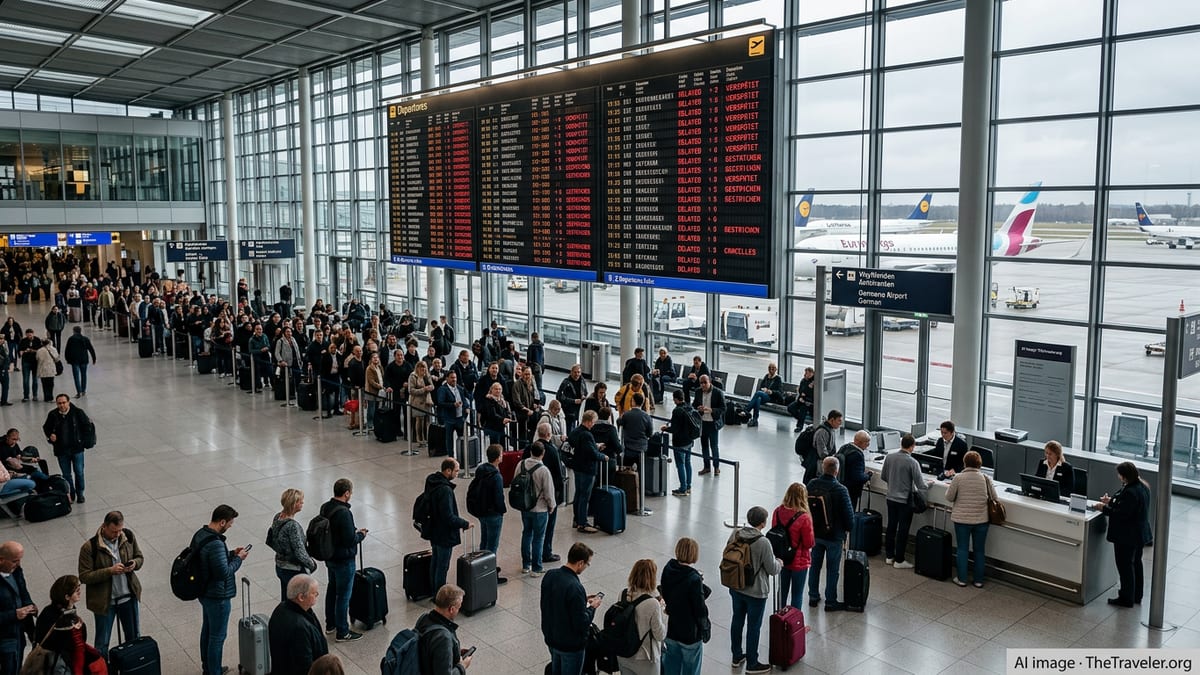
Wave of Disruptions at German Hubs
The latest bout of travel chaos follows days of mounting operational pressure at Europe’s major hubs, with Frankfurt and Munich again at the centre of the turmoil. German flag carrier Lufthansa and low-cost affiliate Eurowings reported dozens of delayed services on Thursday and Friday, particularly on high-frequency short-haul routes that connect Germany with neighbouring capitals.
Data from passenger-rights monitoring services tracking operations this week show that Germany has been one of the hardest-hit markets in a wider European disruption pattern, which logged more than 1,000 combined delays and cancellations on March 5 alone. Frankfurt International and Munich Airport, two of Lufthansa’s primary hubs, have struggled with congestion as late-arriving long-haul aircraft forced cascading schedule changes across the network.
The latest tally for Germany points to in excess of 150 delayed departures and arrivals and at least 12 cancellations affecting Lufthansa, Eurowings and other airlines operating under codeshare or alliance agreements. While these figures are modest compared with continent-wide totals, the concentration on trunk routes has magnified the impact for business and leisure travellers alike.
Berlin Brandenburg Airport has also reported knock-on delays on domestic and regional services, as carriers reposition aircraft and crews from disrupted rotations in Frankfurt and Munich. With many of Germany’s busiest routes structured around tight turnaround times, even minor operational hiccups are quickly spilling into multi-hour delays.
Key Routes to London and Paris Severely Affected
Flights linking Germany to the United Kingdom and France have borne the brunt of this week’s disruption. Services between Frankfurt, Munich and Berlin on the one hand, and London Heathrow, London Gatwick and Paris Charles de Gaulle on the other, have seen repeated schedule changes, extended departure queues and, in some cases, outright cancellations.
On Thursday, monitoring data showed Heathrow recording some of the highest delay and cancellation numbers in Europe, with knock-on effects radiating into Lufthansa’s and Eurowings’ German operations. As late-running transatlantic and Middle Eastern services arrived into London and Paris, aircraft and crew availability for short-haul sectors tightened, forcing German-bound flights into rolling delays.
Travellers on popular morning and evening rotations between Munich and London, as well as Frankfurt and Paris, have reported waiting on taxiways for available slots, circling in holding patterns, or missing onward connections. With many itineraries relying on a single short-haul leg to feed into long-haul departures, delays of 60 to 90 minutes have been enough to unravel complex multi-stop journeys.
Airlines have attempted to consolidate lightly booked flights and upgauge aircraft on remaining services to clear backlogs, but seat availability has remained under pressure on core city pairs. That has left some passengers stranded at outstations overnight while they wait for rebooking options to open up.
Weather, Staffing and Network Strain Behind Chaos
Industry analysts point to a combination of adverse weather, residual staffing shortages and structural strain in Europe’s tightly interlinked flight network as key drivers of the turmoil. Earlier in the week, poor weather conditions at several hubs led to temporary capacity reductions, which, compounded by constrained air-traffic control resources, produced a surge in knock-on delays.
Although Thursday and Friday brought more stable conditions over much of central Europe, airlines have continued to battle the after-effects, with aircraft and crews often out of position. Carriers including Lufthansa and Eurowings are still operating with thinner staffing margins than before the pandemic, leaving limited flexibility to absorb sudden schedule shocks such as sickness, technical faults or airspace restrictions.
The timing of this disruption has also exacerbated the impact. Early March traditionally sees a pickup in business travel ahead of the Easter holiday peak, and demand on Germany’s short-haul routes to London and Paris has been robust. High load factors reduce airlines’ ability to re-accommodate passengers on later flights, turning routine one- or two-hour delays into full-day ordeals for affected travellers.
Operational experts note that once delays accumulate across several tightly scheduled hubs, recovery can take multiple days. Each late arrival into Frankfurt or Munich narrows the margin for the next departure, creating a feedback loop that can only be broken by cancelling flights, trimming frequencies or adding reserve aircraft that many carriers currently lack.
What Stranded Passengers Can Expect
For travellers caught up in the latest wave of disruption, assistance and compensation options depend on the cause and length of the delay. Under EU261, the bloc’s air passenger rights regulation, customers experiencing cancellations or lengthy delays on flights operated by EU carriers such as Lufthansa and Eurowings may be entitled to meals, refreshments, hotel accommodation and, in some circumstances, financial compensation.
In practice, airlines at German airports on Thursday and Friday have been issuing meal vouchers, providing hotel rooms where overnight stays are unavoidable and rebooking passengers on the next available services, including via alternative hubs. Some carriers are also offering rail alternatives on domestic sectors, an option that can be quicker than waiting for a fresh flight slot when bad weather or air-traffic constraints persist.
Consumer advocates, however, warn that passengers should keep detailed records of boarding passes, delay notifications and any out-of-pocket expenses, as claims processes can be slow and, at times, contentious. They also recommend that travellers proactively check flight status before heading to the airport and consider allowing longer connection times when transiting through Frankfurt or Munich during periods of widespread disruption.
With European regulators still debating potential changes to compensation rules that could alter eligibility thresholds in future, the current chaos in Germany and its links to London and Paris is likely to fuel renewed scrutiny of airlines’ resilience planning. For now, travellers are being advised to brace for ongoing irregular operations over the coming days as carriers work to restore schedules and reposition aircraft across the region.