

More news on this day
German air travel faced fresh disruption on March 10 as more than 30 international flights were canceled across Munich, Berlin, Dusseldorf and Hamburg, affecting passengers booked on Qatar Airways, Lufthansa, British Airways, KLM and other major carriers on routes to Doha, Tel Aviv, London, Amsterdam, Riyadh, Paris and beyond.
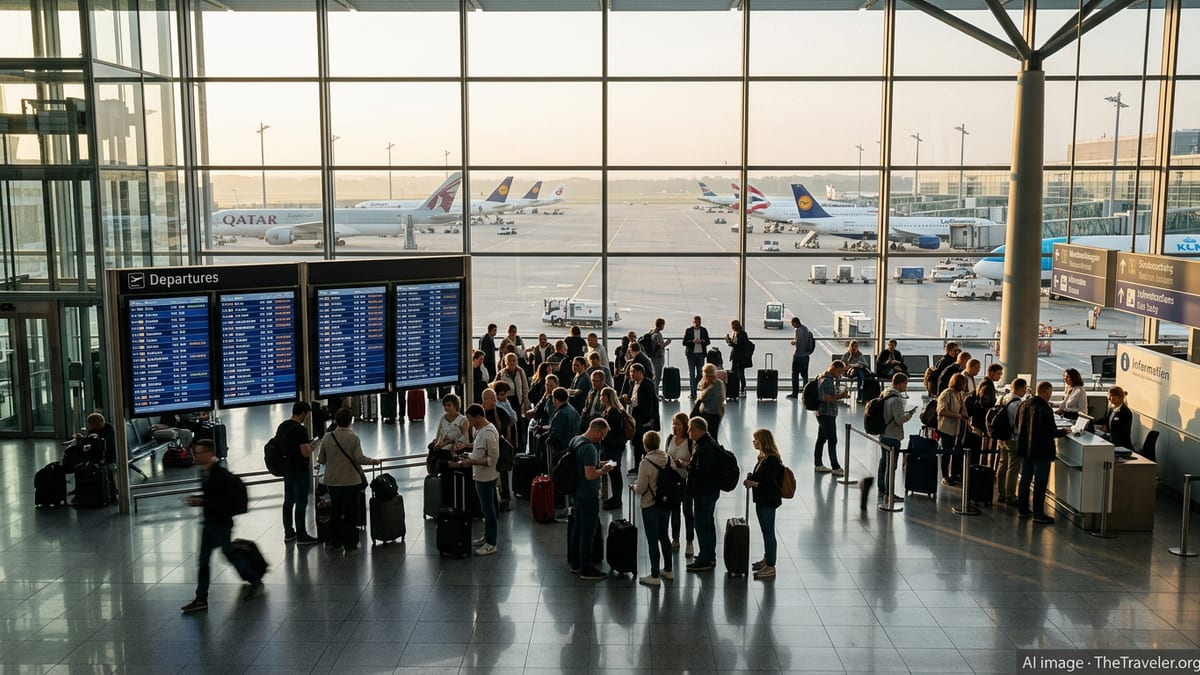
Middle East Airspace Turmoil Ripples Into German Hubs
The latest wave of cancellations in Germany is closely tied to ongoing airspace restrictions and instability across parts of the Middle East, which have already grounded or limited thousands of flights connecting Europe and Asia. Gulf and European carriers have been forced to rework schedules, pause services or reroute around closed corridors, increasing flight times and straining operational flexibility.
Qatar Airways has been running a limited schedule to and from Doha after previously grounding much of its network, while still focusing on maintaining essential connections and repatriation links. For German travelers, that has translated into canceled or heavily adjusted departures from Munich, Berlin and other airports, particularly on long haul itineraries that rely on Doha as a major transfer point.
Lufthansa Group airlines have also suspended or curtailed several services to cities such as Dubai, Abu Dhabi, Tel Aviv and other destinations in the wider region in recent days, creating knock on effects for feeder flights within Germany. With key long haul routes disrupted, selected short haul segments from German hubs are being cut or consolidated, contributing to the tally of more than 30 cancellations reported on Monday.
British Airways and KLM have faced their own operational pressures as they avoid sensitive airspace and adapt schedules on routes to Tel Aviv, Riyadh and other destinations tied into Middle East and Eastern Mediterranean traffic flows. Passengers flying from German airports via London or Amsterdam have been among those caught by last minute cancellations or rebookings as the situation remains fluid.
Munich, Berlin, Dusseldorf and Hamburg See Mixed but Noticeable Impact
While Germany has not experienced the mass shutdown of entire airports seen during past nationwide strikes, Monday’s operational picture still proved challenging for travelers using major hubs. Munich, traditionally one of Lufthansa’s key long haul gateways, recorded several cancelled departures and arrivals tied to Middle East and Asia connections, including services marketed or operated by partner carriers.
In Berlin, the cancellation list featured a mix of point to point European flights and long haul feeder services, some of them operated by or on behalf of British Airways, KLM and other alliance partners. For affected passengers, disruption has meant being rebooked onto later flights via alternative hubs or in some cases being forced to postpone travel entirely as long haul capacity remains tight.
Dusseldorf and Hamburg, which handle a blend of leisure and business traffic, also posted cancellations on routes linking Germany with hubs such as London Heathrow, Amsterdam Schiphol and Doha. These cuts have had an outsized effect on travelers from western and northern Germany who rely on these airports for one stop connectivity to the Middle East and onward to Asia and Africa.
Across all four airports, delays have compounded the challenge, with aircraft and crew out of position after several days of rolling schedule changes. Even passengers whose flights operated as planned frequently reported longer journey times and missed connections, particularly when traveling beyond primary European gateways.
Key Routes to Doha, Tel Aviv, London, Amsterdam, Riyadh and Paris Under Strain
Among the most affected links are services between Germany and Doha, where Qatar Airways is gradually rebuilding a restricted network while continuing to prioritize humanitarian and essential travel. Flights connecting Munich and Berlin with Doha have seen cancellations and aircraft changes, leaving some passengers scrambling for scarce seats on remaining services or on alternative routings via Istanbul, Rome or other hubs.
Routes touching Tel Aviv remain highly disrupted, with several European airlines including Lufthansa and KLM maintaining suspensions or severely reduced schedules to Israel. German travelers booked from Berlin, Munich, Dusseldorf or Hamburg to Tel Aviv via European hubs such as Frankfurt, Vienna, Amsterdam or London are facing cancellations, extended layovers and last minute rebookings.
Short haul and medium haul corridors that normally appear resilient, such as flights from Germany to London, Amsterdam and Paris, have not been immune either. British Airways and KLM have both recorded a number of cancellations and delays as aircraft are redeployed and schedules are trimmed to cope with longer flight paths around restricted airspace and ongoing bottlenecks at major hubs.
Services to Riyadh and other Gulf destinations, often operated in cooperation with local partners or codeshare arrangements, are similarly constrained. German travelers heading for Saudi Arabia or continuing onward to Asia and Africa via Gulf hubs are being urged to check bookings repeatedly, as schedules are still being updated at short notice.
What Travelers Flying From Germany Need to Know Today
Passengers scheduled to fly on March 10 and in the coming days from Munich, Berlin, Dusseldorf or Hamburg are being advised to monitor airline communications closely and to verify flight status before leaving for the airport. Carriers including Qatar Airways, Lufthansa, British Airways and KLM are issuing rolling updates and allowing greater flexibility for rebooking on many affected routes.
Travel experts recommend that passengers with connections through Doha, Tel Aviv, Gulf destinations or onward Asian hubs build in additional buffer time and, where possible, avoid tight same day transfers. With rerouted flights often taking significantly longer, particularly on Europe to Asia sectors, even small delays can cascade into missed onward flights.
Those who experience cancellations at short notice should keep digital copies of booking confirmations, boarding passes and receipts for any accommodation or meals purchased as a result of disruption. Although the current situation is driven largely by extraordinary circumstances linked to airspace closures and regional tensions, some European consumer protection rules may still provide entitlement to care, assistance or partial refunds depending on the airline and exact cause.
Given the scale of recent cancellations, many airlines are temporarily relaxing change fees and fare rules, especially for passengers booked through the most affected hubs and regions. Travelers willing to adjust departure dates, switch to alternative routings through less congested airports or accept schedule changes may find more options to complete their journeys with minimal additional cost.
Outlook for the Coming Days Across European and Gulf Networks
Although some Gulf and European carriers have begun cautiously restoring select routes, aviation analysts expect instability to persist at least through mid March as airlines reassess risk, negotiate airspace access and work through significant backlogs of displaced passengers. The pattern of scattered cancellations across German airports is likely to continue, even if the total number of axed flights fluctuates from day to day.
Industry observers note that capacity between Europe and the Middle East, as well as onward to Asia and Africa, will remain tight as long as key corridors stay partially closed or heavily restricted. That means Germany’s position as a major transfer market will continue to feel the strain, particularly at airports like Munich and Berlin that feed long haul networks for Lufthansa, Qatar Airways, British Airways, KLM and their alliance partners.
For now, airlines are balancing the need to maintain critical links with the operational and safety challenges of flying alternative routings and running extended duty days for crews. Schedules are being adjusted in small increments rather than through sweeping public announcements, leaving travelers to navigate a patchwork of changes that can shift several times in a single week.
With demand for spring travel building and the summer timetable just weeks away, carriers serving Germany will be under pressure to offer more predictable operations. Until regional tensions ease and airspace patterns stabilize, however, passengers on routes linking German airports with Doha, Tel Aviv, London, Amsterdam, Riyadh, Paris and other major hubs should be prepared for continued short notice disruptions.