

More news on this day
Air travel across Germany faced fresh disruption on February 28 as more than 35 additional flights were cancelled or rerouted, with services operated by Emirates, Etihad, Lufthansa and other carriers affected on key routes to Dubai, Abu Dhabi, London Heathrow, Bahrain, Copenhagen and other global hubs.
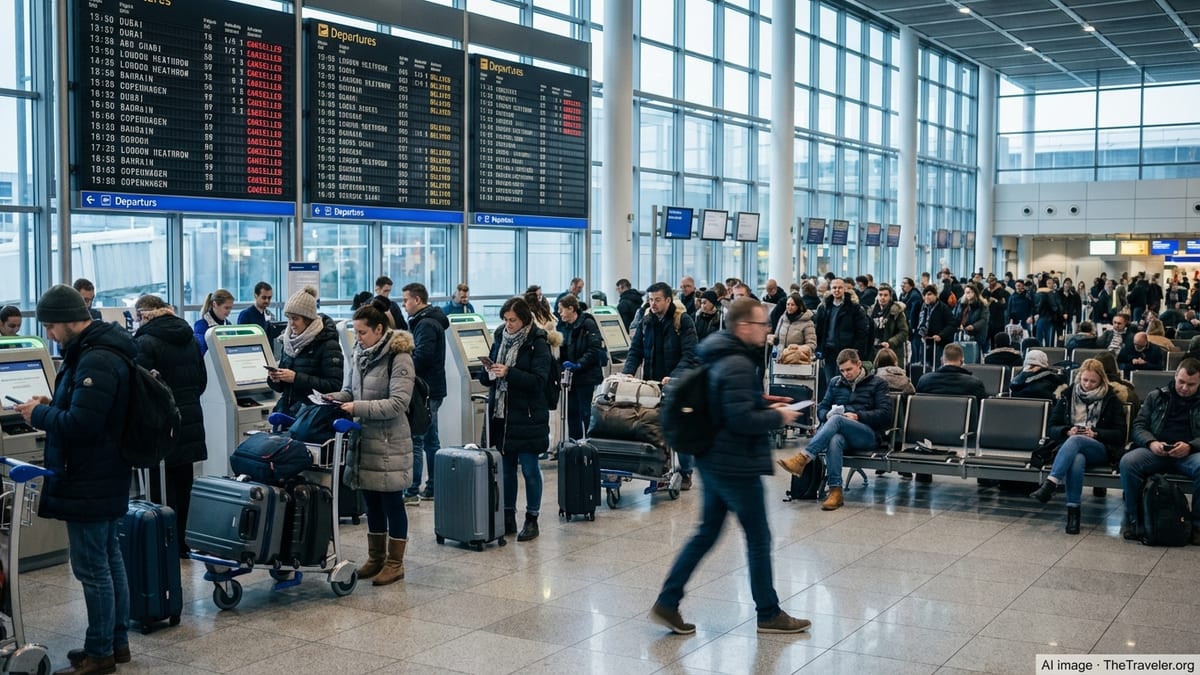
Middle East Airspace Closures Ripple Into German Hubs
New cancellations announced on Saturday followed overnight decisions by Gulf states and Qatar to temporarily close or restrict their airspace after US and Israeli strikes on Iran. The move has forced major carriers that connect Europe with Asia and Africa through the Gulf to halt or reconfigure large parts of their networks, with Germany’s Frankfurt and Munich airports among the hardest hit in Europe.
Data from aviation analytics firms show hundreds of flights into the United Arab Emirates, Qatar and Bahrain scrubbed in a matter of hours, and German-origin services are prominently represented among them. Additional cancellations involving more than 35 flights touching German airports were logged on Saturday alone, adding to a growing tally of disrupted services since the airspace measures came into effect.
With the UAE and Qatari airspace effectively closed for commercial traffic, traditional eastbound corridors from Europe have narrowed sharply. Airlines have been forced either to cancel flights outright or consider lengthy detours, undermining the tight connection banks on which Gulf hubs depend and leaving German passengers facing last-minute changes or prolonged delays.
German and European regulators are also responding to the deteriorating security picture. The European Union Aviation Safety Agency has warned of a high risk to civil aviation over parts of the Middle East, advising airlines to avoid affected skies while the situation remains volatile, adding further operational pressure on carriers serving the region from Germany.
Lufthansa Suspends Dubai and Abu Dhabi Flights
The most immediate impact for German travelers is being felt through Lufthansa Group’s extensive network. The airline has suspended flights to and from Dubai and Abu Dhabi until at least March 1, alongside a broader halt to services to Tel Aviv, Beirut, Amman, Erbil and Tehran until March 7. The group has also committed to avoiding Israeli, Lebanese, Jordanian, Iraqi, Qatari and Iranian airspace over the same period.
Lufthansa said the safety of passengers and crew remains its top priority and confirmed that it is monitoring security assessments on an ongoing basis. The group is offering affected customers free rebooking for later dates or full refunds, a policy that applies not only to Lufthansa-branded flights but also to other group airlines that rely on German hubs.
The cancellations mean that passengers booked on Lufthansa’s popular overnight connections between Frankfurt, Munich and Dubai or Abu Dhabi face immediate disruption, with aircraft grounded and crews redeployed. Given that these routes also carry a significant proportion of transfer traffic to Asia and Australia, the knock-on effects are being felt far beyond point-to-point Germany–Gulf demand.
In addition to long-haul routes, short- and medium-haul feeder flights into Frankfurt and Munich are being affected as airlines adjust capacity to reduced long-haul operations. Industry analysts say the schedule changes are likely to disrupt aircraft rotations for several days even if airspace restrictions are eased quickly.
Emirates, Etihad and Other Gulf Carriers Cut Services
Germany is also bearing the impact of wide-scale cancellations by Gulf carriers whose hubs in Dubai, Abu Dhabi and Doha have been thrown into disarray. Emirates has suspended all operations to and from Dubai after the temporary closure of UAE airspace, wiping out a dense bank of flights linking the city with Frankfurt, Munich, Düsseldorf and Hamburg.
Etihad Airways has similarly curtailed its operations from Abu Dhabi, with services to Germany among those grounded as airlines await clarity on when Gulf airspace can safely reopen. Qatar Airways, Gulf Air and other regional carriers have also halted or sharply reduced flights across the Middle East, interrupting one-stop connections from German cities to destinations across Asia, Africa and Oceania.
For German passengers heading to or from key European and Nordic capitals via Gulf hubs, the disruption is being felt on multiple legs. Cancellations and rerouting have touched flights to London Heathrow, Copenhagen and other European gateways, as operators work to reposition aircraft and crews around the blocked airspace and suspended hubs.
Low-cost and leisure carriers are not immune. Scandinavian operators have suspended or adjusted services from Copenhagen to Dubai and Tel Aviv, removing additional capacity from the market and narrowing options for German travelers who often use nearby hubs to begin long-haul trips.
Knock-on Effects for Bahrain, Copenhagen and Beyond
The reverberations of the Middle East closures extend deep into Europe’s secondary hubs. Flights between Germany and Bahrain are among those disrupted as Gulf Air and European carriers restructure timetables and seek alternative routings where possible. With Bahrain’s airspace subject to heightened restrictions, airlines are treading cautiously, resulting in further cancellations beyond the initial wave.
Travelers connecting in Copenhagen, London Heathrow and other major European airports are encountering indirect effects of the German and Gulf cancellations. Aircraft that would normally cycle through German hubs before continuing to Scandinavia or the UK are now out of position, triggering delays and sporadic cancellations even on routes that do not enter Middle Eastern airspace.
Industry observers note that the cumulative effect is comparable to a large-scale weather event, but with the added complexity of security-driven airspace closures across multiple jurisdictions. Schedules are being updated hour by hour by airlines that are juggling risk assessments, crew duty limits and aircraft availability while fielding a surge of calls from stranded passengers.
German airports are meanwhile managing congestion as aircraft diverted from traditional Middle East routes return to their origin points or park at alternative stands. Ground handlers report additional pressure on resources as they process disrupted flights and attempt to rebook passengers on the limited remaining capacity to unaffected destinations.
What Affected Passengers in Germany Should Expect Next
For travelers in or transiting through Germany, airlines are urging close monitoring of booking details and departure boards over the coming days. With route suspensions currently stretching into early March for several Middle Eastern destinations, passengers with imminent departures to Dubai, Abu Dhabi, Bahrain, Doha, Tel Aviv or other regional cities are being advised to contact their airlines before heading to the airport.
Lufthansa Group has confirmed that customers on cancelled flights may rebook once to a later date without additional rebooking fees, or request a refund. Gulf-based carriers have issued similar waivers, though exact conditions vary by airline and fare type. Travelers whose journeys involve multiple airlines may need to coordinate with both the operating carrier and the ticketing agent to secure alternative arrangements.
Analysts caution that even passengers not flying directly to the Middle East could see their plans affected. Long-haul itineraries from Germany to Asia, Australia and parts of Africa often rely on Gulf or Levantine stopovers, and replacement routings via alternative hubs in Europe or North America may add several hours to total travel time and limit seat availability.
With no definitive timeline yet for the full reopening of Gulf and surrounding airspace, airlines serving Germany are preparing for several days of irregular operations. Travelers are being urged to build in extra flexibility, consider postponing nonessential trips to affected regions, and anticipate that further adjustments to flight schedules are likely as security assessments evolve.