

Germany’s immigration framework is highly regulated, documentation-intensive and time-bound, but it follows a consistent sequence of steps that most new long-term residents will experience in some form. Understanding this sequence in advance is critical for assessing whether relocation to Germany is administratively feasible, how long key milestones will take and what risks arise if deadlines are missed. This briefing outlines the main stages of the German immigration process for new residents, from pre-arrival planning through post-arrival registration and longer-term residence planning.
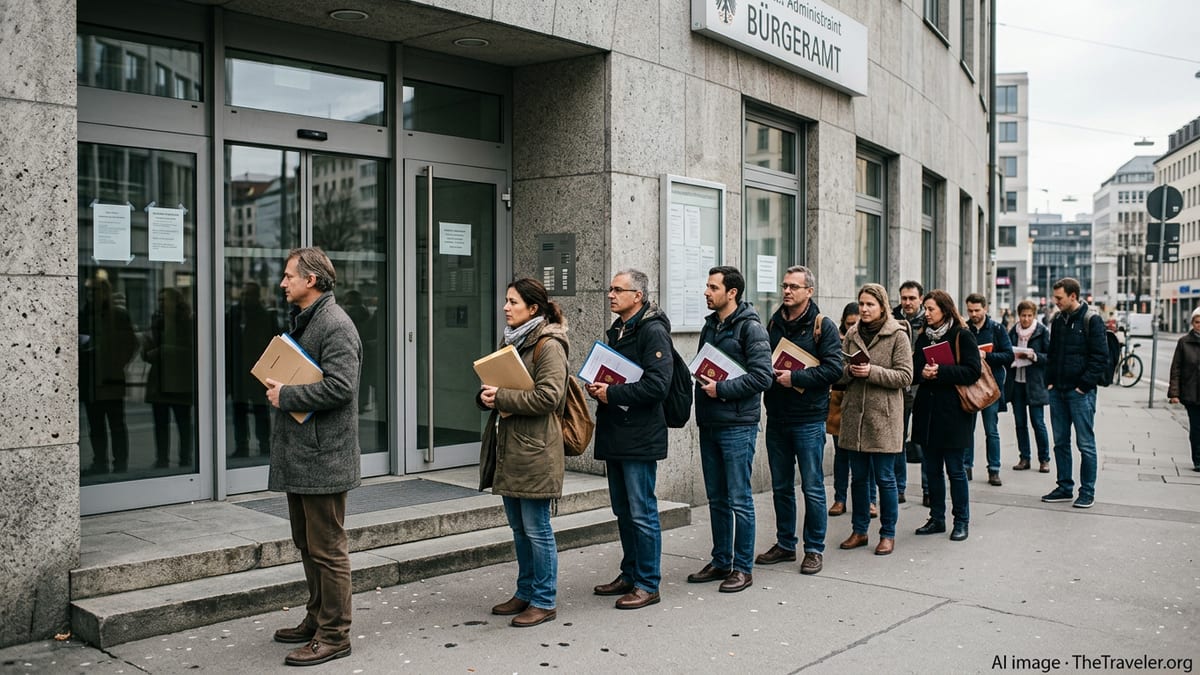
Overview of the German Immigration Process for New Residents
Germany separates immigration into several distinct legal steps: entry into the country, formal registration of residence, issuance or extension of a residence title, and eventual moves toward long-term residence or settlement. Each step is handled by different authorities and governed by specific legislation, primarily the Residence Act and the Federal Registration Act.
For most third-country nationals, the process typically starts with a national visa for long stays obtained at a German mission abroad, followed by onshore procedures to convert that visa into a residence permit after arrival. EU and EEA citizens follow a simplified route without a classic residence permit, but are still subject to local registration requirements. In all cases, the address registration (Anmeldung) is a central pivot in the process because many subsequent steps, including residence permit issuance, require proof of registration.
Timelines vary by city and by category of residence, but the critical pattern is consistent: secure legal basis for entry, document a recognized purpose of stay, complete local registration within a short statutory deadline, and then obtain or extend the appropriate residence title at the local immigration authority. Evaluating feasibility therefore involves assessing whether each of these stages can realistically be completed within the necessary timeframes given personal circumstances.
Pre-Arrival Planning and Eligibility Assessment
The German immigration process effectively begins before arrival, when prospective residents determine the correct basis for their stay. Germany offers different residence titles such as employment, EU Blue Card, research, vocational training, family reunification, study and self-employment. Each category has specific qualification, income or contract requirements and may have different processing times at consulates and immigration offices. Individuals must be able to document a clear purpose of stay that aligns with one of these categories.
In practice, new residents need to consider whether their profile fits a relatively straightforward category, such as a skilled worker with a signed employment contract and recognized degree, or a more complex one, such as self-employment or job seeking, which can involve additional scrutiny of business plans or financial means. The more complex the category, the more lead time should be anticipated for gathering supporting evidence, translations and legalized documents.
From a process perspective, it is important to understand that many German immigration steps are sequential rather than parallel. For example, it is rarely possible to apply for a German residence permit in Germany without first holding the appropriate national visa, unless the individual is visa-exempt for long stays through EU/EEA citizenship or specific agreements. Misjudging this sequence can result in needing to leave Germany to apply from abroad, significantly extending the relocation timeline.
Entering Germany: From Visa to Initial Arrival
For most non-EU nationals, entry for long-term residence is based on a national visa obtained from a German embassy or consulate. This visa is usually issued for a limited period, often up to 90 or 180 days, and is intended to cover the initial phase in Germany while the holder applies for a residence permit locally. The visa will typically indicate the permitted purpose of stay, which must match the later residence title.
On arrival in Germany, new residents must comply with border checks and may need to show the national visa, proof of accommodation, employment contract or admission letter, and health insurance documentation. At this point, the focus is primarily on confirming that the person is entering for the purpose for which the visa was issued. The deeper immigration processing occurs after entry, particularly at the level of city registration offices and local immigration authorities.
New residents should be aware that the effective timeline begins running on arrival. While the national visa allows legal presence, several critical downstream steps are time-sensitive. The main immediate priorities after landing include moving into accommodation that allows registration, securing an appointment for address registration and preparing for the residence permit application at the local immigration office.
Mandatory Address Registration (Anmeldung) After Arrival
Germany’s Federal Registration Act requires everyone who moves into a residence to register their address with the local Residents’ Registration Office, usually called Bürgeramt or Einwohnermeldeamt, within approximately two weeks of moving in. Most guidance from municipal authorities refers to a deadline of 14 days from the actual move-in date, not from arrival in Germany or from signing the lease. ([findenglish.de](https://www.findenglish.de/blog/complete-anmeldung-guide-for-expats-in-germany?utm_source=openai))
The address registration process, known as Anmeldung, is a cornerstone of the immigration system. After successful registration, the resident receives a registration certificate (Meldebescheinigung) that is needed for many subsequent formalities, including applying for a residence permit, obtaining a tax identification number and often opening a German bank account. In some cities, appointments at registration offices are scarce, so new residents must usually book an appointment as early as possible once a firm move-in date is known. ([simpleberlin.com](https://www.simpleberlin.com/blog/anmeldung-berlin-register-your-address?utm_source=openai))
Typical documents requested for Anmeldung include a valid passport or EU identity card, the completed registration form and a written confirmation from the landlord or housing provider (Wohnungsgeberbestätigung) confirming the move-in. This landlord confirmation is legally required and must include the address, move-in date and names of all persons moving in. Hotels and temporary housing providers sometimes decline to issue such confirmations, which can complicate registration and delay later immigration steps. ([insurancy.de](https://www.insurancy.de/en/expats/anmeldung/?utm_source=openai))
While late registration can result in warnings or fines under local rules, practice varies by municipality. More importantly for immigration planning, failure to register promptly can delay residence permit applications, tax registration and access to services. For decision-making purposes, prospective movers should assume that having a registerable address quickly after arrival is not optional but central to making the wider immigration process workable.
Applying for a Residence Permit at the Immigration Office
After address registration, non-EU nationals whose stay exceeds the validity of their national visa must apply for a residence permit (Aufenthaltstitel) at the local immigration authority, usually referred to as Ausländerbehörde or, in some cities, Immigration Office. This step converts the time-limited entry visa into a longer-term residence title that defines both the duration and rights of stay, including the right to work.
Local immigration offices generally require the following for an initial residence permit application: valid passport, biometric photos, proof of address registration (Meldebescheinigung), proof of health insurance, evidence of secured livelihood such as an employment contract or proof of funds, and documentation supporting the specific residence category (for example, university enrollment for students or degree recognition and job contract for skilled workers). Some categories may also require language certificates or proof of professional recognition.
Processing times vary significantly across Germany. In some municipalities, appointments for initial applications may be available within a few weeks, while in high-demand cities waiting times can stretch to several months. During this period, the national visa usually remains valid, and if necessary, immigration authorities can issue temporary confirmations to bridge gaps. However, because national visas are generally limited in duration, it is in the applicant’s interest to submit the residence permit application well before the visa expires.
For highly skilled workers, including EU Blue Card applicants, recent reforms have aimed to accelerate processing and make qualification criteria somewhat more flexible, for example by enabling easier recognition of foreign degrees and by slightly lowering salary thresholds. Nonetheless, the procedural requirement to submit a complete application with supporting documents at the local immigration office remains, and incomplete applications can prolong the process or delay access to full work authorization. ([rivermate.com](https://rivermate.com/blog/eu-blue-card-germany/?utm_source=openai))
Key Administrative Interactions After Initial Registration
Once a new resident has completed Anmeldung and applied for or obtained a residence permit, several related administrative steps follow that are not immigration titles in themselves but significantly influence the practical execution of an immigration plan. Most are contingent on the registration certificate and, for non-EU nationals, sometimes on proof that a residence permit application has been submitted.
First, the address registration triggers issuance of a German tax identification number (Steuer-ID), which is mailed to the registered address and is required by employers for payroll. Second, many authorities and service providers, including banks and health insurers, use the registration certificate as primary proof of residence. Third, some municipalities provide information about language integration courses or orientation offerings at this stage, and new residents with certain residence titles may be eligible or obliged to participate in integration courses administered under federal rules. ([simpleberlin.com](https://www.simpleberlin.com/blog/anmeldung-berlin-register-your-address?utm_source=openai))
For immigration process planning, these ancillary steps are relevant primarily because they can delay the practical start of work or study. For example, an employer may be reluctant to onboard a new hire until the residence permit has been formally granted or at least until the immigration office has issued a written confirmation that an application has been filed and work is permitted. Similarly, delays in receiving the tax ID or health insurance documentation can complicate payroll setup. Although not strictly immigration decisions, these administrative dependencies should be factored into the realistic timeline for becoming fully established in Germany.
Monitoring Status, Renewals and Pathways to Long-Term Residence
The German immigration process does not end with the first residence permit. Most permits are issued for a limited period that corresponds to the employment contract, study program or other basis of stay, often between one and four years. Before expiry, holders must apply for renewal or for a change of status, again at the local immigration authority. The renewal process usually requires up-to-date documentation of the ongoing basis of stay, continued health insurance and, in many cases, proof of sufficient income.
Over time, some residents may qualify for more secure statuses such as the EU long-term residence permit or a settlement permit (Niederlassungserlaubnis). Eligibility for these statuses typically depends on a minimum uninterrupted residence period in Germany, evidence of integration such as German language skills, stable income and pension contributions, and adequate living space. These more permanent titles offer stronger protection against loss of status and can, for example, facilitate mobility within the EU or provide a more stable basis for family life in Germany.
From a planning perspective, understanding these longer-term pathways is important when evaluating whether relocation to Germany is a short- or long-horizon move. For instance, some categories like EU Blue Card holders can access a settlement permit sooner under favorable conditions if they meet higher income and language thresholds, while other categories may require longer residence periods. While detailed settlement rules fall beyond this article’s core scope, the key point is that the initial immigration process sets a trajectory that can either support or limit future options.
In addition, recent legislative reforms have aimed to speed up processing and reduce bureaucratic barriers, but implementation is uneven across federal states and municipalities. Therefore, even when federal rules suggest simplified pathways, the practical experience at specific immigration offices can differ, underlining the importance of local-level information and realistic expectations about processing times.
The Takeaway
For prospective new residents, Germany’s immigration process is structured and predictable in outline but demanding in terms of documentation, appointments and timing. The core sequence consists of determining the correct residence category, obtaining the appropriate long-stay visa where required, entering Germany, registering an address within about two weeks of moving in, and then applying for a residence permit at the local immigration authority with complete supporting evidence.
Successful navigation of this process depends heavily on two factors: access to registerable accommodation shortly after arrival and the ability to secure timely appointments at registration and immigration offices. These practical constraints, rather than legal eligibility alone, often determine whether a planned move is feasible within a preferred timeframe. For individuals assessing relocation to Germany, an honest appraisal of these logistical aspects is as important as evaluating job offers or academic admissions.
While Germany continues to reform its immigration framework to attract skilled workers and streamline procedures, applicants should plan for administrative lead times, potential backlogs and strict adherence to documentary requirements. Those who approach the process with a clear understanding of the steps, realistic timing assumptions and an organized documentation strategy are significantly better positioned to achieve a stable residence status and to progress eventually toward longer-term settlement options if desired.
FAQ
Q1. How long do I have to register my address after moving in Germany?
Most municipalities expect new residents to complete their Anmeldung within about 14 days of moving into a residence, counting from the actual move-in date rather than the lease signature. Late registration can lead to warnings or fines and may delay downstream immigration steps.
Q2. Can I complete the immigration process without a fixed address?
In practice, a fixed, registerable address is essential because the registration certificate is required for many subsequent steps, including residence permit applications, tax registration and access to services. Temporary accommodation that does not allow registration will usually complicate or prolong the process.
Q3. Do EU and EEA citizens follow the same immigration process as non-EU nationals?
EU and EEA citizens benefit from freedom of movement and normally do not need a residence permit, but they are still required to register their address locally. Non-EU nationals typically need both address registration and a residence permit based on a specific purpose of stay.
Q4. When should I apply for a residence permit after arriving in Germany?
Non-EU nationals should usually apply for a residence permit as soon as possible after completing their Anmeldung and before their national visa expires. Early applications are advisable given variable appointment availability and processing times at local immigration offices.
Q5. What happens if my national visa expires before my residence permit is issued?
If a complete residence permit application is submitted in time, immigration offices can typically issue a temporary certificate confirming legal stay and, in many cases, continued work authorization until the formal residence card is produced. However, this depends on local practice, so applying early is important.
Q6. Which documents are most critical for the immigration process in Germany?
Key documents include a valid passport, long-stay national visa if required, landlord confirmation and registration certificate, proof of health insurance, evidence of income or financial means and documents supporting the specific residence category such as employment contracts or university admissions.
Q7. Are processing times for residence permits the same across Germany?
No. Processing and appointment waiting times vary widely by city and region. Large urban centers with high demand often have longer queues, while smaller municipalities may process applications more quickly. Applicants should factor in local conditions when planning timelines.
Q8. Can I change my residence title category after arriving in Germany?
In many cases it is possible to switch from one residence purpose to another, such as from study to employment, provided the legal requirements for the new category are met. However, changes typically require a formal application at the immigration office and may not be granted automatically.
Q9. How does the immigration process relate to later permanent residence in Germany?
The initial residence permit establishes the starting point for calculating qualifying residence periods for long-term or settlement permits. Maintaining legal, continuous residence, stable income and integration indicators such as language skills over several years is essential for accessing more permanent statuses.
Q10. What are the main risks that can disrupt the immigration process for new residents?
Principal risks include inability to secure a registerable address, delays in obtaining appointments at registration or immigration offices, incomplete documentation, and misunderstandings about visa and residence permit validity periods. Proactive planning and conservative time assumptions help mitigate these risks.