

More news on this day
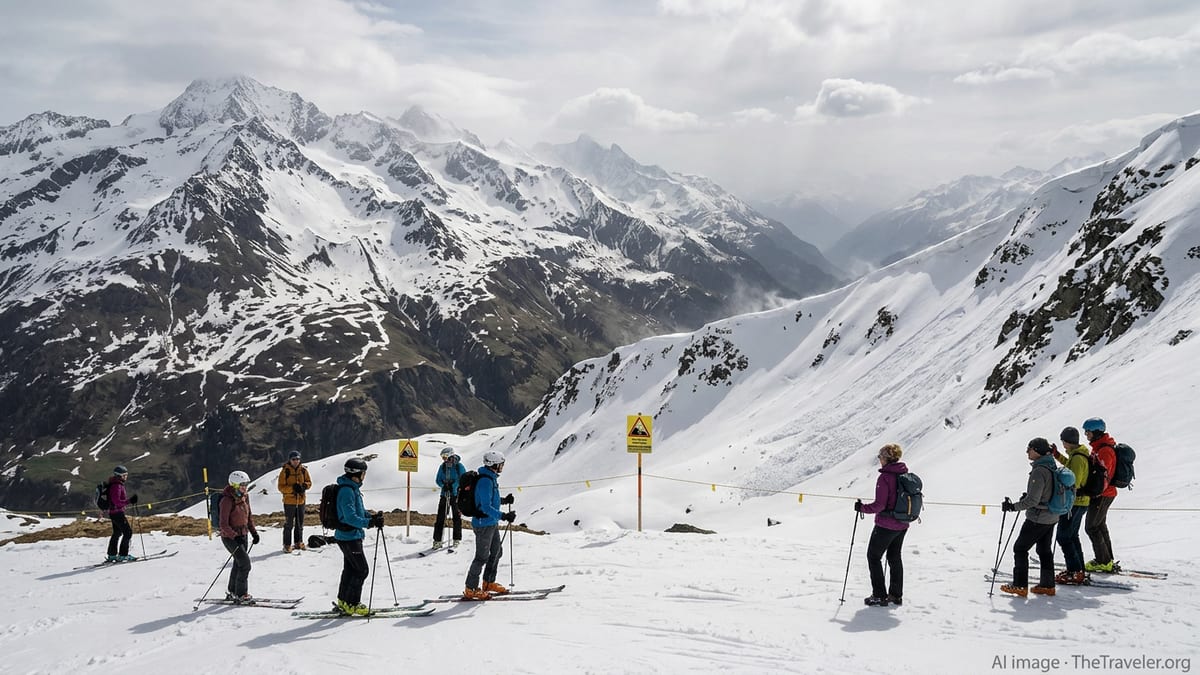
Germany has issued a spring travel advisory for Switzerland, warning its citizens about unstable weather patterns, elevated avalanche danger, and hazardous conditions for skiers, hikers, and other outdoor enthusiasts across the Alps as the winter season transitions toward milder months.
Get the latest news straight to your inbox!
Advisory Highlights Rising Springtime Risks in the Swiss Alps
The new advisory, published ahead of the main Easter and spring holiday period, urges German travelers to treat early spring in the Alps as a high-risk phase rather than the start of a milder outdoor season. Publicly available information from German foreign travel notices and European weather services points to a combination of deep snowpack, recent heavy snowfall, and strong winds that have created unstable layers in the snow, particularly on steep alpine terrain.
Reports from avalanche bulletins in Switzerland indicate that several alpine regions have recently experienced danger levels at the upper end of the European scale, with Level 3 (considerable) and Level 4 (high) conditions persisting through late February and early March. In some western and southern sectors of the Swiss Alps, repeated storms have deposited significant new snow on top of a fragile base, increasing the likelihood of both spontaneous and human-triggered slab avalanches on popular touring and off-piste routes.
The advisory does not discourage travel to Switzerland entirely, but it underscores that mountain activities require heightened preparation and caution in the coming weeks. Travelers are encouraged to distinguish between groomed resort slopes with controlled avalanche protection and unsecured off-piste areas, where conditions can change within hours as temperatures rise or new fronts move across the region.
Unstable Weather Pattern Drives Avalanches and Rapid Snowmelt
Recent weather across the broader Alpine arc has been marked by a series of Atlantic storm systems bringing alternating periods of heavy snowfall, storm-force winds at higher elevations, and brief warm spells. Meteorological coverage of the current European winter highlights how these swings have produced complex snowpacks, with weak layers buried under dense windblown slabs and crusts that respond unpredictably under additional loading or warming.
In Switzerland, national avalanche bulletins issued in February and early March describe a snowpack that remains particularly sensitive on north-facing and high alpine slopes. Strong winds along the main Alpine ridge have transported snow into leeward bowls and couloirs, building deep drifts that can release under relatively low additional pressure from passing skiers or snowboarders. When combined with brief sunny intervals and rising daytime temperatures, these conditions create a classic springtime instability, where hazard can spike during the midday and afternoon hours.
Reports from regional and international media also point to a series of recent avalanches in the broader Alpine region, including incidents in Valais and neighboring countries, some of which have affected transport corridors and ski areas. While not all of these events occurred in Switzerland, the pattern underscores the advisory’s message that the current season is atypically volatile, with localized extreme events possible even when forecasts at lower altitudes appear benign.
Heightened Implications for Skiers, Snowboarders, and Tourers
For winter sports travelers, the advisory draws a clear distinction between marked pistes at major Swiss resorts and off-piste or backcountry routes that have become increasingly popular among experienced skiers and riders from Germany. According to published avalanche safety guidance, controlled ski slopes are subject to active risk management, including controlled releases and closures, while routes beyond resort boundaries may not benefit from any such interventions.
During spring, when fresh snow overlays older, faceted layers, the consequences for those venturing into unpatrolled terrain can be severe. Avalanche experts routinely warn that slabs can be triggered well above a skier, releasing entire slopes and carrying debris into valleys, forests, or even transport lines. As a result, the advisory notes that specialized equipment such as avalanche transceivers, shovels, probes, and where appropriate airbags, along with strong route-finding skills, are indispensable for those considering off-piste or ski touring itineraries.
The advisory further highlights timing as a critical factor. While early morning departures remain standard practice for spring ski touring, public information from alpine clubs and mountain safety campaigns in Germany and Switzerland stresses that slopes can transition from relatively stable to highly unstable within a single sunny morning. Travelers are encouraged to adjust objectives to the conditions, favoring lower-angle terrain and routes with clear escape options over committing high alpine descents.
Spring Hiking and Mountaineering Face Hidden Alpine Hazards
The warning extends beyond winter sports to include hikers, snowshoers, and mountaineers who may underestimate residual snow coverage on popular summer trails. According to coverage from alpine rescue organizations and outdoor associations, sections of high-level routes and passes can remain snowbound well into late spring, with hard, compacted snowfields, cornices, and avalanche debris blocking paths that appear clear at lower elevations.
Such conditions present multiple risks: concealed ice can cause uncontrolled slips, while snow bridges over streams or depressions can collapse without warning. In addition, slush avalanches and wet-snow slides become more frequent as temperatures rise, particularly on sun-exposed slopes in the afternoon. Hikers planning early-season trips to classic Swiss routes are advised to regard them as serious alpine undertakings requiring winter-capable footwear, traction devices, and possibly technical equipment such as crampons and an ice axe, depending on altitude and exposure.
Publicly available guidance from Swiss and German alpine clubs also urges visitors to check the status of mountain huts, cable cars, and pass roads, many of which operate on reduced schedules outside the peak summer season. Temporary closures for avalanche control or storm damage can lengthen approaches or force detours, increasing exposure time in unstable terrain.
Practical Guidance for Travelers Navigating a Volatile Season
In light of the advisory, travelers are encouraged to adopt a more conservative mindset when planning trips to the Swiss Alps over the coming weeks. Official tourism platforms, alpine clubs, and national weather services provide daily avalanche bulletins, regional weather forecasts, and information on trail and lift status, which can help visitors match their plans to real-time conditions rather than fixed itineraries.
Germany’s notice emphasizes that adequate travel insurance, including coverage for mountain rescue and medical evacuation, is increasingly important for visitors drawn to high-risk activities such as freeride skiing, ski touring, and high-altitude hiking. Public information from insurers and rescue services in the region highlights cases in which costs can quickly escalate in remote valleys or glacier terrain, particularly when helicopter transport is required.
For those still keen to experience the Alps this spring, the advisory points toward lower-elevation destinations, valley walks, and resort-based activities as safer alternatives during active instability. Urban centers such as Zurich, Geneva, and Bern, as well as lake regions and foothill towns, remain largely unaffected by avalanche danger, offering a broad range of cultural and scenic experiences while the high mountains cycle through a volatile and hazardous transition from winter to summer.