

More news on this day
Germany has issued an urgent new travel advisory covering France, the United Kingdom, Spain, Denmark, Italy, the Netherlands, Greece and other European destinations, warning spring visitors to prepare for heightened security threats, stricter identity card checks and growing border delays just as the peak tourism season begins.
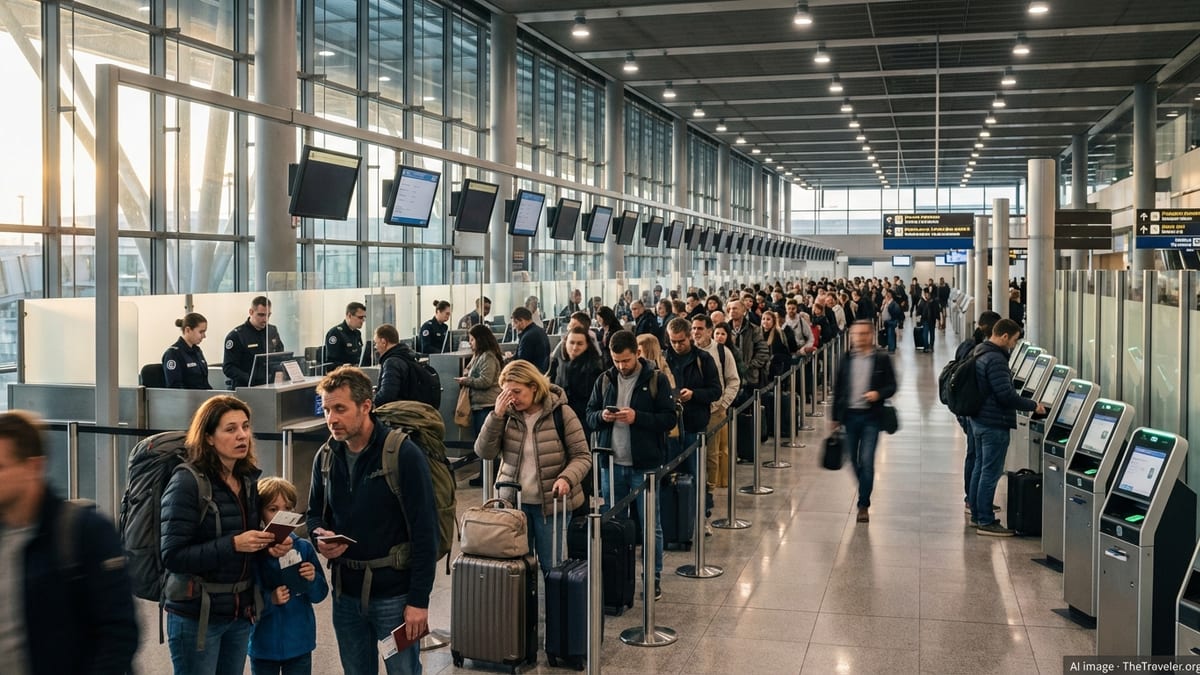
Security Fears Drive a Tougher German Travel Advisory
The advisory, published in late February 2026, reflects what German officials describe as a broad deterioration in the European security climate, driven by persistent terrorism concerns, regional geopolitical tensions and a spike in petty crime in tourist hubs from Paris to Athens. Travelers are urged to remain highly vigilant in crowded public places such as airports, train stations, metro systems and major landmarks, and to follow instructions from local police and security services at all times.
Germany’s warning singles out popular neighbors including France, Spain, Italy, Denmark, the Netherlands and Greece, noting that many have stepped up surveillance, patrols and random checks around transport nodes and major events. For visitors, that translates into visibly heavier police and military presence, more bag inspections and the possibility of short notice closures or evacuations of busy sites if a threat is identified.
Authorities stress that tourism continues across the region, but say the combination of heightened threat levels and record spring travel demand means risks and disruptions are more likely to be felt by ordinary visitors. Travelers from outside Europe, including the United States, are advised to pay particular attention to local news in their destination country and to register with their own foreign ministry or embassy alert systems where available.
Several European governments, including France and the United Kingdom, have independently raised or maintained significant domestic threat levels, citing concerns over inspired or opportunistic attacks in crowded spaces. Germany’s move brings these fragmented warnings together into a more coordinated message aimed at its own citizens heading across the continent this spring.
Border Checks Return Across Schengen as EES Rollout Looms
The advisory comes as Europe’s traditionally open internal borders face a web of temporary controls. Germany has confirmed it will prolong systematic checks at its land frontiers, including with France, until at least mid September 2026 under Schengen emergency provisions that allow tighter controls when there is a serious threat to public order or internal security. Similar measures remain in place in France, which has maintained the option of checks on arrivals from all neighboring EU states and Switzerland through at least April 30 2026.
These national decisions intersect with the European Union’s new biometric Entry Exit System, due for full implementation at all external Schengen border points on April 10 2026. The technology, which records fingerprints and facial images of non EU nationals, has already been partially introduced at some airports, ports and land crossings, where early trials have produced processing time increases of up to 70 percent and queues stretching to several hours at peak times.
Airport and airline associations across the continent have warned that, without additional staff and more flexibility in how the system is applied during busy periods, border bottlenecks risk tipping into widespread disruption over the summer travel wave. French airport operators in particular have asked Brussels to allow a pause or slower scale up of the system at major hubs like Paris Charles de Gaulle during the heaviest months, citing unresolved technology issues and chronic understaffing of border police.
For travelers heading from Germany into France, Spain, Italy, Denmark, the Netherlands or Greece this spring, that means planning for more frequent document checks not only at external EU borders, but sometimes on traditional Schengen internal routes such as long distance trains, motorway crossings and ferry ports. Officials advise allowing extra buffer time for connections and being ready for queues even on journeys that previously felt as simple as crossing a state line.
Identity Cards, Passports and New Authorization Rules
Alongside security threats and border controls, Germany’s advisory devotes significant attention to documentation, warning that identity cards and passports will be more strictly enforced across Europe in the months ahead. Police in many countries have legal powers to request identification at any time, and travelers who cannot produce an accepted document risk being detained while their identity is verified, or in some cases fined.
Within the Schengen Area, nationals of EU and some neighboring states can typically travel using national identity cards, but the advisory notes that many border posts involved in temporary checks now favor passports because they are easier to scan and match against security databases. German travelers in particular are being urged to carry a full validity passport even for short trips to nearby countries, and to keep a digital or paper copy stored separately in case of loss or theft.
Travel regulations for the United Kingdom also continue to tighten following its departure from the EU. German and other EU citizens will increasingly be required to obtain electronic travel authorizations for short stays in the UK, adding a new digital checkpoint that must be completed well before departure. While separate from Schengen systems, these British rules are contributing to a wider trend in Europe toward pre screening and data collection on visitors in the name of security and migration management.
Germany’s foreign ministry is also encouraging travelers to check not just entry rules but transit requirements, especially if they are changing planes in hubs such as Paris, Amsterdam or London on the way to non European destinations. Confusion about when and where biometric registration or electronic permissions are needed has already led some passengers to be denied boarding or to miss onward flights while paperwork issues are resolved.
Country by Country: Hotspots for Delays and Disruptions
France features prominently in the latest alert, both for its raised terrorism posture and for the practical strain on its border infrastructure as spring approaches. The government remains on high alert in and around Paris, major regional cities and tourist magnets such as the Riviera and key Alpine resorts. At the same time, French airports, ports and Channel rail links are contending with the phased rollout of biometric checks, with industry groups warning of potential queues of several hours at passport control if no further mitigation measures are introduced.
In the United Kingdom, Germany notes a combination of terrorism risk, sporadic industrial action and weather related disruption. Recent storms have already led to severe delays across rail and air networks, and unions representing transport workers have threatened further strikes through the spring period that could affect city metros, intercity trains and some airport operations. Travelers are urged to track timetables closely and build flexibility into city to city itineraries.
Spain, Italy, the Netherlands and Greece are cited mainly for rising petty crime in tourist concentrated neighborhoods, along with occasional large demonstrations that can spill into transport corridors. Pickpocketing, bag snatching and tourist scams remain a concern in busy metro systems, around famous monuments and at waterfront promenades. German officials recommend carrying only essential valuables when out sightseeing, using hotel safes where possible and avoiding displays of expensive jewelry or electronics in crowded areas.
Some central and eastern European states, including Poland, have separate German and partner country advisories tied to military activity near the borders with Belarus and Ukraine and to intermittent closures or slowdowns at road and rail crossings. While not part of the headline spring warning for western holiday destinations, these notices illustrate the patchwork of risks that now characterize travel across different parts of the continent.
How Spring Travelers Can Reduce Risk and Avoid Chaos
For visitors planning trips in March, April and May, the core message from German and other European authorities is to prepare more carefully than in previous years. Travelers are urged to check official advisories not only when they book, but again shortly before departure, in case rules on border checks or documentation have changed. Adjusting airport arrival times, particularly for early morning and late evening flights when staffing can be thinner, may help absorb unexpected lines at immigration or security.
Experts also advise reconsidering tight self made connections between trains, ferries and low cost flights that rely on smooth border crossings. A short hop from Germany into France or Denmark that once could be counted on to run almost like a domestic leg may now involve an unpredictable stop for ID checks or biometric registration, making missed onward departures more likely if itineraries are too compressed.
On the ground, common sense security precautions are being strongly emphasized. Travelers are encouraged to stay alert in crowded settings, avoid leaving luggage unattended and report suspicious behavior or items to local authorities. Monitoring local media in the language you understand best, or using reputable news apps and official alert services, can provide early warning of protests, strikes, severe weather or security incidents that might affect specific cities or transport routes.
Despite the sobering tone of the advisory, tourism bodies across France, Spain, Italy, Greece and other highlighted countries insist that visitors will still be welcome this spring. The challenge for travelers will be to balance the renewed allure of Europe’s cities and coastlines in the warmer months with a more complex security and border environment, and to adapt their plans so that extra checks and longer queues do not overwhelm the experience of being on the road again.