

More news on this day
Canadian travelers heading to Europe face a new reality at the border as Germany moves in step with Spain, France, Portugal, Italy, Greece, the Netherlands and other Schengen states to roll out the European Union’s biometric Entry/Exit System, replacing passport stamps with digital identity checks at air, land and sea crossings.
Get the latest news straight to your inbox!
Europe’s Biometric Border Shift Reaches Germany
Europe’s Entry/Exit System, commonly known as EES, is now moving from planning documents into day-to-day border checks across the Schengen Area. Publicly available information from EU institutions shows that the system formally entered into operation on 12 October 2025, with a phased launch running through early 2026. During this period, member states have been progressively activating EES at their external border crossings, gradually reducing reliance on manual passport stamps.
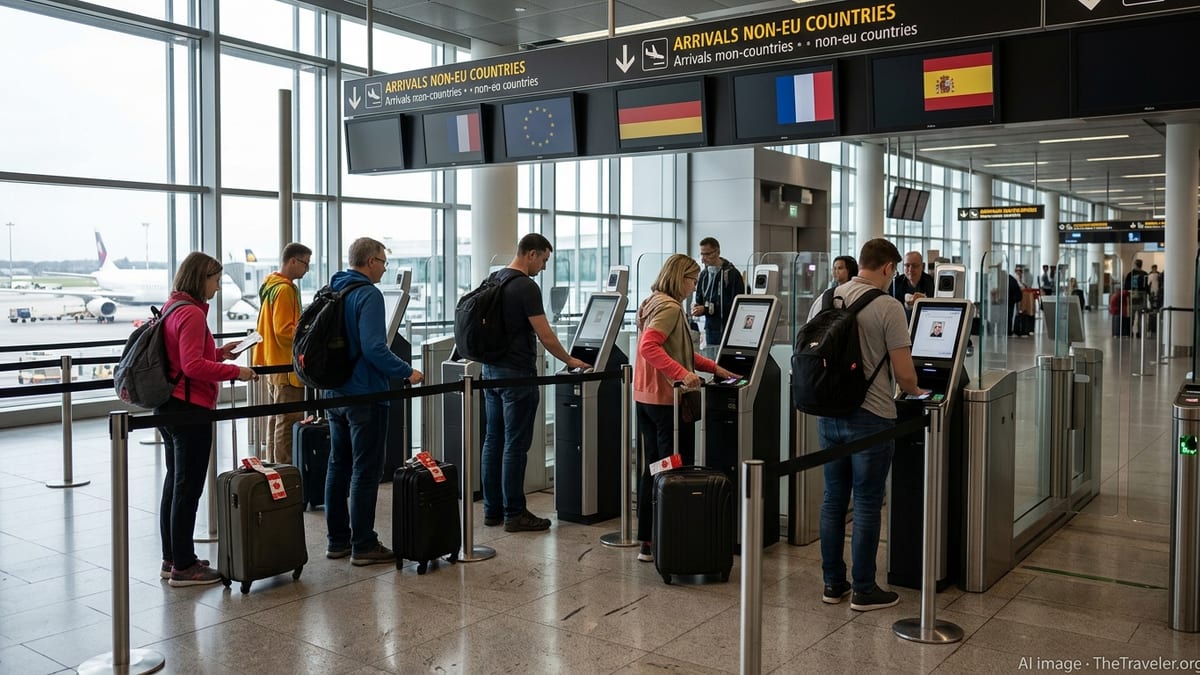
Germany has now joined early adopters such as Spain, France, Portugal, Italy, Greece and the Netherlands in using the new infrastructure at major gateways. German airports including Frankfurt and Munich are deploying biometric kiosks and automated gates that capture facial images and fingerprints from non‑EU nationals, including Canadians, on their first EES‑recorded entry. Once registered, subsequent crossings are verified against the stored biometric record instead of relying solely on visual inspection and ink stamps.
The move is part of a broader EU border‑management overhaul designed to tighten oversight of short stays while streamlining controls at high‑volume hubs. Official communications from the European Commission and the Council of the EU describe EES as a cornerstone of a new digital architecture that will eventually interconnect with other systems, including the forthcoming European Travel Information and Authorisation System, or ETIAS.
For Canadian visitors who have long enjoyed largely frictionless arrivals at Schengen airports, the change marks one of the most significant procedural shifts in years, even though their underlying visa‑free access for short stays remains intact.
What the New Rules Mean for Canadian Passport Holders
Under EES, Canadian citizens entering the Schengen Area as short‑stay visitors continue to benefit from visa‑exempt status, but their movements are now logged in a central EU database. On arrival at participating border posts, first‑time EES users are required to provide four fingerprints and a live facial image, alongside the usual passport scan. The system then generates a digital file recording each entry and exit, the travel document used and the length of stay.
The practical impact is most visible at the first crossing after activation. Travel industry briefings and airport advisories highlight that initial EES enrollment can add time to the border process as travelers are guided through biometric capture and familiarise themselves with new kiosks. After that first registration, later trips within the system’s data‑retention window are expected to move more quickly, with automated gates and pre‑existing biometric profiles reducing the need for manual checks.
For Canadians, the key rule itself has not changed: trips for tourism or business are still limited to 90 days within any rolling 180‑day period in the Schengen Area. What does change is how that limit is enforced. With every crossing time‑stamped electronically, authorities no longer rely on deciphering a patchwork of entry and exit stamps in multiple passports. Travelers who cut their timing close may encounter less flexibility, as over‑stays are more easily detected by system queries.
Border‑management briefings further indicate that EES data for compliant travelers are typically retained for three years from the last recorded exit, with a longer period applied when overstays or refusals of entry occur. Canadians planning repeat visits over several seasons will therefore be interacting with a digital history of their Schengen travel each time they arrive at a European border post.
Germany, Spain, France and Other Hubs Standardize the Experience
Major Schengen destinations frequented by Canadian tourists and business travelers are now converging on a similar model of biometric border processing. Spain has begun using EES at airports such as Palma de Mallorca, while France has been integrating the new system alongside its existing PARAFE automated gates, which already admit Canadian biometric passport holders at many terminals. Reports from aviation and travel industry bodies suggest that Italy, Portugal, Greece and the Netherlands are following comparable paths, focusing first on high‑traffic international airports before expanding to additional crossings.
Germany’s adoption is particularly significant for North American travelers because Frankfurt and Munich serve as key intercontinental hubs with dense schedules to and from Canada. Public information circulated by travel organizations notes that these airports are advising airlines and passengers to allow extra time during the first months of full EES use, particularly at peak hours and during holiday periods, when unfamiliarity with the new procedures can cause bottlenecks.
While the underlying technology is shared, implementation details can still vary by country and even by airport. Some terminals are pairing staffed biometric kiosks with dedicated assistance teams to help travelers through enrollment, whereas others are relying more heavily on self‑service e‑gates and roving support personnel. For Canadians connecting within Europe, this means that the first entry point into the Schengen Area remains the critical touchpoint for biometric capture, even if the final destination is in a different member state.
Travel industry commentary also points out that the new system diminishes the practical importance of collecting passport stamps as souvenirs or as evidence for future visa applications elsewhere. With EES operating behind the scenes, a Canadian’s passport may now contain fewer visible records of European trips, even as the digital log maintained by EU authorities becomes more comprehensive.
Preparing for Trips After the Rollout
As EES moves from pilot deployments to broader use, Canadian travelers are being urged by airlines, airports and travel advisers to treat border formalities as a more time‑sensitive part of the journey. Guidance from aviation associations recommends arriving at departure airports earlier than usual for flights into the Schengen Area, especially during the first wave of travel following the system’s expansion. The goal is to absorb potential delays linked to enrollment without risking missed connections or tight onward travel plans.
Canadians are also being encouraged to familiarise themselves with the basics of the new rules before departure. That includes understanding which European countries participate in EES, where the Schengen 90‑day clock applies, and how back‑to‑back stays in multiple Schengen states are aggregated into a single allowance. Some travel advisers suggest keeping a personal log of days spent in the Area to cross‑check with expectations, even though the official record is now electronic.
At the same time, observers point out that many Canadians already navigate comparable systems when visiting other destinations. Canada’s own Electronic Travel Authorization regime, as well as programs such as the United States’ ESTA and the United Kingdom’s upcoming Electronic Travel Authorisation, have accustomed frequent travelers to pre‑screening and data‑sharing as part of international trips. For those accustomed to automated passport control on long‑haul routes, EES may feel like an extension of a wider global trend rather than an entirely new concept.
Despite transitional challenges, European policymakers are promoting the system as a pathway to more predictable border operations in the medium term. Once the initial surge of first‑time enrollments subsides and airports optimise passenger flows, EES is expected to underpin faster decisions at border posts, more precise enforcement of stay limits and, ultimately, a more standardised experience across the Schengen Area for Canadian visitors.
Looking Ahead: ETIAS on the Horizon for Canadians
Beyond EES, Canadian travelers must also keep an eye on the timeline for ETIAS, the separate electronic travel authorisation that the European Union is developing for visa‑exempt visitors. According to revised schedules published by EU institutions, ETIAS is planned to take effect after EES has been fully deployed, with current estimates pointing to the last quarter of 2026. Once in place, ETIAS will operate in tandem with EES, checking travelers before departure while EES records their movements at the border.
For Canadians, ETIAS is expected to work in a similar fashion to Canada’s own eTA or the U.S. ESTA system. Prospective visitors will need to submit an online application ahead of travel, provide biographical details and answer security‑related questions. A modest fee is anticipated, and most approvals are projected to be issued quickly, though some applications may undergo additional review. The resulting authorisation will be electronically linked to the traveler’s passport and will be checked by carriers before boarding.
When ETIAS does arrive, it will add a new layer to pre‑trip planning but will not replace EES. Instead, the two systems are designed to complement one another: ETIAS screens who is allowed to board for Europe, while EES records when and how long those travelers actually stay once they cross the external border. For Canadians accustomed to visa‑free access, this combination signifies a shift from low‑visibility paper processes to a more data‑driven model of mobility management.
Until ETIAS becomes mandatory, however, the primary change for Canadian visitors remains the biometric checks and electronic records introduced under EES. With Germany now standing alongside Spain, France, Portugal, Italy, Greece, the Netherlands and other Schengen countries in implementing the new system, the transformation of Europe’s borders is moving decisively from concept to lived experience for North American travelers.