

More news on this day
Germany has joined the United States, Italy, Canada, the United Kingdom, Russia, China and several other nations in issuing urgent travel advisories for the Gulf region, even as Kuwait moves in the opposite direction for many foreign residents and visitors by quietly rolling out automatic one-month visa extensions and temporary waivers of overstay fines.
Get the latest news straight to your inbox!
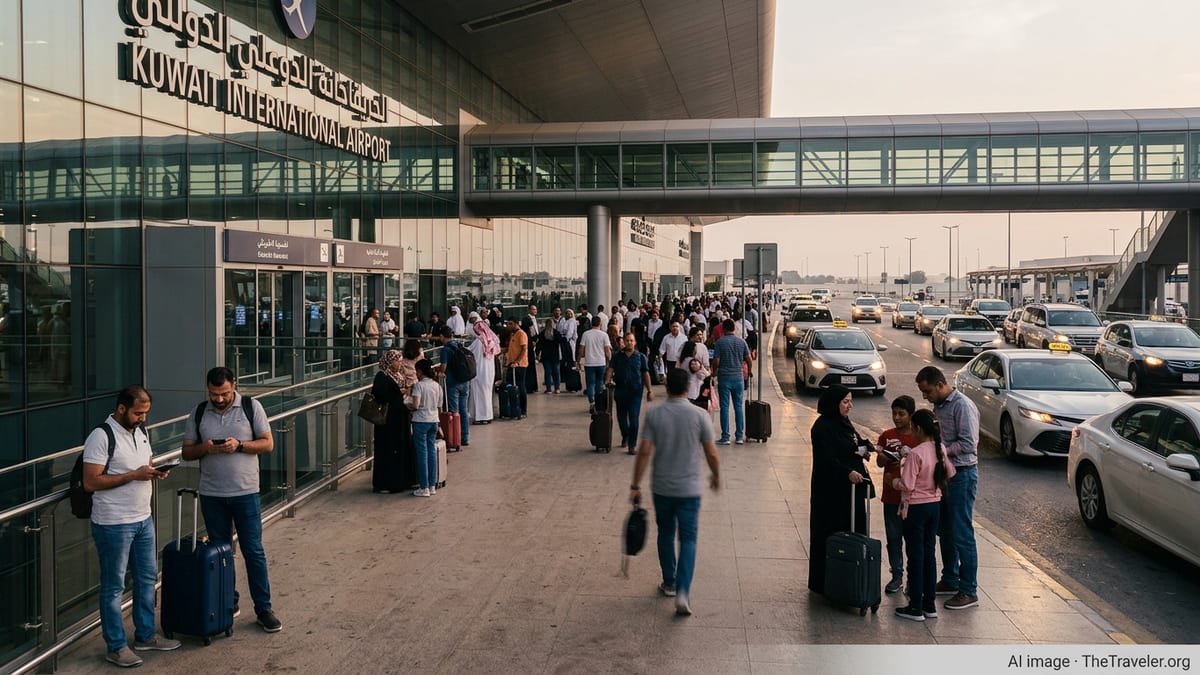
Coordinated Emergency Advisories Reshape Travel In The Gulf
Publicly available information from recent government travel notices indicates that Germany is the latest major country to urge its citizens to reconsider or end non-essential stays in parts of the Middle East, particularly around the Gulf. The move mirrors similar advisories already in place from the United States, Italy, Canada, the United Kingdom, Russia, China and others, creating an unusually broad international consensus on elevated risk in the region.
These advisories, which have intensified since late February and early March 2026, focus heavily on the possibility of regional escalation and disruption to flights, shipping and essential services. Travelers are being urged to monitor commercial flight availability closely and have contingency plans in place, as some carriers adjust schedules or introduce flexible booking policies in response to the uncertainty.
For tourists and expatriates, the overlapping alerts add a new layer of complexity to planning trips, rotations and family visits. Many travelers with spring and early summer itineraries are now weighing whether to proceed, reroute via alternative hubs or delay travel entirely, especially when itineraries depend on Gulf transit points.
At the same time, consular services across multiple countries are prioritizing registration and location updates from citizens in the region, in case of sudden airspace closures or rapid changes to local entry and exit rules. This environment puts a premium on flexible tickets, comprehensive travel insurance and careful documentation of visa and residency status.
Kuwait Introduces Automatic One-Month Visa Extensions
Against this backdrop of caution, Kuwait has quietly implemented measures that temporarily make life easier for many foreign visitors and residents. Recent local reporting and community guidance indicate that the country has activated an automatic one-month extension for a broad group of valid entry visas, removing the need for in-person applications at immigration offices in the short term.
Under the current arrangement, eligible visa holders are reportedly seeing their permitted stay automatically prolonged by one month in government systems, without having to submit new forms or pay standard extension fees. For thousands of travelers and family dependents, this effectively provides an administrative grace period at a time when flight availability and onward travel planning may be complicated by wider regional tensions.
The move marks a shift from Kuwait’s traditionally strict approach to visit and residency deadlines, which in recent years has included sharply higher overstay penalties and tougher enforcement of departure and renewal dates. The temporary relaxation appears designed to reduce crowding at immigration centers and avoid penalizing those who are temporarily unable to depart or complete renewals due to disrupted travel.
Expatriate communities and travel advisers are closely watching how consistently the automatic extension is applied across different visa categories, including family, work-entry and visit visas. While anecdotal reports suggest broad coverage, travelers are still being urged to carry printed evidence of their status when possible and to verify details with employers or sponsors.
Overstay Fine Waivers Offer Breathing Room To Stranded Travelers
A second component of Kuwait’s temporary policy shift is targeted relief on overstay fines. According to regional coverage and legal commentary, individuals whose authorized stays lapsed in the immediate period before or during the new extension window are being offered limited waivers or reductions of the daily penalties that would normally accrue.
Historically, Kuwait has imposed substantial fines for each day a foreigner remains in the country beyond the allowed visa period, with the possibility of exit bans or future entry complications. The current waiver initiatives appear to suspend or soften those penalties for a defined group of cases, especially where onward travel has been disrupted or renewal steps have been delayed by factors beyond the traveler’s control.
The practical impact is significant for affected families and workers who may have faced bills running into hundreds of dinars, along with uncertainty over whether they could leave and later return without long-term consequences. By neutralizing part of that financial and bureaucratic burden, the waivers effectively stabilize the status of many individuals who might otherwise rush to exit the country during a volatile regional moment.
However, advisers note that the fine waivers are not a blanket amnesty. Travelers are being cautioned that the relief appears time-bound and situation-specific, meaning those with longstanding overstay histories or unrelated legal issues may not benefit in the same way. Close attention to official announcements and any published clarifications remains essential.
Global Risk Warnings Versus Local Flexibility
The contrast between broad international emergency advisories and Kuwait’s relatively flexible visa stance illustrates the uneven nature of travel risk in 2026. While foreign ministries in Germany, the United States, Italy, Canada, the United Kingdom, Russia and China have amplified warnings about the potential for sudden disruptions, individual Gulf states are calibrating their internal rules to prevent administrative bottlenecks and humanitarian strain.
For Kuwait, offering automatic extensions and partial overstay relief reduces the likelihood of crowded airport departures or mass last-minute renewals, which can strain systems during times of heightened alert. It also signals a willingness to cushion the impact on foreign workers and visiting families who underpin large segments of the local economy.
From a traveler’s perspective, this divergence means that official advice from home countries and practical conditions on the ground do not always align neatly. A German or Canadian citizen in Kuwait, for example, might face strong recommendations to depart while simultaneously being granted extra time by Kuwaiti authorities to remain lawfully in the country and arrange logistics.
Travel planners and corporate mobility managers are therefore layering multiple risk assessments, combining national advisories, airline operations, insurance conditions and host-country immigration practices. Many are revisiting contingency plans that include alternative routings via non-Gulf hubs and pre-approved remote work arrangements if staff are unable to rotate on schedule.
What Travelers Should Watch In The Weeks Ahead
In the near term, the most immediate concern for travelers is whether regional conditions will trigger sudden airport closures, restricted airspace or further schedule cuts by major carriers. Any of these developments could quickly test Kuwait’s new visa-flexibility measures, as stranded passengers rely on the automatic extensions and fine waivers to remain in legal status while they search for new routes.
Visitors and residents in Kuwait are being advised by travel professionals to keep digital copies of passports, visas and residency pages, monitor announcements from airlines and local news outlets, and reconfirm bookings frequently. Those whose stays have already benefited from an automatic extension should note the new expiry date carefully, as there is no guarantee that a second automatic prolongation will follow.
Meanwhile, Germany’s decision to align with the United States, Italy, Canada, the United Kingdom, Russia and China in issuing critical emergency guidance underscores how quickly risk perceptions can shift. If conditions worsen, travelers may see additional layers of restrictions such as tighter transit rules, new insurance exclusions or temporary suspension of certain visa categories across the region.
For now, Kuwait’s one-month extensions and targeted overstay fine waivers offer a rare piece of administrative good news for thousands of foreign nationals in an otherwise tense travel environment. How long these concessions remain in place, and whether other Gulf states adopt similar measures, will be key questions for globally mobile travelers in the weeks and months ahead.