

More news on this day
Germany is emerging as a central driver of Croatia’s next tourism wave, joining the United States, Romania, Spain, Italy, Malta, Slovakia, Iran and other markets redirecting demand to the Adriatic country as travelers seek closer, perceived safer and better-value destinations heading into 2026.
Get the latest news straight to your inbox!
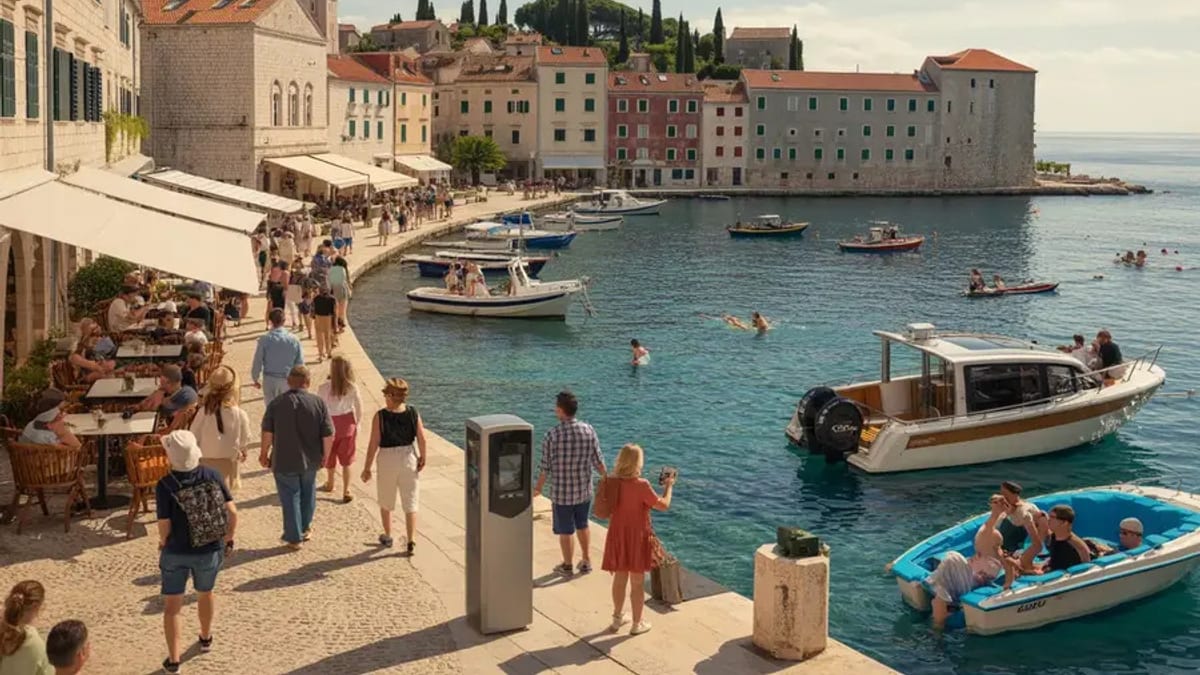
Image by Latest International / Global Travel News, Breaking World Travel News
Croatia Consolidates Its Status as a European Tourism Safe Haven
Publicly available data show that Croatia has spent the past three seasons consolidating its position among Europe’s most tourism-dependent and fastest-growing destinations. The eVisitor system recorded more than 21 million arrivals and around 109 million overnight stays in 2024, setting a new benchmark after the post-pandemic rebound. Analysts note that this performance came despite inflationary pressure and concerns about overtourism in several coastal hotspots.
Early figures for 2025 indicate that growth has continued, albeit at a slower pace. National and local statistics for the first half of 2025 point to a low single-digit increase in both arrivals and nights, reinforcing Croatia’s image as a mature but still expanding Mediterranean destination. Industry reports highlight that the country is now competing not only on sea and sun, but also on cultural, nature and active tourism products that are less vulnerable to seasonal shocks.
Regional observers describe Croatia as a “safe haven” market within Europe’s tourism map. While long-haul destinations contend with geopolitical risks, volatile airfares and shifting safety perceptions, Croatia benefits from its proximity to key source markets, eurozone membership and relatively stable political environment. Tourism strategists argue that these factors are increasingly significant in shaping travel decisions for 2026.
Germany’s Pivotal Role in Croatia’s Visitor Mix
Germany has been Croatia’s single most important foreign market for years, and recent statistics confirm that this dominance is holding as 2026 planning ramps up. Official tourism and statistics office releases for 2023 and 2024 show German visitors consistently topping the arrival and overnight tables, with an estimated 2.8 to 3 million German arrivals annually in the pre- and post-pandemic recovery period. In peak months such as August, Germans have accounted for more than a quarter of all foreign overnight stays in the country.
Reports from Croatian and German tourism bodies suggest that this relationship is structural rather than cyclical. High car-ownership rates, strong disposable incomes and long-standing cultural ties between the two countries support a steady flow of German leisure travelers to the Adriatic. Many German visitors reach Croatia by road, reducing their exposure to airline disruption and making the destination attractive even when aviation markets are unsettled.
At the same time, recent coverage notes subtle shifts in German travel behavior. Rising living costs and broader economic uncertainty in Germany have prompted some holidaymakers to seek shorter stays or more budget-conscious options. Industry commentary indicates that while the absolute number of German visitors remains high, spending patterns are evolving, with greater interest in early-booking discounts, shoulder-season travel and less crowded secondary destinations along the coast and inland.
Travel trade analysis for the 2026 season points to a renewed marketing focus on Germany by Croatian tourism stakeholders. Campaigns emphasize value for money, diverse accommodation categories and improved transport links, aiming to reassure German travelers that Croatia can deliver predictable, high-quality experiences despite broader economic headwinds.
United States, Romania, Spain, Italy and Malta Diversify Toward the Adriatic
Croatia’s appeal is no longer limited to traditional Central European feeder markets. Published tourism data and trade reports show rising interest from the United States, Romania, Spain, Italy and Malta, each responding differently to global instability and currency volatility as 2026 approaches.
For the United States, Croatia forms part of a broader pivot toward European destinations perceived as relatively secure and offering strong cultural and nature-based experiences. Airline schedules and tour operator programs for 2024 and 2025 have already expanded connectivity through major European hubs, making multi-country itineraries that include Croatia more accessible to North American visitors. Analysts suggest that in an environment of uncertain long-haul demand to other regions, Croatia benefits from its inclusion in Mediterranean and Central European circuits marketed as stable and high-value.
Romania and other Eastern European markets are increasingly present in Croatian arrival figures, according to recent national statistics. Stronger regional air and road links, combined with comparable price levels, have made the Adriatic a competitive option for middle-class Romanian travelers who might otherwise have chosen destinations outside the European Union. At the same time, economic caution in households has favored closer, shorter trips, a trend that appears likely to continue into 2026.
Spain, Italy and Malta, themselves heavily tourism-dependent and exposed to climate and capacity pressures, are also present in Croatian inbound statistics, particularly through regional city-break and conference travel. Industry commentary notes that as these Mediterranean countries wrestle with congestion and climate-related challenges, some travelers and even small-scale operators are experimenting with Croatia as an alternative or complementary destination. This exchange is visible in rising flows of visitors, especially during shoulder seasons when coastal cities such as Split, Zadar and Rijeka promote cultural and gastronomic events to attract international guests.
Emerging Interest from Slovakia, Iran and Nontraditional Markets
Alongside larger economies, smaller or more distant markets including Slovakia and Iran are drawing attention in Croatia’s tourism planning for 2026. European Commission and regional tourism statistics underline that Slovakia already sends a notable volume of travelers abroad relative to its population, and Croatia figures prominently among preferred seaside destinations. Improved motorway infrastructure and competitive accommodation pricing have consolidated that position.
Travel trade publications and aviation news have also highlighted tentative signs of growing outbound demand from Iran to Central and Eastern Europe in recent years, driven by a combination of diaspora links, education travel and niche tourism segments. While Iranian arrivals to Croatia remain comparatively modest, the market is watched closely because of its potential sensitivity to global political realignments and sanctions regimes. Any easing of travel constraints could translate into stronger flows toward relatively affordable European seaside destinations, with Croatia well placed to capture a share.
Other emerging markets cited in tour operator reports include countries in the Caucasus, the Gulf and parts of Asia, where middle-income travelers are seeking European holidays but remain cautious about cost and perceived safety. Croatia’s tourism authorities and private sector operators have responded by attending more international trade fairs, adjusting marketing messages and investing in multilingual digital platforms tailored to these audiences.
Analysts caution, however, that diversification brings new operational and cultural challenges. Variations in travel seasonality, payment preferences and regulatory requirements require adjustments in everything from air service agreements to local hospitality training. As 2026 approaches, Croatia is working to balance the benefits of new markets with the need to preserve service quality for its core European base, particularly Germany.
Tourism Growth Versus Economic and Social Pressures
The rapid expansion of Croatia’s visitor economy is taking place against a backdrop of global economic uncertainty and local debates over sustainability. International organizations have warned that geopolitical tensions, higher borrowing costs and weaker consumer confidence could weigh on tourism demand across Europe in 2026. Yet the same assessments also note that destinations perceived as resilient, accessible and diversified may outperform, a category many analysts now place Croatia in.
Inside the country, public statistics and media reporting show tourism contributing close to one fifth of gross domestic product, among the highest shares in the European Union. This reliance raises questions about vulnerability to external shocks, from energy prices to climate-related disruptions. Municipal leaders in major destinations such as Dubrovnik and Split have already begun experimenting with visitor-flow management and caps on cruise or day-trip arrivals in response to overtourism concerns.
Economic commentary points to a nuanced picture on the ground. While accommodation occupancy and overall arrivals remain high, some reports describe signs of visitor fatigue with rising prices and crowded peak-season conditions. Social media discussions and travel forums in 2025 have featured complaints about dynamic pricing, particularly in food and beverage services, prompting local and national industry groups to call for more transparent practices to protect Croatia’s value-for-money reputation.
As German, American, Romanian, Spanish, Italian, Maltese, Slovak, Iranian and other travelers refine their 2026 plans, Croatia’s challenge will be to maintain its momentum while addressing these structural pressures. Policy documents and tourism strategies released over the past two years emphasize year-round tourism, regional dispersion of visitors and higher-quality, lower-impact development as key responses, aiming to ensure that the country remains attractive even in a more uncertain global economic climate.