

More news on this day
As geopolitical tensions, inflation concerns and uneven economic growth reshape European travel choices for 2026, Croatia is emerging as a relative safe haven, attracting renewed attention from Germany, the United States, Romania, Spain, Italy, Malta, Slovakia, Iran and other markets seeking stability and value in a turbulent global tourism landscape.
Get the latest news straight to your inbox!
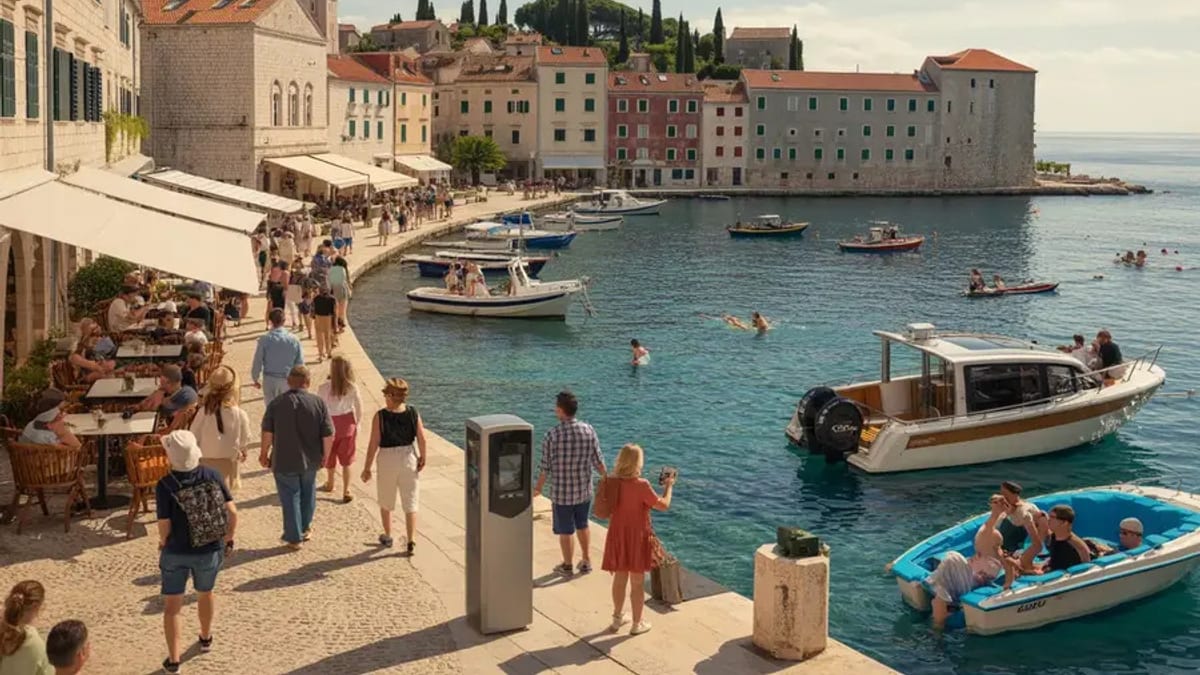
Germany Emerges as Croatia’s Anchor Market for 2026
Recent tourism data shows that Germany has consolidated its position as Croatia’s most important foreign source market, reinforcing a trend that has been building since before the pandemic and strengthened through 2024 and 2025. Croatian statistical releases and sector analyses indicate that German visitors account for the largest share of foreign arrivals and overnight stays, with several million visits annually and more than one fifth of all foreign nights in some recent seasons.
In the first half of 2025, Germany again generated the highest number of overnight stays in Croatia, with figures in the millions and a modest year on year increase, even as many euro area economies wrestled with weak industrial output and soft consumer sentiment. Observers note that this performance underlines a willingness among German travelers to prioritize nearby, easily accessible destinations that offer a perceived balance between price and quality.
For 2026, travel market briefings in Germany highlight Croatia alongside neighboring Mediterranean destinations as a preferred option for cost conscious holidaymakers. Analysts point to Croatia’s combination of extensive coastline, developed camping and private accommodation sectors, and relatively short travel times by car or low cost air connections as key reasons why German demand is expected to remain strong despite broader economic uncertainty.
Industry overviews also note that German outbound travel to the Western Balkans and Adriatic region has already surpassed pre pandemic levels, with Croatia among the key beneficiaries. As households in Germany weigh spending decisions in a low growth, low confidence environment, package tours and repeat stays in familiar Croatian resorts are increasingly presented as lower risk choices for summer 2026.
Transatlantic and Regional Markets Expand Their Footprint
While Germany remains dominant, Croatia’s tourism growth entering 2026 is increasingly broad based. Published coverage of tourism performance in late 2025 highlighted the United States as one of the fastest growing long haul markets, with strong year on year gains in arrivals and overnight stays. American travelers, traditionally a smaller segment for Croatia, are now contributing more significantly to winter city breaks, coastal shoulder seasons and cruise related traffic.
European Tourism Commission data on 2025 trends shows that most reporting destinations in Europe, including Croatia, recorded rising numbers of American visitors compared with the previous year, in spite of a weaker dollar and concerns over a slowing United States economy. Travel analysts suggest that Croatia’s position as a Schengen and euro area member makes itinerary planning easier for transatlantic visitors combining several European countries in a single trip, which could continue to support growth from the United States in 2026.
Closer to home, regional markets such as Romania, Slovakia and other Central and Eastern European countries are also strengthening their role. Pre pandemic patterns of car based summer holidays along the Adriatic have resumed, with household budgets in these markets particularly sensitive to price movements. As some rival Mediterranean destinations experience sharper cost increases, Croatia’s authorities and businesses are under pressure to manage pricing in order to preserve appeal among these cost conscious visitors.
Southern European partners including Spain and Italy, traditionally seen as direct competitors, are simultaneously important outbound markets for Croatia. Travel industry reporting shows that Italians remain among the top ten foreign visitor groups by nights, while Spanish demand, though smaller, is growing off a low base. This diversification across both regional and long haul markets is widely viewed as a buffer against shocks in any single source country.
Tourism Strength Offsets Global Economic and Geopolitical Headwinds
Croatia enters 2026 with solid macroeconomic projections supported in part by tourism, even as the broader European picture remains subdued. European Commission forecasts released in late 2025 anticipate Croatian GDP expansion close to 3 percent in 2025, easing slightly but remaining above the euro area average in 2026. Analysts attribute part of this resilience to sustained services exports, particularly tourism, alongside inflows of European Union recovery and cohesion funds.
International institutions such as the OECD and the International Monetary Fund note that risks to Croatia’s outlook are tilted toward the downside due to external factors, including weaker demand from major trading partners like Germany and Italy, ongoing geopolitical tensions affecting energy and transport costs, and the possibility of softer tourism demand if households retrench. However, current baseline scenarios still assume continued growth in visitor numbers and overnight stays, albeit at a slower pace than in the immediate post pandemic rebound years.
Within Europe, tourism performance is increasingly seen as a differentiating factor among smaller economies. Croatia’s ninth place ranking among European Union destinations by international arrivals in recent tallies, and its position as one of Southern Europe’s most visited countries, underline the sector’s strategic importance. As global instability continues to weigh on long haul travel to some regions, Mediterranean and Adriatic destinations perceived as politically stable and relatively secure are expected to capture a larger share of demand.
For 2026, many travel and economic outlooks emphasize the interaction between inflation, wages and discretionary spending. Households facing higher housing and energy costs may cut back on travel frequency or duration but still seek one main holiday. Croatia’s challenge, according to sector commentary, will be to maintain competitiveness on pricing and service quality so that it remains within reach for middle income travelers from Germany, the United States, Romania, Slovakia, Italy, Spain, Malta and beyond.
Infrastructure, Events and Policy Aim to Lock In Gains
To sustain momentum, Croatia is investing in tourism related infrastructure and positioning major events as anchors for 2026 visitation. Airport statistics reveal that Croatian airports handled more than 14 million passengers in 2025, reflecting a significant recovery in air connectivity. Fleet modernization efforts by national and regional carriers are expected to improve efficiency on key European routes, which could support further expansion of services from Germany, Italy, Spain and transatlantic hubs.
Sports and cultural events are another component of the 2026 tourism strategy. Zagreb is scheduled to host the European Men’s Artistic Gymnastics Championships in August 2026, an event expected to draw athletes, officials and spectators from across the continent. Tourism planners view such fixtures as opportunities to promote city break travel beyond the traditional July and August coastal peak and to showcase Croatia’s urban infrastructure and hospitality capacity.
Policy documents from Croatian authorities and European partners stress continued investment in sustainability, diversification beyond sun and sea, and improved regional transport links. Initiatives under discussion range from enhancing rail and bus connectivity from Central Europe to upgrading coastal and island infrastructure to better handle peak season crowds. These efforts are presented as essential for maintaining the country’s attractiveness amid intensifying competition from neighboring destinations.
However, sector observers also caution that overtourism and rapid price increases could undermine progress if not carefully managed. Public discussions in 2025 highlighted concerns among some travelers that Croatia had become significantly more expensive than neighboring non euro countries. For 2026, industry commentary suggests that aligning pricing with perceived value, rather than relying solely on high demand, will be crucial to preserving loyalty from Germany and other core markets.
New and Niche Markets Add to a More Global Visitor Mix
Beyond established European partners and the United States, Croatia is gradually attracting visitors from a broader range of regions, including the Middle East and parts of Asia. While arrivals from Iran and several Gulf markets remain modest compared with those from Germany or Slovenia, travel trade reporting points to increased marketing activity and growing interest in Adriatic coastal itineraries, religious heritage routes and medical tourism offerings.
Travel agencies in Central and Eastern Europe describe Croatia as a “bridge” destination that can be combined with neighboring countries on multi stop tours, an approach that appeals to emerging markets seeking varied experiences within a limited time frame. Packages that include Croatia alongside Italy, Slovenia or Hungary are being promoted for 2026, often emphasizing ease of movement within the Schengen area and the convenience of a single currency across much of the journey.
Malta and Slovakia, though small outbound markets in absolute terms, are also part of this wider reorientation toward Croatia. Airline schedule updates show seasonal services linking these countries with Croatian coastal airports, pointing to growing niche flows that complement mass market traffic from Germany, Austria and Poland. Sector analysts argue that such diversification enhances resilience, reducing reliance on any single geography or travel segment.
With global tourism still adjusting to post pandemic realities, climate concerns and geopolitical shocks, Croatia’s ability to draw interest from a rising number of countries is seen as a significant advantage. As 2026 approaches, the convergence of strong demand from Germany, expanding transatlantic interest from the United States and a widening circle of regional and emerging markets positions Croatia as one of Europe’s more dynamic, if closely watched, tourism stories.