

More news on this day
Greece’s aviation and tourism sectors marked a new milestone in 2025, with international air arrivals reaching a record 31 million and Germany emerging as the country’s leading source market, ahead of Turkey, the United Kingdom, the United States and Israel.
Get the latest news straight to your inbox!
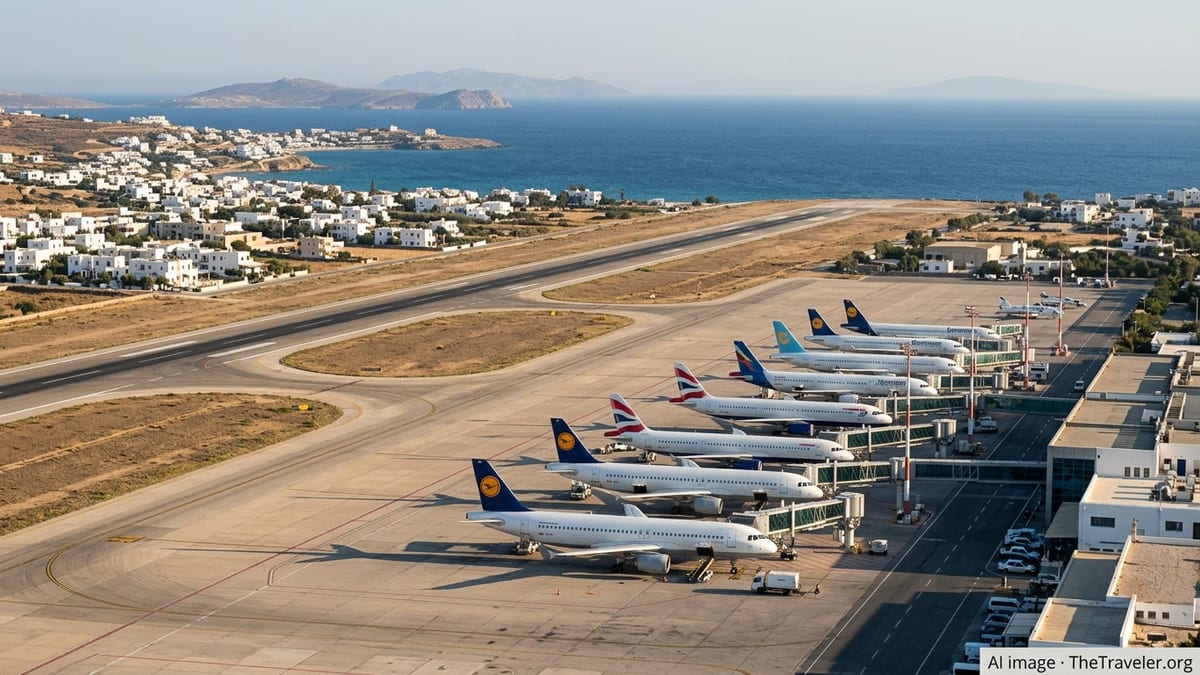
Germany Takes Top Spot in a Record-Breaking Year
According to recently published aviation and tourism data drawing on Bank of Greece statistics and airport traffic reports, international air arrivals to Greece climbed to around 31 million in 2025, setting a new high for the Mediterranean destination. The figures reflect a consolidation of the strong rebound seen in 2023 and 2024, when overall foreign arrivals surpassed 40 million visitors across all modes of transport.
Within this surge, Germany strengthened its position as Greece’s largest individual source market. Travel intelligence analyses based on Bank of Greece data indicate that arrivals from Germany grew at a solid pace in 2025, pushing German traffic ahead of other key markets such as Turkey, the UK, the US and Israel in terms of international air passengers and associated receipts.
Sector reports highlight that Germany’s lead is not only visible in visitor numbers but also in travel revenue, with German travelers generating the highest share of tourism receipts among source markets. This combination of volume and spending has made Germany the cornerstone of Greece’s inbound tourism portfolio during the 2025 season.
Tourism researchers note that the latest figures build on trends already visible in 2023 and 2024, when German arrivals to Greece passed the five million mark and continued to grow. The 2025 air traffic data suggest that Germany has now widened its lead over other traditionally strong markets, confirming a structural shift in source-market dynamics.
Turkey, UK, US and Israel Deliver Growth but Lose Primacy
While Germany has taken the top spot, other major markets also contributed significantly to Greece’s record aviation and tourism performance in 2025. Industry summaries of airport arrivals show continuing growth from Turkey, the UK, the US and Israel, albeit at levels that no longer match Germany’s overall volume.
Analysts point out that the UK and the US have been among the fastest-growing long-haul and medium-haul markets for Greece in recent years, with substantial increases in both direct flights and tourism receipts. However, the 2025 data indicate that these gains were not sufficient to surpass Germany’s dominant position in international air arrivals.
Turkey and Israel remain central to Greece’s regional network, particularly for short-haul traffic in the Eastern Mediterranean. Air service expansion and year-round schedules have supported steady flows from both countries. Yet the latest tallies show that their combined volumes still trail the robust pipeline of German visitors traveling to Greek destinations.
Travel-market commentators describe the current configuration as a diversification rather than a dependence on a single market. Germany leads in absolute arrivals, but the UK, US, Turkey and Israel continue to play an important role in sustaining load factors, extending the season and supporting specific niche segments such as city breaks, religious tourism and short-notice leisure travel.
Aviation Network Expansion Fuels Mediterranean Hub Ambitions
The 31 million international air arrivals recorded in 2025 are closely linked to a substantial expansion of Greece’s aviation infrastructure and network over the past decade. Data from Athens International Airport and regional airports under concession arrangements indicate sustained double-digit growth in passenger volumes compared with pre-pandemic levels, supported by new routes, higher frequencies and larger aircraft.
Airline schedule analysis for 2025 points to significant capacity increases from German cities such as Frankfurt, Munich, Düsseldorf and Berlin to both Athens and popular island gateways, including Rhodes, Heraklion and Corfu. Low-cost carriers and charter operators have added to the mix, feeding traffic from secondary German airports into Greek holiday regions.
Similar patterns are visible from the UK, US, Turkey and Israel, where carriers have introduced more non-stop connections and seasonal routes to regional Greek airports. Nevertheless, Germany’s extensive network breadth and the country’s large outbound travel base have translated into higher overall passenger numbers to Greece compared with these competitors.
Industry observers suggest that Greece is consolidating its role as a key aviation and tourism hub in the Eastern Mediterranean. The combination of upgraded airport facilities, competitive charges, and diversified airline partnerships has allowed the country to capture a growing share of intra-European and transatlantic leisure traffic during the 2025 summer peak.
Tourism Revenue Outpaces Arrivals as Quality Rises
Beyond headline arrival numbers, 2025 has been characterized by a notable rise in tourism revenue. Recent reporting based on Bank of Greece figures indicates that travel receipts climbed by roughly 9 to 10 percent compared with 2024, outpacing the growth in visitor numbers and signaling higher average spending per trip.
Germany’s lead as a source market is reflected in these financial results. Analyses of country-specific receipts show that German visitors account for the largest share of tourism revenue, while UK and US travelers register particularly strong growth rates in spending. This pattern supports the view that Greece is moving gradually toward a higher-value tourism model, with an emphasis on longer stays, upgraded accommodation and diversified experiences.
Market research from tourism think tanks and industry associations notes that visitors are spending more on gastronomy, cultural activities, outdoor recreation and premium services across the islands and mainland. The 2025 data suggest that this qualitative shift is occurring across multiple source markets, with Germany at the forefront in absolute terms and Anglo-Saxon markets leading in growth percentages.
Travel economists underline that tourism receipts have become an increasingly important component of Greece’s external balance, offsetting a substantial part of the goods trade deficit. In this context, the continued expansion of high-spending segments from Germany, the UK, the US and other mature markets is viewed as critical for sustaining economic momentum.
Strategic Challenges Behind the Record Numbers
The achievement of 31 million international air arrivals in 2025 reinforces Greece’s position as one of Europe’s most tourism-dependent economies, but it also underscores structural challenges. Tourism policy studies stress the need to manage capacity pressures on popular islands, protect natural and cultural assets, and ensure that record volumes translate into broad-based local benefits.
Analysts highlight that heavy reliance on air arrivals from a handful of large markets, led by Germany, introduces exposure to macroeconomic and geopolitical risks. Exchange-rate movements, changes in consumer confidence, or external shocks affecting outbound travel from these countries could quickly impact Greece’s visitor numbers and tourism revenue.
In response, public strategies referenced in tourism development plans emphasize diversification across both markets and products. Efforts are focusing on attracting visitors from a wider range of European and non-European countries, extending the season into spring and autumn, and promoting lesser-known regions beyond the established island hotspots.
Sector commentators note that the 2025 performance gives Greece a strong platform to pursue these objectives. Germany’s rise to the top of the air arrivals ranking, outpacing Turkey, the UK, the US and Israel, is seen as a marker of the country’s competitive appeal in the Mediterranean. The challenge now, they argue, lies in converting record-breaking traffic into a sustainable, resilient tourism model for the years ahead.