

More news on this day
Germany has consolidated its position as a powerhouse source market for Greece, joining the United Kingdom, the United States, Italy, France, Spain, Russia, China and Japan in driving a new tourism surge that is filling aircraft and airports, with Aegean Airlines, Lufthansa and Emirates all reporting record or near-record passenger volumes on Greek routes.
Get the latest news straight to your inbox!
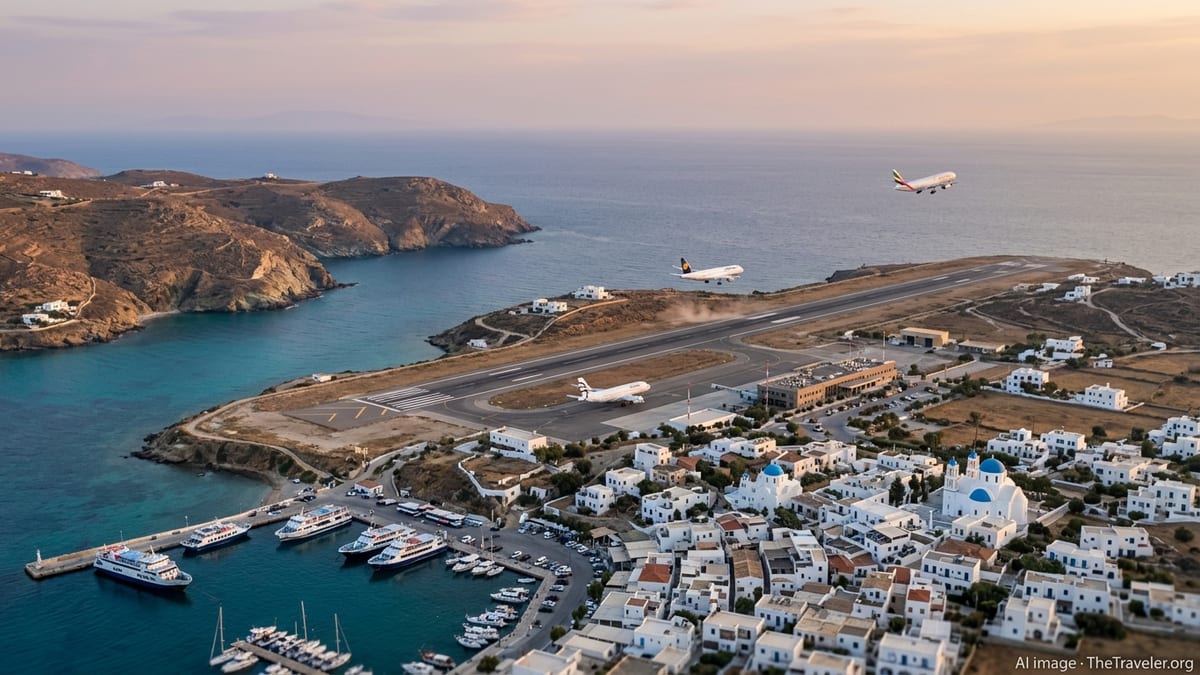
Germany Climbs to the Top of Greece’s Tourism League Table
Recent data on Greece’s travel receipts and arrivals show that Germany has emerged as the single most valuable tourism market for the country, edging ahead of other long-standing European feeders. Reports drawing on Bank of Greece figures indicate that German visitors generated the largest share of inbound tourism income in the most recent full year, with arrivals expanding at a faster pace than many other EU markets.
Analyses of Greece’s tourism performance between 2019 and 2024 highlight that Germany and the UK together now account for roughly one-third of total travel revenues, underscoring their central role in the sector’s rebound. While traditional European markets such as France and Italy remain important, growth from Germany has been particularly strong, both in absolute visitor numbers and in spending per trip.
Industry and economic bulletins describe a clear structural shift: whereas Greece once depended more evenly on a wider mix of European sources, a larger share of incremental growth is now traced back to Germany, the UK and the US. This concentration has helped lift overall receipts to record or near-record levels despite pockets of softness from some smaller European markets.
German demand has also become more geographically diverse within Greece. Airport traffic reports point to rising German arrivals not only at Athens International Airport, but also at regional gateways such as Heraklion, Rhodes and Thessaloniki, where sun-and-sea holidaymakers are increasingly combining classic resort stays with city-break style itineraries.
Record Passenger Growth for Aegean as Greece Airports Hit New Highs
Greece’s flag carrier Aegean Airlines sits at the heart of this boom. The airline’s latest financial and traffic disclosures for 2024 describe a new all-time high in passenger numbers, continuing the strong recovery recorded in 2022 and 2023. Passenger traffic at all Greek airports reached close to 80 million movements in 2024, according to Aegean’s annual report and civil aviation data, with the carrier capturing a significant share of this growth.
More recent trading updates for 2025 show that Aegean has continued to expand its capacity and load factors. In the most recent summer quarter, the airline reported that it offered around 6.6 million seats, an increase on the same period a year earlier, and carried approximately 5.6 million passengers with higher year-on-year growth on international routes. The performance was achieved despite air traffic control delays across Europe that created operational challenges during the peak season.
Regional airport operator documents also confirm that Greece’s island and secondary airports are experiencing record flows. Fraport Greece’s reporting for 2024 notes that its network of regional airports handled nearly 20 million passengers, a historic high helped by intensified schedules from European carriers and code-sharing partnerships that feed long-haul demand into domestic island routes.
This expansion has deepened the link between strong source markets and Greece’s lesser-known destinations. As Aegean and other airlines ramp up connections between key European hubs such as Frankfurt, London and Paris and Greek islands, visitor numbers from Germany and its peers are being spread across a wider map of resorts, cultural cities and secondary islands.
Lufthansa and Emirates Build Capacity into Athens and the Islands
Major international carriers are reinforcing this trend. Lufthansa Group has steadily increased seat capacity into Greece over the last several seasons, adding frequencies from German hubs to both Athens and popular island gateways. Airline schedules and seasonal announcements highlight expanded services from Frankfurt and Munich to destinations including Heraklion, Corfu and Rhodes, responding to resilient demand from German leisure travelers.
Emirates has likewise capitalized on Greece’s global appeal. The airline’s publicly available route information shows sustained operations on the Dubai–Athens corridor, alongside a seasonal Athens–Newark service that effectively positions the Greek capital as a bridge between North America, the Gulf and the Eastern Mediterranean. These routes help channel high-spending visitors from the United States, the Middle East and Asia into Greek resorts and city stays.
Both carriers benefit from growing two-way traffic. For Lufthansa, Greece functions not only as a leisure destination for German and Central European travelers, but also as a feed market into its global long-haul network. For Emirates, Athens serves as a strategic European node where passengers from markets like China, Japan and Australia can connect efficiently to Greece without transiting the continent’s congested northern hubs.
The result is a dense mesh of connectivity that links Germany, the UK, the US and an expanding roster of long-haul markets directly to Greek gateways. This network effect amplifies the impact of individual markets, making it easier for first-time visitors from Asia and North America to combine Greece with multi-country itineraries that include other European or Middle Eastern stops.
Global Markets from the US to China Fuel a Broader Greek Tourism Boom
Beyond Germany, a constellation of major economies is reinforcing Greece’s upswing. Travel statistics compiled from central bank and tourism ministry data indicate that the UK and the US now sit firmly among the top three source markets by receipts, with American arrivals in particular surpassing pre-pandemic levels by a wide margin. Higher-spending long-haul visitors are contributing to robust revenue growth even when their length of stay is shorter than that of traditional European holidaymakers.
Italy, France and Spain also remain key pillars of inbound demand. These Mediterranean neighbors collectively represent millions of annual arrivals, supported by dense low-cost and full-service air links. While growth rates vary year by year, recent figures show renewed momentum from Italy and a solid, if more moderate, performance from France, helping to smooth seasonal and regional fluctuations across Greece.
Arrivals from Russia, China and Japan are smaller in volume but strategically important. Following several years of disruption, travel flows from Russia have partially resumed at very low levels. At the same time, incremental returns of Chinese group and independent travelers, together with a strong rebound in outbound tourism from Japan, are gradually restoring pre-2020 patterns in East Asian demand for Greek destinations and cruises.
International tourism rankings place both China and Japan among the world’s leading generators of outbound travelers, and Greece is working to strengthen its share of these markets through new air links and marketing partnerships. As capacity from Gulf and European hubs grows, these visitors increasingly reach Greece via one-stop connections with airlines such as Emirates, Qatar Airways and major European groups.
Economic Impact and Outlook for Greece’s Tourism-Driven Recovery
The combined effect of these market dynamics is highly visible in Greece’s macroeconomic indicators. Tourism’s direct and indirect contribution to Greek GDP has returned to and, in some years, exceeded its pre-pandemic share, supported by record or near-record travel receipts that exceeded 20 billion euros in the latest completed season, according to sector analyses based on Bank of Greece data.
Employment statistics show the sector’s growing footprint. Tourism-related jobs increased steadily through 2023 and 2024, with peak summer employment reaching new highs as hotels, restaurants, transport providers and tour operators scaled up to meet demand. This has provided a crucial buffer for the Greek labor market at a time of rising living costs and broader economic uncertainty across Europe.
At the same time, policymakers and industry bodies are increasingly focused on sustainability and capacity management. Reports from tourism research institutes point to pressures on popular islands and urban centers during peak months, prompting experiments with cruise passenger caps, upgraded infrastructure and incentives to spread travel across seasons and lesser-known regions.
Looking ahead to the 2026 and 2027 seasons, forecasts from banks and international organizations suggest that Greece is on track for another period of elevated visitor numbers, provided external shocks remain contained. With Germany now firmly established alongside the UK, US, Italy, France, Spain, Russia, China and Japan as key drivers of demand, and with airlines such as Aegean, Lufthansa and Emirates committed to maintaining or increasing capacity, Greece’s tourism boom shows few signs of losing altitude.