

Germany is a high-opportunity destination for globally mobile professionals, yet it is also widely perceived as one of Europe’s more complex administrative environments. For expats evaluating a move, understanding Germany’s relocation complexity score is less about lifestyle or costs and more about how predictable, timely and navigable the country’s bureaucratic systems are. This briefing explains what a Germany-specific relocation complexity score typically captures, why Germany tends to sit in the medium-to-high complexity band, and how different types of expats may experience that complexity in practice.
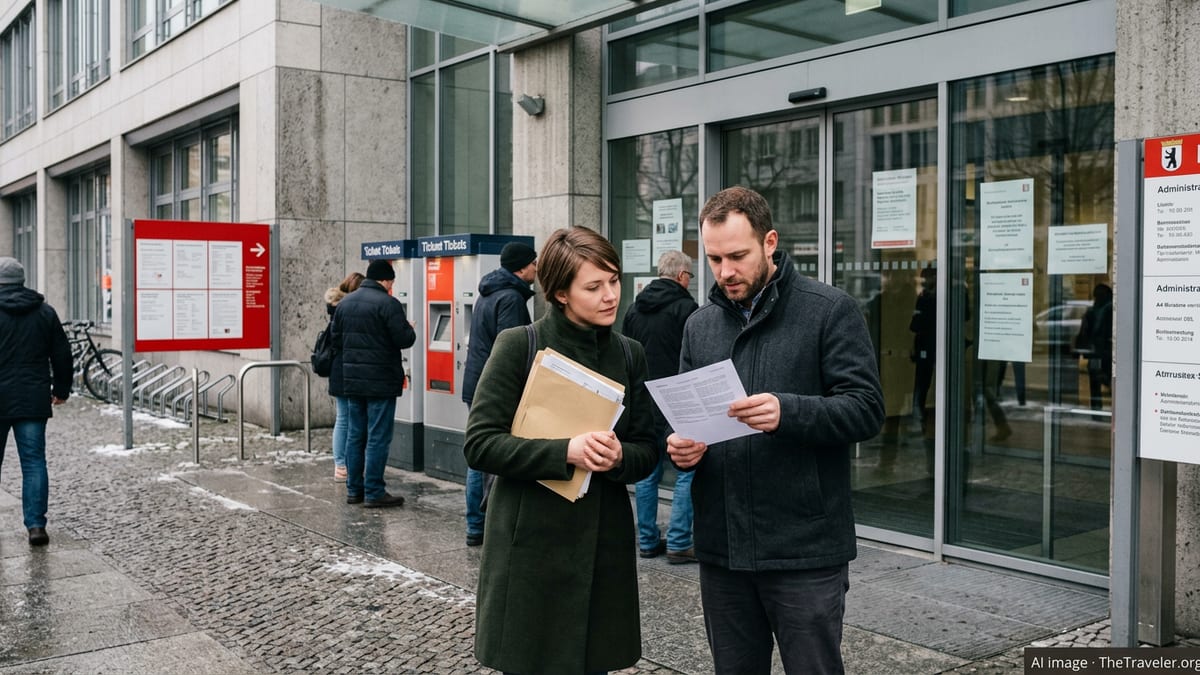
What a Germany Relocation Complexity Score Measures
Relocation complexity scores are composite indicators used by mobility teams and policy analysts to quantify how difficult it is to execute a compliant and timely move to a given country. For Germany, such a score concentrates on administrative and procedural friction rather than economic or lifestyle factors. It aggregates the effort required across key touchpoints such as interaction with local authorities, documentation standards, and the consistency of rules between federal, state and municipal levels.
Typical Germany-focused complexity models weigh four dimensions heavily: the volume of procedural steps, the degree of decentralization between the federal government and the 16 states, the digital maturity of government services, and the predictability of processing times and outcomes. These dimensions affect both corporate-sponsored assignees and self-directed movers, though not equally. A large employer with relocation providers may absorb parts of the burden, while individuals confront it directly.
In comparative benchmarking, Germany usually appears more complex than highly digitalized smaller states, but less opaque than some emerging markets with rapidly changing rules. The result is a profile often categorized as structured but slow. The system is rules‑driven and generally reliable once requirements are met, yet the path to fulfilling those requirements can be time‑consuming and fragmented for expats.
The relocation complexity score therefore does not question Germany’s attractiveness as a destination. Instead, it flags that expats need greater lead times, more thorough document preparation and closer interaction with local authorities than in many peer countries, particularly during the first 12 to 24 months after arrival.
Structural Drivers of Administrative Complexity in Germany
Several structural characteristics of the German state directly influence its relocation complexity score. The first is federalism: responsibilities relevant to expats are distributed between the federal level, the states and municipalities. Residence law is set nationally, but implementation is delegated to local foreigners’ offices and town halls. This produces substantial variation in documentation checklists, appointment systems and processing capacity between cities, even for identical case types.
The second structural factor is Germany’s legalistic administrative culture. Authorities place strong emphasis on written rules, formal documentation and traceability. For expats, this translates into detailed evidence requirements across processes such as residence permits, registration of address, recognition of qualifications and, later, long‑term status or citizenship. Anecdotal evidence from officials indicates that a significant proportion of applicants appear without complete files, which leads to repeated appointments and longer end‑to‑end timelines.
A third structural element is the historically limited level of digitalization in public services. International benchmarks that examine government online service delivery have repeatedly rated Germany below some of its European peers. Many expat‑relevant processes still rely on paper forms, wet signatures and in‑person appearances, even where information could in principle be exchanged electronically. While online portals exist in some cities, their coverage is patchy and often does not extend to more complex immigration or registration cases.
These systemic characteristics do not make relocation impossible, but they raise the baseline complexity score. They imply higher preparation effort, more dependence on local office capacity and a greater risk that a single missing document or delayed appointment can disrupt broader relocation timelines, such as employment start dates or school enrolments.
Appointment Systems and Processing Times as Key Complexity Indicators
Across Germany, appointment access and processing timelines at foreigners’ offices are among the most important quantitative indicators feeding into relocation complexity assessments. In major urban centers, expats frequently report waiting periods of several months for initial residence permit appointments or renewals, especially for high‑demand categories. Independent commentary has cited appointment lead times of three to five months in cities such as Berlin, Munich and Frankfurt for certain work and family categories, with similar backlogs in some mid‑sized cities.
Several large municipalities have publicly acknowledged appointment bottlenecks and backlogs. In Berlin, for example, authorities have reported sustained appointment access problems and have experimented with changes to the booking system in response to systemic abuse and black‑market reselling of slots. Other cities have highlighted high case volumes, sometimes in the hundreds of thousands per year at a single office, as a driver of longer processing times despite increased staffing.
Processing times for residence permit cards and status changes also influence the complexity score. Reports from immigration specialists and corporate mobility providers describe end‑to‑end timelines for in‑country work and residence permits extending to 10 to 16 weeks or more in certain periods, compared to earlier norms closer to one month. Technical disruptions have periodically aggravated delays, such as regional IT failures that left thousands of applicants waiting for residence documents in several western states in 2025.
From a relocation‑planning perspective, these data points translate directly into higher complexity. Employers must factor in several additional weeks or even months between contract signature and full local work authorization. Individual movers need contingency plans for travel, banking and lease signings, recognizing that appointments and card issuance may not align neatly with their preferred schedule.
Documentation Standards, Decentralization and Variability
Another major component of Germany’s relocation complexity score is the level of documentation required and the degree to which requirements vary between locations. While federal law applies nationwide, each foreigners’ office and registration authority maintains its own checklists, which can differ in format, level of detail and interpretation. For example, proof of accommodation, health coverage or income may be accepted in different forms across municipalities, and some offices may request additional supporting documents beyond the legal minimum.
Expat forums and corporate mobility feedback consistently highlight the impact of incomplete or non‑standard documentation. Officials in some offices estimate that a significant share of applicants arrive without the full set of required documents, resulting in rescheduled visits, issuance of interim certificates instead of long‑term permits, and elongated processing timelines. This pattern reinforces the perception of complexity, even when the underlying legal rules are clear, because applicants experience repeated administrative friction.
Decentralization also affects the standardization of digital tools. Some cities now allow parts of the process to be handled online, including submission of forms, upload of documents or asynchronous communication with caseworkers. Others still rely primarily on email, postal mail or in‑person visits. For expats relocating within Germany, a move from one municipality to another can therefore feel like entering a different administrative system, with new portals, forms and appointment logics.
In complexity scoring models, such variability reduces predictability and thus increases perceived risk. Global mobility teams must adjust internal checklists for each destination city, and expats cannot reliably extrapolate from experiences in one German city to another. The same case type may require fewer visits and shorter waits in a smaller town than in a congested metropolitan area, which complicates nationwide benchmarking.
Temporary Status, Legal Continuity and Practical Uncertainty
Germany’s legal framework contains mechanisms intended to protect continuity of legal stay when authorities are backlogged. A typical example is the provision that, when an expat submits an application for extension or change of status before a current permit expires, the existing status is generally treated as continuing until a decision is taken. In many cases, offices issue provisional certificates that confirm this continued legality and allow the holder to remain in Germany while the application is processed.
However, from a relocation complexity perspective, the existence of interim certificates is a double‑edged factor. On paper, they reduce the risk of falling into irregular stay due to administrative delays. In practice, they introduce uncertainty in interactions with employers, landlords, banks or border officials, who may be unfamiliar with the documents or uncertain about their implications. Reports from affected expats indicate that such uncertainty can complicate job onboarding, contract renewals or international travel, even when their underlying status is secure.
Backlogs in longer‑term processes such as permanent residence or citizenship further illustrate this dynamic. Following reforms to make naturalization more accessible to third‑country nationals in 2024, multiple naturalization authorities announced that they expected significant increases in application volumes and corresponding processing delays. In parallel, commentary in early 2026 highlighted that many applicants were forced to renew their existing residence permits at additional cost while citizenship applications remained pending.
These realities shape the relocation complexity score by shifting part of the burden from clear legal rules to practical implementation. The more often expats must rely on interim documentation, repeated renewals or overlapping processes, the higher the perceived complexity, even where the legal safeguards are robust.
Digitalization Efforts and Emerging Mitigating Factors
Recent policy initiatives aim to reduce administrative complexity and are therefore relevant when evaluating Germany’s current and future relocation complexity score. The federal government has adopted multi‑year programs to expand online access to public services, including many that directly affect expats such as registration of residence, document issuance and certain immigration procedures. Some municipal immigration offices report that the majority of their overall case volume is now at least partially handled digitally, even if in‑person identity verification or biometrics are still required for the final step.
New participatory tools are also emerging. In early 2026, a national portal was launched to crowd‑source user feedback on bureaucratic pain points, with the aim of feeding into a legislative simplification package. Early activity on the platform reportedly focused heavily on expat‑relevant issues such as residence‑permit paperwork, driving‑licence exchanges and cross‑border tax certificates. For relocation analysts, such initiatives are a signal that administrative complexity is recognized as a strategic issue and may gradually decline over the medium term.
At the same time, private‑sector and advisory intermediaries are increasingly active in managing German administrative procedures for expats. Specialist relocation firms and digital document services now monitor local appointment bottlenecks, pre‑check documentation and submit applications on behalf of corporate clients. While this does not change the underlying structure of the system, it can significantly lower the effective complexity score experienced by assignees whose employers invest in such support.
Nevertheless, improvements are uneven, and in many locations digital tools coexist with legacy paper‑based processes. For the foreseeable future, expats should expect a mixed environment: some procedures can be initiated online, while others still require multiple in‑person visits, original documents and patience with variable processing times.
The Takeaway
Germany’s relocation complexity score reflects a combination of structured legal frameworks and challenging implementation realities. Federalism, detailed documentation standards, variable local capacity and incomplete digitalization collectively push the score into a medium‑to‑high band compared with other popular expat destinations. Appointment bottlenecks, multi‑month processing times and reliance on interim certificates translate into real planning risks for employers and individuals, particularly during the first year in country.
At the same time, the system is rules‑based and ultimately predictable once requirements are understood and adequately prepared for. Complexity arises less from arbitrary decisions and more from volume pressures, decentralized practices and the number of steps required. Where expats have access to expert guidance, thorough pre‑arrival preparation and flexible timelines, the practical impact of this complexity can be managed, though rarely eliminated entirely.
For relocation decision‑making, the key question is not whether Germany is administratively simple; it is not. The more relevant assessment is whether the opportunities offered by the German labor market and legal stability justify navigating a demanding but navigable bureaucratic environment. For many globally mobile professionals and companies, the answer remains yes, provided that they budget sufficient time, administrative capacity and specialist support to operate effectively within Germany’s particular brand of structured complexity.
FAQ
Q1. How does Germany’s relocation complexity score compare with other European countries?
Germany typically ranks as more complex than highly digitalized smaller states, but less unpredictable than some emerging markets. The score reflects a structured yet often slow administrative environment rather than legal volatility.
Q2. Is Germany’s bureaucracy getting easier or harder for expats?
In the short term, high case volumes and reforms have increased workloads for authorities, which can mean longer waits. Over the medium term, digitalization initiatives and simplification efforts aim to reduce complexity, but progress is uneven across regions.
Q3. Why are appointment backlogs at foreigners’ offices so important for relocation planning?
Appointment lead times of several months in major cities can delay work start dates, residence card issuance and family reunification, directly affecting relocation timelines and increasing perceived complexity for expats and employers.
Q4. Do all German cities have the same level of relocation complexity?
No. Decentralized implementation means that documentation checklists, appointment availability and digital tools vary significantly between municipalities. Smaller cities can sometimes process cases faster than congested metropolitan areas.
Q5. How does digitalization affect Germany’s relocation complexity score?
Limited and uneven digitalization raises complexity by requiring more in‑person visits and paper documents. Where online portals and digital communication are fully implemented, the effective complexity for expats is noticeably lower.
Q6. What role do temporary certificates and provisional documents play in complexity?
They help maintain legal continuity when permits are delayed but can create uncertainty with employers, landlords and border controls. Reliance on such documents is therefore treated as a complexity‑raising factor in relocation assessments.
Q7. Are corporate assignees less exposed to complexity than self‑sponsored movers?
Often yes. Employers that use relocation providers can absorb much of the administrative workload. However, corporate assignees are still affected by structural issues such as appointment scarcity and long processing times.
Q8. How do legal reforms, such as changes to citizenship rules, influence complexity scores?
Reforms can increase attractiveness while temporarily raising complexity by generating additional application volumes and backlogs. Analysts consider both the long‑term simplification of rules and short‑term processing pressures.
Q9. Can expats rely on national‑level information alone to understand requirements?
National guidance provides the legal baseline, but local foreigners’ offices and registration authorities may apply their own detailed checklists. For accurate planning, expats usually need municipality‑specific information.
Q10. What practical indicators should expats watch when assessing Germany’s relocation complexity?
Key indicators include appointment lead times in the target city, typical processing durations for the relevant permit type, the extent of online services and how often interim documents are used. Together, these provide a realistic picture of on‑the‑ground complexity.