

More news on this day
International travel in 2026 is being reshaped by a new wave of entry restrictions and visa reviews, with Germany reinforcing internal border checks and Thailand preparing to curtail its recently expanded visa-free policy, while countries from Brazil to Mexico adjust their own rules for foreign visitors.
Get the latest news straight to your inbox!
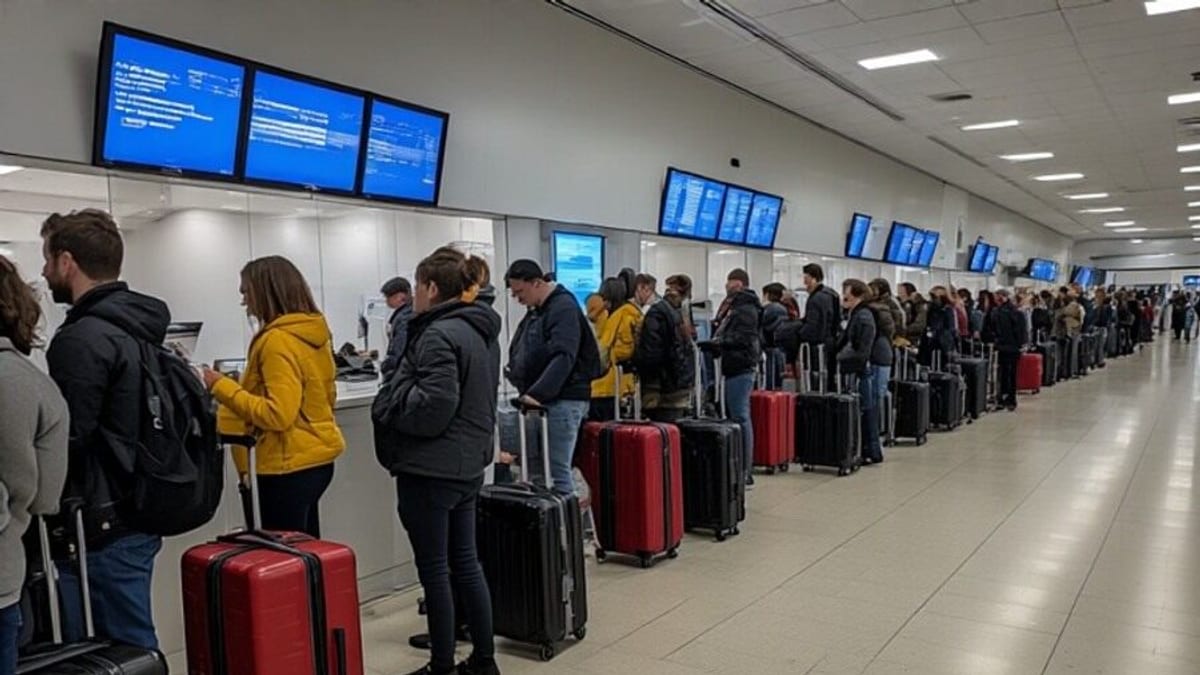
Image by Global Travel Alerts, Advisories, International Travel Alerts
Germany Extends Border Checks Amid Migration and Security Pressures
Germany has emerged as one of the clearest examples of Europe’s shift toward tighter controls on movement. Publicly available government and industry bulletins indicate that temporary checks at Germany’s internal Schengen borders, first intensified in 2025, have continued into early 2026 in response to persistent irregular migration, pressure on asylum systems and broader security concerns linked to regional conflicts. These controls affect land borders with several neighboring states, including Austria, Poland and the Czech Republic, and have added an extra layer of scrutiny to journeys that were previously treated as routine intra-Schengen travel.
Although the measures fall short of a full reintroduction of traditional border posts, travelers report longer processing times, more frequent identity checks and occasional questioning about travel history and accommodation plans. Transport operators have had to adjust schedules and staffing to account for possible delays, particularly on cross-border rail and coach routes. For holidaymakers, the change does not alter visa-free rights inside the Schengen Area, but it does erode some of the frictionless movement that defined European travel over the past decade.
Germany’s approach sits within a wider European Union effort to recalibrate how visa-free travel is managed. Updated EU rules for suspending visa waivers for certain third countries, along with preparations for new systems such as the Entry/Exit System and the European Travel Information and Authorisation System, are expected to further tighten pre-screening of visitors. In practice, this means more advance paperwork and data checks for many non-EU travelers, even as formal visa requirements remain unchanged for short stays.
For now, tourism demand for Germany remains robust, but travel analysts note that repeated short-notice extensions of border checks create uncertainty. Tour operators have begun advising customers to build extra time into itineraries and to keep documentation such as accommodation confirmations and onward tickets easily accessible at border crossings.
Thailand’s Open-Door Strategy Gives Way to Stricter Visa-Free Limits
Thailand, long marketed as one of Asia’s most accessible destinations, is rapidly rethinking its recent experiment with an expanded visa-free regime. After raising its standard visa-exempt stay from 30 to 60 days for visitors from more than 90 countries in 2024 and 2025 to revive tourism, the government is now moving toward scaling that generosity back. Coverage in regional media and specialist travel outlets in February and March 2026 indicates that policymakers have endorsed plans to cut the visa-free period back to 30 days, citing overstay concerns, illegal work by visitors on tourist entries and pressure on popular destinations.
Debate over the policy has intensified as local business groups and community representatives in hotspots such as Phuket raise complaints about foreigners using extended visa-free stays for non-tourist activities. Economic monitors also point to a softer-than-expected tourism recovery in 2025, despite higher arrival numbers, suggesting that longer stays have not translated into evenly distributed spending. In response, officials have framed the prospective reduction as an effort to promote “quality tourism” rather than simply higher headcounts.
At the same time, Thailand continues to roll out a broader package of immigration changes that affect how travelers enter the country. New requirements for an electronic pre-arrival or travel authorization, the gradual expansion of a digital arrival card to replace older paper forms and stricter scrutiny of onward travel and proof of funds all point to a more controlled model of openness. Reports describe a growing number of visitors questioned on arrival about travel patterns, including frequent back-to-back visa-free entries.
While the core visa-exempt list remains extensive, the prospective cut in permitted stay length, combined with closer enforcement, effectively marks a partial suspension of the easygoing “open-door” image that helped Thailand stand out in the region. Frequent visitors, digital nomads and long-stay tourists are among those most directly affected, with many now advised to consider formal visas or alternative destinations in Southeast Asia.
Americas Adjust Entry Rules: From Brazil’s Partners To Mexico’s E-Visas
Beyond Europe and Southeast Asia, several countries in the Americas are also redrawing the lines of who can come and on what terms. Brazil, which has alternated between waiving and reintroducing visas for travelers from major markets in recent years, continues to refine its reciprocity-based approach. Public information on Brazil’s visa policy highlights a patchwork of exemptions and electronic visas, reflecting attempts to balance tourism promotion with migration controls and diplomatic considerations.
Canada and Mexico, both key hubs for transcontinental air travel, have also tightened aspects of their entry systems. Canada has continued to rely heavily on its Electronic Travel Authorization system for visa-exempt air passengers, part of a broader shift toward pre-clearance of travelers before departure. Mexico, meanwhile, has quietly expanded use of electronic visas and additional screening for certain nationalities, including recent moves to require online travel permits for some South American visitors. These adjustments are framed in official and media reports as measures to reduce irregular onward migration to the United States and to strengthen aviation security.
For travelers, the practical effect is a more fragmented landscape across the Americas. Long-standing visa-free privileges often remain in place for major tourism markets, but they are increasingly coupled with digital pre-registration, biometric checks or carrier-level responsibilities for verifying documents. Travel planners describe a rising volume of last-minute itinerary changes caused by passengers discovering new authorization requirements only at check-in, underscoring the importance of verifying rules directly with government portals before booking.
Ireland and France, while operating within the broader EU framework, have also signaled firmer stances on border and migration management. Irish authorities have updated carrier guidance and risk-based checks on certain routes, while France has supported EU-level mechanisms that make it easier to suspend visa-free access from countries deemed non-cooperative on returns or linked to heightened security risks. Together with Germany’s internal checks, these moves reflect a coordinated European response that still stops short of ending short-stay tourism, but makes spontaneous cross-border travel more conditional.
Central Europe, Hungary And The Spread Of Targeted Restrictions
In Central Europe, Hungary continues to apply one of the region’s more restrictive narratives around migration and border security, a stance that shapes how transit and tourism intersect. Although Hungary remains part of Schengen and permits standard short-stay travel for many nationalities, public statements and domestic legislation emphasize deterrence of irregular entry and tighter control of external borders. This approach has influenced coordination on regional rail and road corridors, including routes popular with backpackers and budget travelers moving between Austria, Slovakia, Hungary and the Balkans.
Neighboring states, including those not mentioned as prominently in headline coverage, have likewise adopted a more selective understanding of openness. Temporary checks, enhanced police patrols near borders and spot inspections on international trains have become more common, even when formal visa rules are unchanged. For visitors, this can blur the line between tourism and mobility management, with some reporting that journeys which once required only a passport now entail questions about employment, financial resources and accommodation, particularly for longer overland trips.
The broader pattern across Central and Western Europe is one of targeted, time-bound restrictions justified by public security, irregular migration or major events. Examples range from short-term controls during high-profile summits and sporting tournaments to longer-running checks in response to sustained asylum pressure. While each measure is officially described as temporary, the cumulative effect has been a near-continuous presence of some form of internal control within what was designed as a passport-free travel zone.
Tourism boards in cities such as Budapest, Vienna and Munich have responded by emphasizing that visitors remain welcome but should prepare for more visible enforcement. Recommendations typically include carrying identification at all times, allowing extra time for cross-border journeys and checking whether any extraordinary measures coincide with planned travel dates.
What Travelers Should Expect As Rules Tighten Worldwide
Viewed together, Germany’s reinforced border checks, Thailand’s reconsideration of its 60-day visa-free stay and the quieter adjustments underway in Brazil, Canada, France, Hungary, Ireland and Mexico illustrate a common trend: visa-free travel is increasingly conditional. Health concerns that dominated the early 2020s have been joined by migration management, labor market protection and national security as central drivers of policy change.
For leisure travelers, the immediate impact is often felt less in outright visa refusals than in new layers of administration. Electronic travel authorizations, digital arrival cards, mandatory pre-registration and stricter carrier screening are becoming standard features of international trips. Even when countries advertise themselves as visa-free, travelers may be required to complete online forms, share biometric data or demonstrate proof of funds and onward travel to avoid disruption at the border.
Industry observers note that these shifts do not signal the end of mass tourism, but rather a move toward more segmented access. Long-stay visitors, budget backpackers and individuals with complex travel histories are more likely to encounter additional questioning or entry refusals than short-stay package tourists from low-risk markets. In Thailand, for example, frequent visitors who relied on repeat visa-exempt entries are finding that a combination of shorter permitted stays and stricter interpretation of rules can abruptly curtail plans.
Travel organizations and mobility consultants increasingly advise would-be visitors to approach 2026 travel planning with the assumption that rules are in flux. Checking official portals close to the departure date, monitoring local news for sudden policy shifts and building flexibility into itineraries are now seen as essential steps. As more countries follow Germany, Thailand and their peers in recalibrating border policies, the era of truly frictionless international leisure travel appears to be giving way to a more managed model.