

More news on this day
Germany’s expanded border checks and Thailand’s reassessment of its generous visa-free entry are emerging as key flashpoints in a fresh wave of travel rule changes stretching from Europe to Southeast Asia, with Brazil, Canada, France, Hungary, Ireland, Mexico and other destinations also recalibrating how and when visitors can cross their borders.
Get the latest news straight to your inbox!
Germany Extends Internal Border Checks Across Much of Schengen
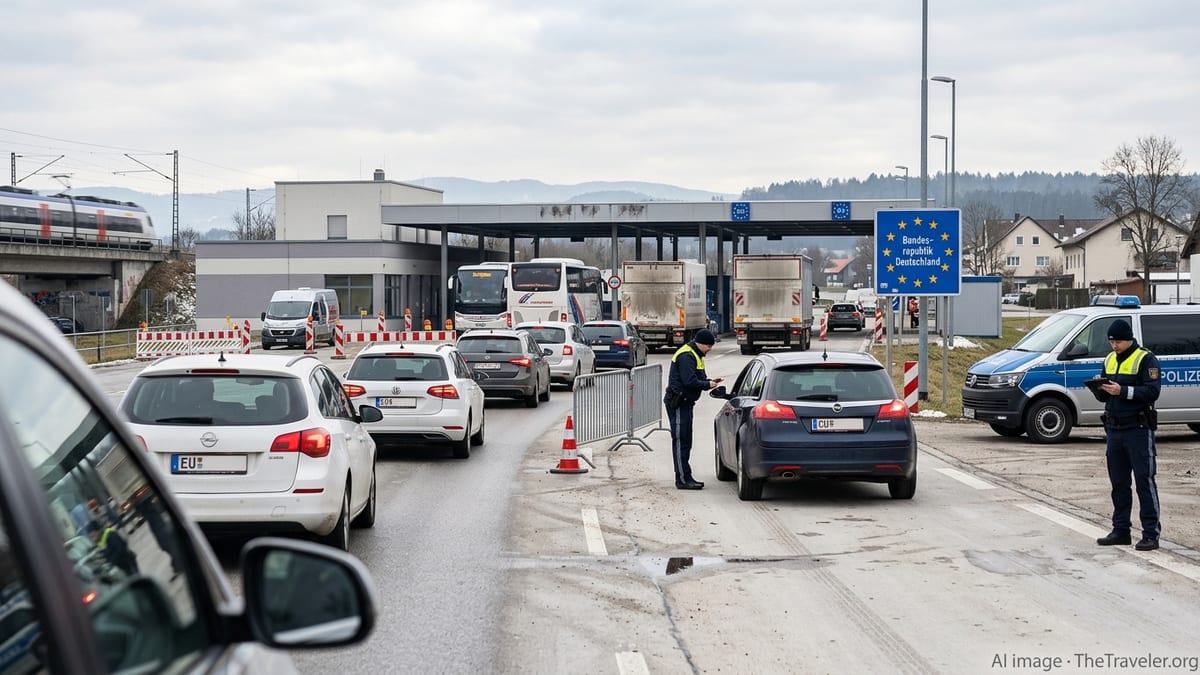
Germany has moved firmly back into the spotlight on European border policy, prolonging internal checks along several of its land frontiers within the normally free-travel Schengen Area. Publicly available notices compiled by travel and immigration advisory services show that controls covering borders with Austria, Poland, Czechia, Switzerland, France, Denmark, Belgium, Luxembourg and the Netherlands have been in place since late 2025, framed as a response to irregular migration, smuggling networks and wider security concerns.
The latest updates confirm that these checks, initially billed as temporary, have been repeatedly renewed into the first quarter of 2026. While they stop short of full closures, the measures mean spot checks, more frequent document inspections and possible delays for travelers who had grown used to frictionless movement across Germany’s land borders.
For leisure travelers, the practical impact is most visible on cross-border rail and road corridors, where lines of vehicles and selective passport inspections have become more common. Published accounts from regional transport operators and logistics groups describe longer transit times on key freight routes as well, with knock-on effects for tour buses and self-drive itineraries that cross two or three countries in a single day.
Germany’s position carries outsized influence over wider European mobility, given its role as both a top tourist destination and a major transit hub for travelers heading between Central, Western and Northern Europe. The country’s moves add to a pattern of tighter checks already in place in parts of Scandinavia, Central Europe and the Balkans, reshaping what “open borders” look like in practice for visitors in 2026.
Schengen Evolves: Digital Entry Systems and Stricter Stay Limits
Germany’s tougher posture is unfolding alongside broader structural changes to how Europe manages its external borders. The European Union’s new Entry/Exit System, which is gradually rolling out ahead of a full launch by April 10, 2026, will replace manual passport stamps with a centralized biometric database recording each crossing by non-EU nationals. Official documentation on the scheme notes that it will automatically calculate how long travelers have stayed in the Schengen Area, enforcing the well known “90 days in any 180 day period” rule more strictly.
The shift carries particular weight for long stay tourists, digital nomads and frequent visitors from countries such as Canada, Brazil, Mexico and Ireland, who often combine multiple European countries in a single extended trip. Border incidents reported by regional media, including fines and detentions for overstays, underscore how even short miscalculations can now trigger consequences when combined with internal spot checks in Germany and elsewhere.
France and Hungary, both key nodes in overland travel across Europe, are also adapting to the new digital environment. France continues to pair selective internal security checks with participation in the forthcoming automatic system, while Hungary has been positioning its residence-by-investment and long stay permits as compliant paths to regularized movement within Schengen. For travelers, the effect is a landscape where formal rules have not dramatically changed on paper, but systems to monitor and enforce them are becoming far more precise.
Industry observers note that tour operators and booking platforms are starting to add clearer warnings about cumulative days in Schengen, advising visitors to track each entry and exit carefully. The old habit of assuming a passport stamp or two could be overlooked is rapidly giving way to an era in which every hour spent inside the zone is recorded and accessible to border officers in Germany and across the bloc.
Thailand’s Visa-Free Policy Under Review After Period of Openness
On the other side of the world, Thailand is wrestling with the limits of its recent open door approach. After expanding visa exemptions and lengthening visa-free stays to 60 days for citizens of dozens of countries in 2024 and 2025 in a bid to turbocharge tourism, public discussions in early 2026 indicate that the government is reconsidering just how generous those terms should remain.
Local and regional coverage in recent weeks has detailed internal reviews of the 60 day visa exemption, with proposals circulating that would shorten the allowed stay back to 30 days for many nationalities or introduce tighter cumulative caps over a six month window. Officials have publicly denied some rumors, including false claims that visitors would be limited to only two visa free entries per year, but they have acknowledged that the policy mix is under active scrutiny amid concerns about illegal work, so called visa runs and perceived security risks.
At airports such as Bangkok and Phuket, travelers are already encountering more probing questions at immigration counters, especially if they have a history of frequent entries and exits. Accounts shared by passengers point to officers requesting proof of onward travel, sufficient funds and clearer itineraries, suggesting that Thailand is moving from a light touch model to a more screening oriented approach even before any formal rule change is announced.
For now, the government continues to promote Thailand as an easy entry destination for tourism, and the 60 day visa free stay for many countries technically remains in place at the time of writing. Yet the tone of public debate and the heightened scrutiny at border checkpoints signal that the period of maximal openness may be drawing to a close, with concrete revisions to stay lengths and entry conditions possible later in 2026.
Brazil, Canada, Ireland, Mexico and Others Adjust Travel Rules
Germany and Thailand are not alone in reworking the fine print of cross-border travel. Brazil has gradually expanded its use of electronic visas and revised visa exemption arrangements in recent years, with updated guidance confirming new e-visa requirements for certain nationalities, including some travelers from Mexico. These moves are framed domestically as efforts to balance tourism promotion with migration management and reciprocity.
Canada, traditionally viewed as open but orderly in its border policies, continues to refine its own electronic travel authorization requirements and trusted traveler programs. Public information from Canadian authorities stresses pre-clearance, advance data collection and closer coordination with airlines, all of which shape how quickly visitors can board flights and clear entry checks upon arrival.
Ireland, while not part of the Schengen Area, has also updated its travel advisories and security posture in line with shifting regional risk assessments. Recent travel information published for Irish holidaymakers highlights a more cautious stance toward certain destinations in the Middle East and Gulf, alongside reminders about documentation, health coverage and local regulations for trips within Europe and beyond.
Mexico, a significant outbound and inbound tourism market, has paired expanded air connectivity with incremental adjustments to its own visitor requirements and data collection practices. Together, these changes across Brazil, Canada, Ireland, Mexico and other countries form a mosaic of tighter controls, more pre-screening and greater emphasis on digital tracking, even as governments continue to court international visitors.
What Travelers Should Expect in the New Era of “Managed Openness”
The convergence of Germany’s extended border checks, Thailand’s reassessment of visa free stays and a host of smaller adjustments in countries such as Brazil, Canada, France, Hungary, Ireland and Mexico points toward a model of “managed openness” in global travel. Borders are largely open in theory, but entry is more conditional, data driven and closely monitored than before.
For travelers, the most immediate takeaways are practical rather than political. Long, loosely planned stays in Europe now require careful counting of days across Schengen states, with systems like the Entry/Exit System set to remove any ambiguity. In Thailand, repeated short trips or extended visa free stays are more likely to attract attention at the immigration desk, making formal visas or long stay permits a safer choice for those who want to spend significant time in the country.
Across the Americas and Europe, early check in cutoffs, pre-arrival authorizations and advance passenger information forms are becoming standard features of the booking process. Airlines and tour operators are adapting, but travelers who overlook small changes in visa rules or electronic permissions risk being turned away at check in or delayed at the border.
While headlines often focus on sudden bans or dramatic closures, the current trend is subtler: a tightening of systems and an insistence on compliance with rules that, in many cases, have existed for years but were not consistently enforced. Germany’s renewed checks, Thailand’s more skeptical stance on long visa free stays and the quiet recalibrations in Brazil, Canada, France, Hungary, Ireland and Mexico suggest that 2026 will test how flexible and well informed travelers really are about the evolving architecture of global mobility.