

More news on this day
Air travel in and out of Germany faces a new wave of disruption as more than 35 additional flights have been cancelled on Saturday, with services operated by Emirates, Etihad, Lufthansa and other major carriers scrapped on routes linking German hubs to Dubai, Abu Dhabi, London Heathrow, Bahrain, Copenhagen and other key destinations.
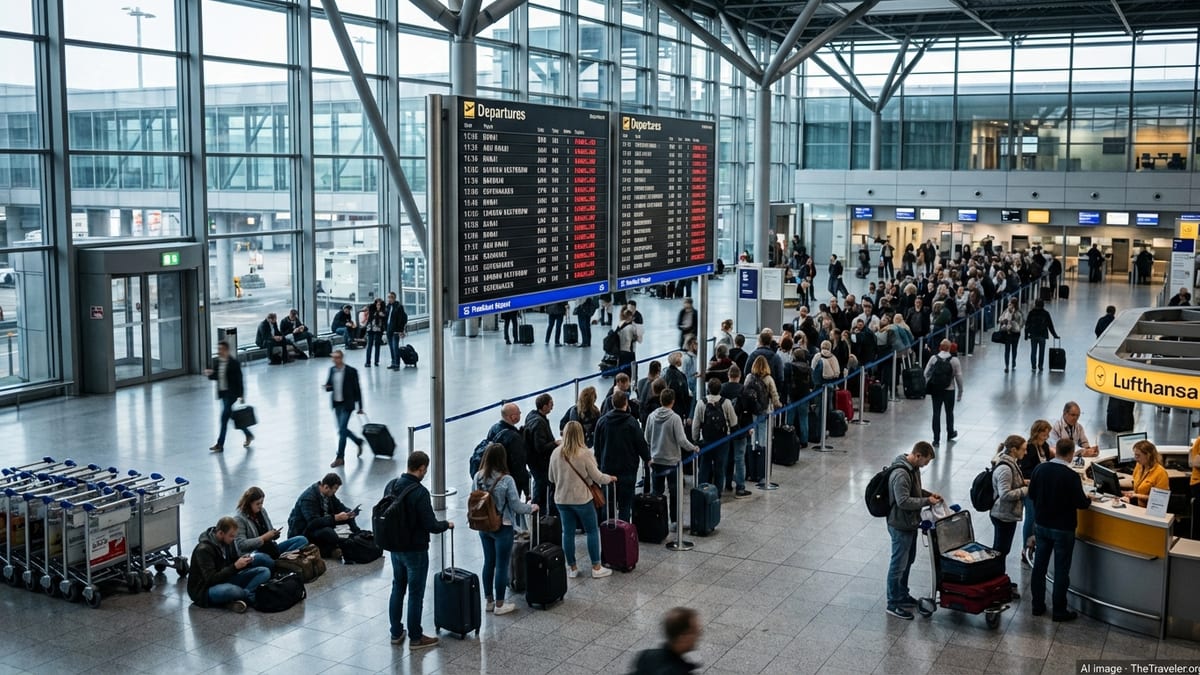
German Hubs Hit as Lufthansa Suspends Middle East Services
Germany’s largest carrier, Lufthansa, has moved swiftly to curb operations across the Middle East, announcing that flights to Tel Aviv, Beirut, Amman, Erbil and Tehran are suspended until at least 7 March. The airline has also halted flights to and from Dubai, Abu Dhabi, Riyadh and Dammam through 1 March, with German airports in Frankfurt, Munich and Düsseldorf among those most affected.
The airline said it would avoid airspace over Israel, Lebanon, Jordan, Iraq, Qatar and Iran until 7 March, forcing long-haul services between Europe and Asia to take lengthier detours or be cancelled outright. Passengers on grounded flights are being offered free rebooking or refunds, but many are still stranded in terminals after last minute schedule changes.
Lufthansa Group carriers, including Eurowings, have warned that further cancellations are possible if security conditions in the region deteriorate. Operational planners are working around the clock to revise networks, but German aviation officials concede that the knock-on effects could be felt across Europe for days.
German authorities have stressed that the decisions are driven by safety considerations, citing evolving guidance from European and national aviation regulators. Airlines continue to coordinate with security agencies as they weigh whether and when to reinstate direct services to the Gulf.
Emirates, Etihad and Gulf Carriers Slash Services to Germany
The closure or severe restriction of airspace across parts of the Middle East has triggered widespread cancellations at the region’s big hub airlines, sharply reducing connectivity between Germany and destinations such as Dubai, Abu Dhabi and Bahrain. Data from aviation analytics firm Cirium shows Emirates, Etihad, Qatar Airways and other Gulf carriers have collectively cancelled hundreds of flights on Saturday alone, including dozens touching European gateways.
Dubai Airports has suspended all passenger flights at both Dubai International and Al Maktoum International until further notice, effectively cutting off the main transit point for many German travellers heading to Asia, Africa and Australia. Emirates has halted operations from its hub while airspace in the United Arab Emirates remains restricted, hitting popular routes linking Dubai with Frankfurt, Munich, Düsseldorf and Hamburg.
In Abu Dhabi, Etihad Airways has also grounded a significant share of its schedule as it navigates closures affecting the UAE, Bahrain, Qatar and other neighbouring states. Germany bound flights and connections via Abu Dhabi to cities such as Copenhagen and London Heathrow are among those impacted, with aircraft redirected, turned back mid route or cancelled before departure.
Regional carriers including Gulf Air and Kuwait Airways have introduced further cuts to services into Europe, including Germany and Scandinavia, as they respond to tightened safety advisories and rapidly changing airspace permissions. Industry executives warn that if restrictions persist, Gulf to Germany capacity could be reduced by well over a third over the coming days.
Ripple Effects Across Europe: London, Copenhagen and Beyond
The disruption is not confined to direct Germany Middle East links. As Gulf hubs throttle back, European airlines are pulling services and adjusting routings, creating a complex web of cancellations and delays that now stretches from London Heathrow to Copenhagen.
British Airways has cancelled flights to Bahrain and Tel Aviv until early March and scrapped at least one scheduled service to Amman, moves that have a direct impact on German travellers using Heathrow as a connecting gateway. Nordic airline SAS has suspended all flights to and from Dubai until 4 March, with Copenhagen and other Scandinavian hubs seeing cancellations that cascade across code share and interline itineraries originating in Germany.
Swiss International Air Lines has cancelled flights from Zurich to Dubai for at least two days, limiting another key transfer option for German passengers accustomed to routing through Switzerland. LOT Polish Airlines has turned back at least one Warsaw to Dubai service, underlining how quickly operations can change even once flights are airborne.
With multiple European and Gulf carriers altering schedules hour by hour, booking systems are struggling to keep pace. Travel agents report a surge in calls from German customers trying to reroute trips to Asia via North America or southern Europe, but warn that seats on alternative corridors are filling quickly and fares are rising.
Why Airspace Closures Are Forcing Rapid Cancellations
The latest round of flight cancellations follows a major military escalation involving the United States, Israel and Iran, which has prompted Iran, Iraq, Israel, Bahrain, Qatar and the United Arab Emirates to close or heavily restrict their airspace. Regulators including the European Union Aviation Safety Agency have issued conflict zone bulletins highlighting a high level of risk to civil aviation in affected skies, urging airlines to steer clear.
For German carriers and their Gulf counterparts, the closures strike at the heart of some of the world’s busiest long haul corridors, which funnel traffic between Europe and Asia via the Middle East. With Russian airspace already constrained by earlier geopolitical tensions, options for safe and efficient rerouting are limited, pushing airlines to cancel services rather than attempt complex and costly detours.
Operational experts note that beyond the initial tally of more than 35 new cancellations affecting Germany and its main Middle East partners, the wider impact lies in disrupted rotations, crews and aircraft stuck out of position. This can lead to rolling delays and additional cancellations on routes that do not even enter the restricted airspace, including some intra European services linking German cities with London Heathrow, Copenhagen and other regional hubs.
Insurance and war risk premiums are also climbing, adding financial pressure to airlines already grappling with higher fuel burn on longer routings. Analysts warn that unless airspace starts to reopen in the coming days, carriers could be forced into deeper capacity cuts across their networks.
Advice for Travellers Departing or Connecting in Germany
Airlines and airports are urging passengers booked on flights between Germany and the Middle East, as well as those connecting onward to Asia and Africa, to verify their itineraries before travelling to the airport. Many carriers are allowing free changes or full refunds, but the precise conditions vary by airline and ticket type.
Passengers holding tickets with Lufthansa Group airlines are being encouraged to manage bookings online where possible, using self service tools to select new dates once services resume. For flights involving Emirates, Etihad and other Gulf carriers, travellers are advised to check the latest statements and rebooking policies, as schedules from Dubai and Abu Dhabi remain highly fluid.
Travel industry associations in Germany say travellers should build in extra time for security checks and expect crowded service desks at major hubs as airlines work through backlogs. Those with urgent travel needs are being told to consider alternative routings that avoid the Middle East altogether, including options via the United States, Canada or southern Europe, where capacity remains comparatively stable.
With no clear timeline for the reopening of key Middle Eastern airspace, aviation insiders caution that disruption at German airports could last well beyond the current weekend window of cancellations. For now, they say, flexibility and close monitoring of flight status will be essential for anyone planning to depart from or transit through Germany in the days ahead.