

More news on this day
Air travel in and out of Germany faces fresh disruption as more than 20 flights have been cancelled on Saturday, affecting services operated by Gulf Air, Qatar Airways, British Airways and EasyJet on routes linking German airports with Bahrain, Doha, London, Amsterdam, Copenhagen, Keflavik, Manchester and other major hubs, according to publicly available flight data and recent media coverage.
Get the latest news straight to your inbox!
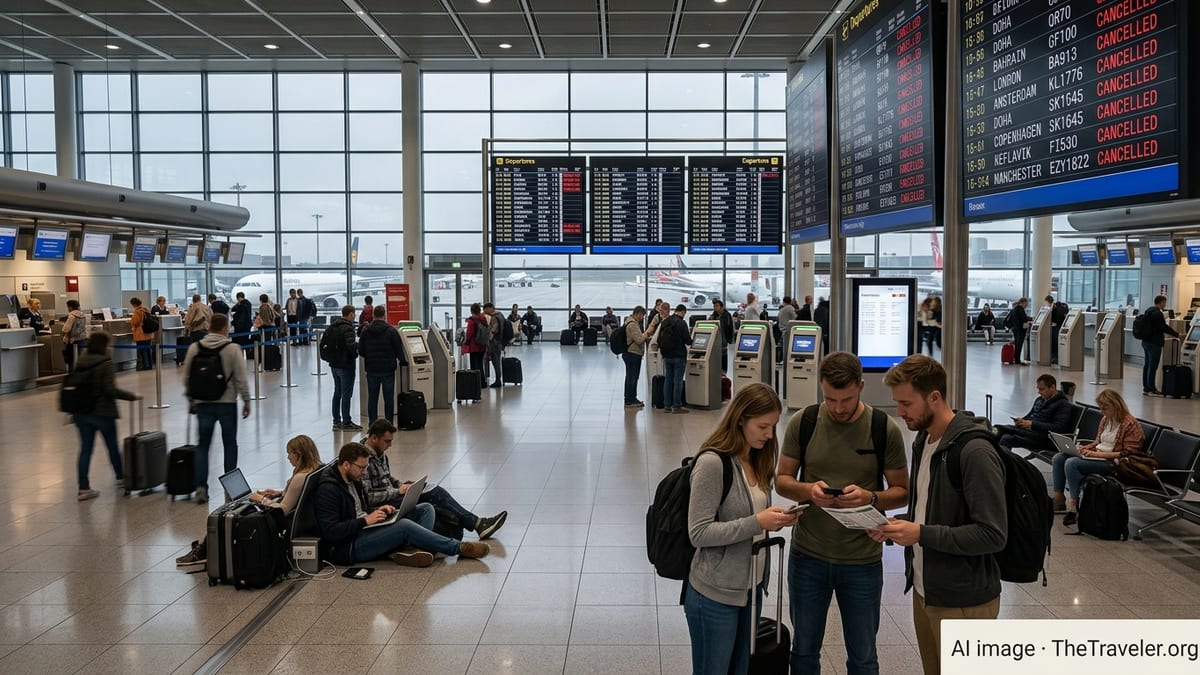
Cancelled Flights Hit Key International Routes
Published flight information and aviation tracking data for Saturday 21 March 2026 indicate that a cluster of cancellations has affected departures and arrivals at several German airports, including Frankfurt, Munich and Berlin. The disruption involves a mix of long-haul and European services, with more than 20 flights removed from schedules over the course of the day.
Reports point to cancellations on services operated by Gulf Air, Qatar Airways, British Airways and EasyJet, among others. The affected routes include connections from Germany to Bahrain, Doha, London, Amsterdam, Copenhagen, Keflavik and Manchester, as well as return services into the country. In several cases, aircraft and crews are being repositioned or held back, reducing capacity across the network.
The pattern of cancellations is adding fresh pressure to an already fragile aviation environment in Europe, where winter-weather disruption, staffing constraints and shifting schedules linked to Middle East airspace issues have been visible throughout the first quarter of 2026. For travellers, the impact is being felt most acutely in the form of last-minute changes, extended layovers and limited same-day alternatives.
The cancellations come on top of previous schedule reductions that airlines had already built into their interim timetables for March. As a result, individual flight cuts are more likely to lead to fully booked alternatives or multi-day delays, especially on popular leisure and family-reunion routes between Germany and the Gulf.
Middle East Airspace Restrictions Feed Through to German Hubs
Publicly available information on recent events in the Gulf region shows that the ongoing conflict involving Iran and Qatar has led to temporary closures and restrictions of Qatari airspace since late February 2026. Passenger services through Doha have been operating on a sharply reduced basis, with only limited corridors approved for repatriation and essential traffic.
This constrained operating environment has had an outsized effect on European connectivity, because Doha functions as a major transfer hub linking Germany with destinations across Asia, Africa and the Pacific. When flights to and from Doha are suspended or consolidated, connecting passengers to and from German airports are frequently caught in the middle, prompting day-of-travel cancellations and multi-leg itinerary changes.
Qatar Airways has been working with an interim schedule that scales back many of its European frequencies, with some routes to Germany and nearby countries operating less often or switching to different aircraft types. As the airline gradually reintroduces select services, reports indicate that ad hoc cancellations continue to occur when safe routing is uncertain or when demand outstrips the limited number of available seats.
Gulf Air connections between Germany and Bahrain have also been affected by the broader regional situation, with published coverage indicating suspensions and route adjustments on certain Gulf-bound services. For travellers using Germany as a gateway to Bahrain and onward destinations, this has translated into cancelled departures, enforced stopovers in alternative hubs and, in some cases, complete rebookings on other carriers.
European Weather, Staffing and Network Changes Add Strain
Alongside Middle East airspace restrictions, Europe’s own operational challenges are feeding into the disruption seen in Germany. Earlier in the year, severe winter storms across northwestern Europe led to hundreds of cancellations and diversions at major hubs including Amsterdam Schiphol. Those weather-related disruptions left many carriers with aircraft and crews out of position, setting the stage for further schedule instability in March.
Staffing constraints at ground-handling providers and air traffic control services have also been highlighted in recent industry reporting. Reduced staffing levels can narrow the margin for handling disruptions, meaning that any delay or reroute has a higher chance of triggering knock-on cancellations, particularly in tightly banked hub operations.
At the same time, airlines such as British Airways and EasyJet are progressing with medium-term network changes designed to focus on higher-yield routes. British Airways has already announced the withdrawal of several short-haul services in continental Europe as part of a strategic realignment for the 2026 summer season. When these structural changes coincide with sudden regional disruptions, passengers can experience cancellations that are partly operational and partly driven by long-term scheduling decisions.
Low-cost operators are not immune. EasyJet’s point-to-point services linking German airports with cities such as London, Amsterdam and Copenhagen have reported scattered cancellations in recent weeks. While many flights continue to operate, passengers booked on marginally timed or lower-demand rotations are more exposed when aircraft are reallocated or when overnight curfews prevent delayed departures from going ahead.
Travellers Face Limited Rerouting Options and Longer Delays
Recent accounts shared by passengers and documented in consumer forums suggest that travellers on Germany-linked itineraries involving Doha, Bahrain and other Gulf gateways are finding rerouting options increasingly constrained. With Qatar Airways, Gulf Air and several European partners operating reduced schedules, same-day alternatives are often unavailable, especially for travellers seeking to avoid the Gulf region entirely.
In multiple reported cases, passengers with itineraries from Asia or the Middle East to Germany via Doha have been offered rebookings several days later, or have been advised that flights remain “scheduled” even when large portions of the network around them are cancelled. This has created uncertainty for those trying to decide whether to wait for official cancellation notices or to proactively seek refunds and alternative one-stop routes via other hubs.
Travellers on British Airways and EasyJet services are dealing with a different set of constraints. Network consolidation and targeted cancellations can leave passengers with fewer direct flights between German cities and London or Manchester on specific days. When a flight is removed from the schedule at short notice, rebooking onto remaining departures can be challenging if those services are already near capacity.
Consumer advocates note that passengers flying from or within the European Union generally benefit from clear compensation and re-routing rules when flights are cancelled. In practice, however, the combination of regional conflict, weather disruption and structural schedule cuts means that, even when travellers are entitled to assistance, the range of practical same-day solutions may be narrow.
What the Latest Developments Mean for Upcoming Trips
Looking ahead to the remainder of March, publicly available timetables indicate that airlines are cautiously rebuilding some connectivity between Germany and the Gulf, but on a reduced and changeable basis. Qatar Airways is gradually adding back select flights between Doha and key European hubs, while maintaining a trimmed schedule to manage operational risk. Gulf Air, British Airways and EasyJet are likewise adjusting day by day as conditions evolve.
For travellers with upcoming journeys touching Bahrain, Doha, London, Amsterdam, Copenhagen, Keflavik or Manchester, the latest pattern of cancellations in Germany underscores the importance of close monitoring. Travel industry guidance consistently recommends that passengers check their booking status directly with their airline in the 24 to 48 hours before departure and again on the day of travel, since overnight changes are common in the current environment.
Experts also point to the value of maintaining flexible plans, including being prepared to depart from or arrive at alternative airports within Germany or neighbouring countries if necessary. With some carriers offering rebookings via different hubs or on partner airlines, passengers who can accept modified routings may have a better chance of securing earlier travel dates.
While airlines are signalling an intention to restore more regular operations as soon as conditions allow, the combination of regional security concerns, European operational pressures and network realignments suggests that Germany’s international flight schedules may remain volatile in the short term. Travellers planning trips through the country’s major airports in late March and early April are therefore likely to face an environment where cancellations, schedule changes and extended connections continue to be a feature of long-haul and regional travel.