

More news on this day
German vacationers heading for spring and summer breaks are being swept into the widening disruption triggered by the conflict in West Asia, as carriers including Lufthansa, British Airways, Air India and Emirates flag longer routes, rolling delays and complex refund policies for travelers from Germany, Italy, the United Kingdom, the United States, France and Spain.
Get the latest news straight to your inbox!
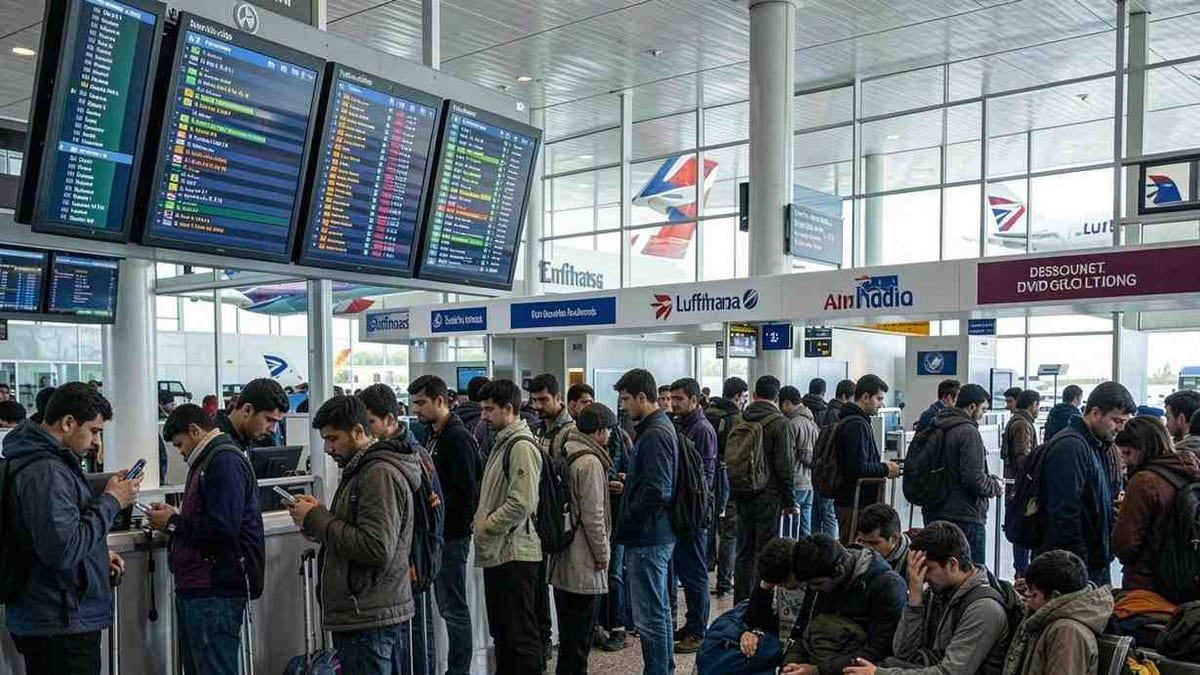
Image by Travel And Tour World
German Holiday Plans Collide With a Shifting Flight Map
Publicly available flight and travel data in late March 2026 show Germany emerging as the latest major European source market to feel the full impact of airspace shutdowns and rerouting across West Asia. Routes linking German hubs to the United Arab Emirates, India and onward destinations in Southeast Asia increasingly mirror the turbulence already experienced by travelers from Italy, the UK, the US, France and Spain.
Industry reports indicate that Lufthansa Group services between Germany and the Gulf, as well as connections to South and East Asia, have been subject to extended flying times and schedule changes as pilots detour around conflict-affected corridors. Similar patterns are being reported by British Airways on services out of London, by Air India on Europe to India routes and by Emirates on links through Dubai, a key global transfer point.
The knock-on effects reach beyond direct flights into the region. European leisure travelers using German, British or Italian hubs as gateways for long-haul itineraries to the Indian Ocean, Thailand or Australia are discovering that a single corridor closure in West Asia can ripple across multiple legs, leaving itineraries out of sync and connection times suddenly unworkable.
For German travelers in particular, the current phase comes on top of a winter marked by weather disruptions and airport staffing strains, sharpening concerns that the 2026 high season may again be defined as much by waiting at terminals as by time on the beach.
Lufthansa, British Airways, Air India and Emirates Adjust Schedules
According to airline advisories and schedule tracking platforms, Lufthansa has rerouted or adjusted frequencies on several services crossing West Asian airspace, contributing to longer block times and tighter aircraft rotations. These operational shifts can leave aircraft and crews out of position, raising the likelihood of late-evening and next-day delays for departures from Germany and neighboring markets such as Italy and France.
British Airways has publicly acknowledged adding capacity between London and Southeast Asian gateways such as Bangkok and Singapore to meet rerouted demand as travelers seek to bypass parts of West Asia. While these temporary boosts help clear backlogs, they also compress already busy schedules at Heathrow and other European hubs, which can translate into missed connections for passengers arriving from regional cities in Germany or Spain.
Air India, operating a dense network between Indian cities and Europe, has been juggling aircraft assignments and timing windows as some of its traditional overflight paths become constrained. Reports from consumer advocates in India and Europe highlight cases where travelers face last-minute time changes of several hours on flights touching West Asian skies, creating uncertainty for onward travel into the United States and Canada.
Emirates, which relies heavily on its Dubai superhub, has issued several rounds of disruption notices this month, including temporary suspensions and rolling schedule updates on selected routes. Public information from passenger forums and airline communications indicates that many Germany, UK, France and Italy itineraries that once relied on smooth transits through Dubai now carry warnings about potential delays and limited rebooking options on peak dates.
Delays, Detours and the Growing Refund Headache
As schedules shift day by day, one of the sharpest pain points for travelers is navigating refund and compensation rules that differ widely by airline and jurisdiction. European consumer regulations such as EU261 and parallel UK rules provide compensation for lengthy delays and cancellations under specific conditions, but travel law specialists note that security-related airspace closures and armed conflict often qualify as extraordinary circumstances, limiting payouts even when holidays are significantly disrupted.
Lufthansa and British Airways direct passengers to manage changes through digital channels and call centers, but high call volumes and fast-changing conditions in West Asia have made it difficult for some travelers to secure timely answers on rerouting or refunds. Public posts on traveler forums describe cases where passengers from Germany, France or Spain receive partial fare credits, vouchers or schedule changes instead of the cash refunds they anticipated for abandoned trips.
Emirates and Air India have announced periods during which full refunds or free rebooking are available on affected itineraries, with eligibility often tied to travel dates and original booking windows. While these waivers offer relief, they can also be confusing for casual travelers who may not follow successive policy updates or who booked through online agencies that apply additional conditions of their own.
The result is a complex patchwork of options: some vacationers accept significant detours via Southeast Asia or Central Asia to salvage long-planned trips, while others cancel outright and attempt to claw back as much of their outlay as possible through airline policies, agency terms and, in some cases, travel insurance.
Italy, UK, USA, France and Spain Vacationers Among the Hardest Hit
Travel-market analysis for early 2026 suggests that outbound leisure travelers from Italy, the UK, the United States, France and Spain have been among the most exposed to the West Asia crisis. These countries generate large flows of holiday traffic to the Gulf, the Indian Ocean and Indian subcontinent during the northern spring, much of it routed via major European or Middle Eastern hubs now grappling with constrained airspace.
Italian and Spanish flyers often connect through central European hubs such as Frankfurt and Munich or through London and Paris, meaning that any disruption at a single node can cascade across several national markets simultaneously. Reports from airport operators and tourism boards indicate that late arrivals, missed hotel check-ins and shortened stays are becoming more common stories among package-holiday customers heading to long-haul sun destinations.
For British and American travelers, the picture is similarly fragmented. Direct long-haul services from London and major US gateways to West Asia and beyond are contending with longer great-circle routings, while itineraries that rely on one-stop connections via Dubai, Doha or Abu Dhabi face heightened uncertainty day to day. French travelers using Paris as a hub see parallel challenges as Air France and partner carriers adjust timetables to absorb detours and crew-rest requirements.
The combined effect is a sense that no single nationality is bearing the brunt alone. Instead, a band of major outbound markets across Europe and North America, now including Germany in full, is weathering a shared experience of unpredictable flying times and opaque refund outcomes.
What Travelers Can Expect Heading Into Peak Season
With the conflict in West Asia still unresolved as of late March 2026, aviation analysts caution that passengers should plan for a prolonged period of operational uncertainty. Schedules for April, May and the main summer holiday months are being published with built-in buffers, but any new airspace restriction can quickly erode those margins, particularly on already stretched weekend departures.
Travel specialists currently advise building extra connection time into itineraries that cross or skirt West Asia, even when tickets are marketed as through journeys by a single carrier or alliance. For Germany-based travelers, that may mean selecting earlier feeder flights into Frankfurt, Munich, London or Paris to reduce the risk of misconnecting to long-haul legs operated by Lufthansa, British Airways, Emirates or partner airlines.
Passengers are also being encouraged by consumer groups to review the exact fare conditions and disruption policies attached to their tickets, rather than relying on broad assumptions about automatic refunds. Nonrefundable economy fares and promotional holiday packages can carry tighter restrictions, even when airlines issue temporary waivers for some categories of travel affected by the crisis.
For now, the message for vacationers from Germany, Italy, the UK, the US, France and Spain is that West Asia’s geopolitical tensions are reshaping not only maps and flight paths but also the fine print of modern air travel, turning what once looked like straightforward holidays into exercises in flexibility and patience.