

More news on this day
Escalating conflict in West Asia is rippling through global air travel networks, with growing evidence that vacationers from Germany, Italy, the United Kingdom, the United States, France and Spain are facing longer journeys, last minute schedule changes and mounting refund frustrations as major carriers adjust to airspace closures and safety constraints.
Get the latest news straight to your inbox!
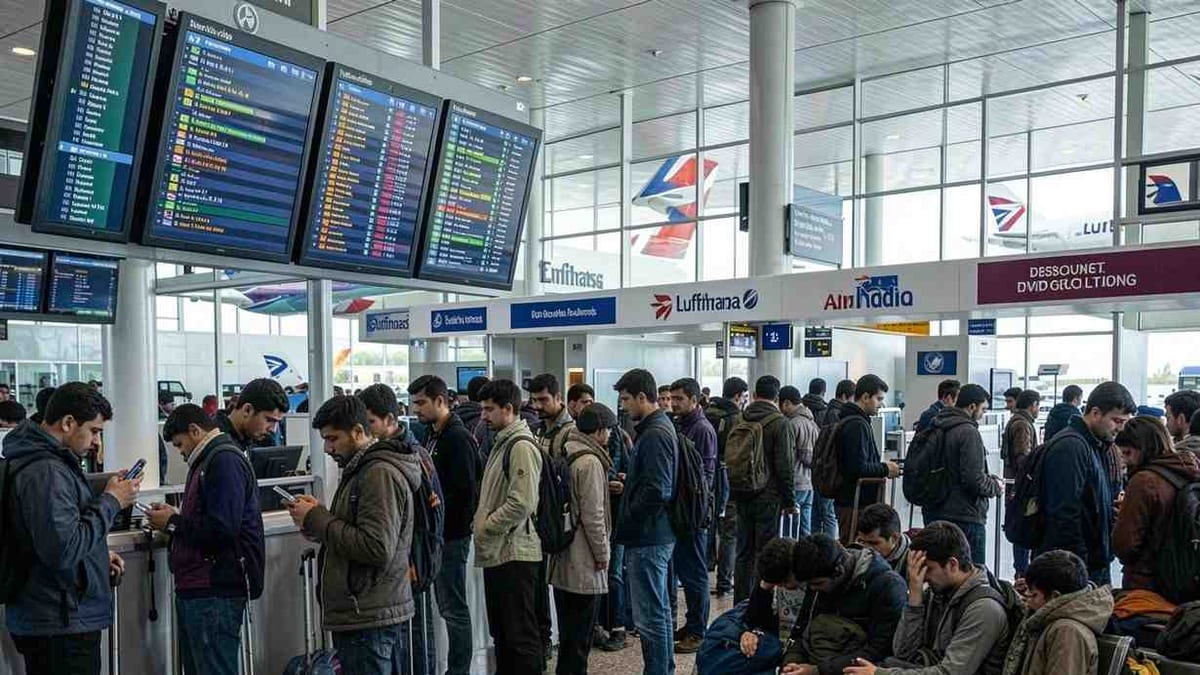
Image by Travel And Tour World
German Travelers Pulled Into Expanding Web of Disruptions
Germany has become increasingly exposed to the turmoil as Lufthansa and other European carriers rework schedules that rely heavily on Gulf hubs to connect Europe with Asia and East Africa. Publicly available traffic data and industry analysis show that the sharp reduction in flights at Dubai, Abu Dhabi and Doha has forced many Germany originating itineraries to be rerouted, lengthening travel times for holidaymakers bound for destinations such as Thailand, the Maldives and India.
While Lufthansa’s most recent published changes primarily target domestic routes for cost reasons, analysts note that the airline and its partners are contending with knock on effects from the Iran war and related airspace closures, including congested alternative corridors over Turkey and southern Europe. As a result, German vacationers who had booked spring and early summer breaks via Gulf hubs are increasingly being rebooked onto indirect routings or split across multiple airlines, with connection times that can stretch total journeys by several hours.
Consumer forums and travel industry coverage also point to growing uncertainty around refund timelines for Germany based travelers whose tickets included now suspended segments through West Asia. With carriers prioritizing reaccommodation on remaining services, some passengers are being steered toward travel vouchers or date changes rather than immediate cash refunds, prompting concern among families who no longer wish to transit the region at all.
Italy, France and Spain See Holiday Corridors Squeezed
Across southern Europe, the impact is particularly acute for Italy, France and Spain, where leisure demand to Indian Ocean resorts and Southeast Asia has surged in the post pandemic period. Gulf airlines had become key intermediaries carrying European tourists via Dubai, Abu Dhabi and Doha, but capacity data tracked in late March show those hubs still operating well below normal levels after the initial collapse in early March.
Recent aviation analysis indicates that Emirates and other Gulf carriers are gradually restoring services to a number of European cities, including Italian and Spanish gateways, but often on reduced frequencies and with aircraft reassigned to the most profitable trunk routes. This leaves fewer seats for price sensitive holidaymakers who booked months in advance on connecting itineraries that are now subject to rolling adjustments.
French and Spanish passengers heading for long haul beach destinations are reporting longer flight times as aircraft detour around high risk airspace and maritime zones affected by the Strait of Hormuz crisis and Red Sea shipping tensions. Tour operators in these markets are starting to flag potential changes to tour departure days and durations as they wait for greater clarity on summer capacity and pricing.
British Airways Warns of Delays and Complex Refund Rules
Travel notices issued in early March by British Airways outline how closely the UK flag carrier’s operations are intertwined with the unstable situation in West Asia. The airline has extended temporary reductions on some Middle East routes and has circulated detailed guidance for customers booked to or via destinations such as Dubai, Abu Dhabi, Doha, Bahrain, Amman and Tel Aviv, covering both voluntary changes and scenarios where flights are canceled outright.
According to publicly posted documentation, eligible customers on affected itineraries may change dates, reroute or request refunds, but the conditions vary depending on ticket type, travel dates and whether a flight is still operating. Consumer advocates in the UK caution that this patchwork of rules can be confusing for travelers trying to make time sensitive decisions about upcoming holidays, particularly when flight status is shifting day by day as airspace restrictions evolve.
Reports from UK focused travel media suggest that British holidaymakers are increasingly being advised to monitor their bookings closely and to document all carrier communications around schedule changes. In practice, some passengers are accepting longer journeys via alternative hubs in Europe or Asia rather than pursuing refunds, amid warnings that rebooked itineraries for peak summer may carry significantly higher fares.
Air India Capacity Shifts Complicate US and European Trips
For travelers from the United States and Europe who connect onto Air India to reach destinations across the Indian subcontinent, the combination of Pakistani airspace restrictions and the West Asia crisis is adding further complexity. Reference material on regional airspace closures shows that Air India has already been forced to reroute many long haul flights via central and northern Europe in order to bypass blocked corridors, extending flight times and tightening crew schedules.
In early March, Air India announced additional flights on selected routes to Europe in an effort to accommodate displaced passengers and maintain links for both business and leisure travelers. However, these measures are taking place against a backdrop of higher fuel costs and longer routings, factors that aviation analysts say limit the airline’s ability to offer broad flexibility on refunds for non canceled flights.
Passenger accounts compiled in recent coverage highlight frustration around the interface between US and European consumer protection rules and Indian carrier policies. While travelers departing from or returning to the European Union or United Kingdom may benefit from clearer refund and rerouting rights, those connecting onto Air India services from third countries often find that refund decisions depend on the precise ticketing structure and point of sale.
Emirates Signals Prolonged Rerouting and Refund Headaches
Among Gulf carriers, Emirates has become a focal point for global concern, given its role as one of the largest connectors between Europe, North America and Asia. After an initial near standstill when airspace closures and drone incidents hit Dubai International Airport, the airline has gradually restored a substantial share of its schedule, but on a revised network that still reflects ongoing security constraints.
Updates published in late March show that Emirates is operating a mix of regular, rerouted and still suspended services, with some European links returning at limited frequencies and selected long haul routes, including at least one United States service, remaining paused. The airline has publicly outlined options for travelers holding tickets issued before the escalation of the crisis, including rebooking within a specified window or applying for refunds through online channels.
However, reports from passenger forums and travel news outlets indicate that obtaining timely refunds has become a major pain point, particularly for those whose flights are technically still operating but on significantly altered timings or routings. Many Germany, UK, US, French, Italian and Spanish travelers who had planned multi stop vacations via Dubai now face the choice of accepting complex itineraries with lengthy layovers or entering often lengthy refund and compensation processes with multiple carriers involved.