

Choosing between Germany and France can feel like an impossible decision. Both are European powerhouses for tourism, drawing tens of millions of visitors each year with world-class cities, storybook landscapes and deep cultural traditions. Yet the experience they offer on the ground is quite different. Whether one country is “better” depends less on rankings and more on the kind of trip you want: fast-paced city breaks or slow wine country rambles, fairytale castles or sunlit Mediterranean beaches, Christmas markets or café terraces. This guide compares Germany and France side by side so you can decide which destination best fits your travel style, budget and timeline.
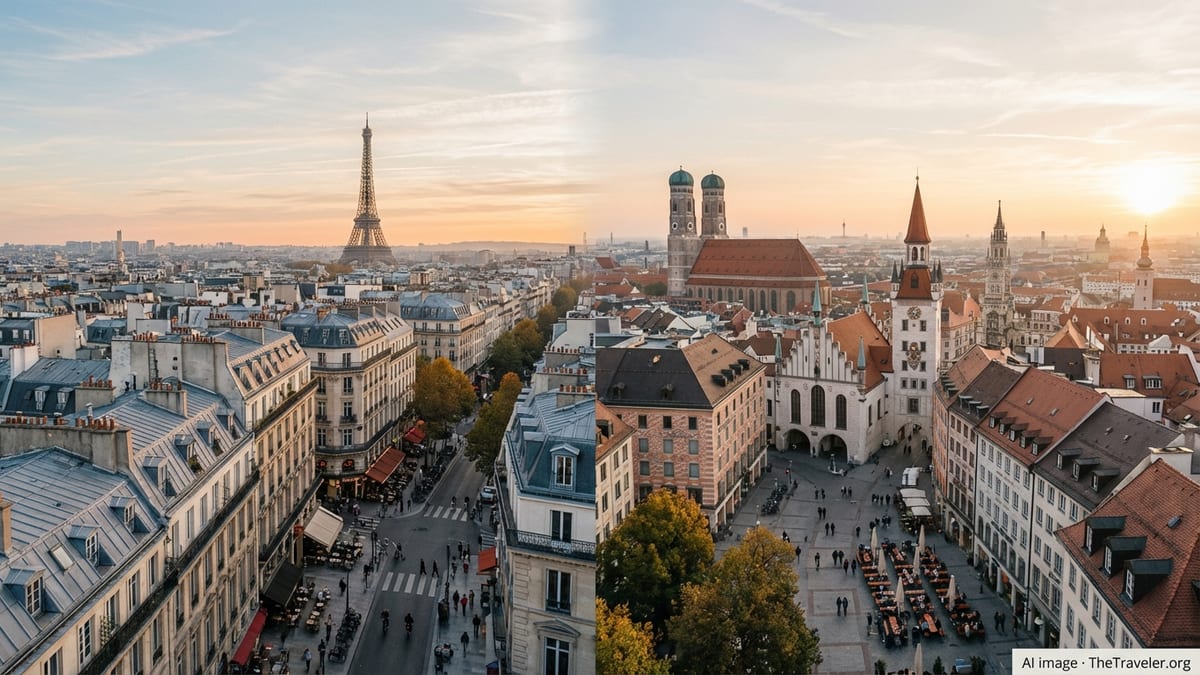
Tourism Powerhouses with Distinct Personalities
France consistently tops global rankings for international arrivals, recently welcoming around one hundred million visitors in a single year. Paris alone draws more international travelers than many countries, with icons such as the Eiffel Tower, Louvre and Palace of Versailles anchoring its reputation. Major events like the Rugby World Cup and the 2024 Olympics have further boosted visibility and demand, especially for Paris and the Riviera. Tourism is a major pillar of the French economy, supporting well over a million jobs and a large share of national service exports.
Germany attracts fewer visitors overall than France but still ranks firmly among the world’s top ten tourism destinations. Recent data shows Germany receiving several tens of millions of international arrivals each year, and total overnight stays in accommodation establishments have been hitting record highs since 2023 and 2024. Business travel remains significant, yet about three-quarters of international visitors now come for leisure, drawn by historic cities, cultural festivals and varied landscapes from the Alps to the Baltic coast.
Despite France’s larger headline numbers, Germany punches above its weight in certain segments. It is regularly rated Europe’s leading cultural destination by European travelers, and its big cities such as Berlin, Munich and Hamburg see strong growth in urban tourism, creative industries and events. At the same time, France maintains a more universal brand recognition. For many long-haul travelers, “Europe” and “France” are almost synonymous, which means that key French destinations can feel busier and more international than their German counterparts.
In practical terms, this means France often delivers more of a classic postcard Europe experience, while Germany offers a slightly more understated but increasingly trendy mix of history, design, nightlife and nature. If you want to be at the center of global tourism energy, France has the edge. If you prefer places that feel a bit less overrun without sacrificing infrastructure or culture, Germany is a compelling alternative.
Cities, Landscapes and Signature Experiences
France’s appeal begins with Paris but does not end there. The country offers a remarkable variety of landscapes in a relatively compact area. In one itinerary you might pair the chateaux of the Loire Valley with the vineyards of Bordeaux, then continue to the cliff-framed Atlantic coast or the lavender fields of Provence. The French Riviera, centered around Nice and Cannes, provides classic Mediterranean sun, glamorous seaside promenades and quick access to hilltop villages. Mountain lovers can head south-east into the Alps or Pyrenees for hiking, skiing and spa towns.
Germany’s geography stretches further north and east, and its experiences are correspondingly different. Berlin, with its layered twentieth-century history, street art and nightlife, feels more alternative than grand. Munich showcases Bavarian traditions, beer gardens and Alpine day trips, while Hamburg offers maritime charm on the Elbe. Beyond the cities, Germany excels in soft adventure and slow travel: cycling paths along the Rhine and Moselle, timber-framed towns in Franconia, lake districts in Mecklenburg, and the dramatic cliffs and beaches of the Baltic and North Sea coasts.
Castle lovers will find options in both countries but of different flavors. France’s Loire chateaux and fortified cities like Carcassonne highlight aristocratic and medieval grandeur. Germany counters with fairytale silhouettes such as Neuschwanstein and a dense scattering of hilltop ruins overlooking river valleys. Wine experiences also diverge. France’s appellations, from Champagne and Burgundy to the Rhône, are globally renowned, with polished tasting rooms and extensive wine tourism infrastructure. Germany’s wine regions, particularly along the Rhine and Moselle, feel more intimate and relaxed, with half-timbered villages and steep vineyards above the water.
If beaches and warm seas are central to your trip, France holds a clear advantage, thanks to its long Mediterranean coastline and the Atlantic swells popular with surfers. Germany’s coasts on the Baltic and North Seas have a more temperate climate and a quieter, sometimes windswept beauty. They are ideal for walking, cycling and health retreats rather than classic sun-and-swim vacations. On balance, choose France for variety within a sun-oriented or coastal trip, and Germany if your priority is an intricate tapestry of cities, forests, rivers and mountains.
Culture, Festivals and Everyday Atmosphere
France is synonymous with art and high culture. Paris is home to some of the world’s most visited museums, from the Louvre to the Musée d’Orsay, and regional capitals like Lyon, Marseille and Lille have strong cultural calendars of their own. Visitors find opera houses, ballet, contemporary art centers and historic theaters across the country. Street life in France often revolves around cafés and open-air markets, and even small towns can surprise you with well-curated museums or concert series, especially in summer.
Germany’s cultural strengths lie in a slightly different direction. It is one of Europe’s leading destinations for classical music and opera, with major houses in Berlin, Munich, Dresden and beyond. Many cities host long-running festivals that mix high art and popular culture. Berlin’s film festival, Cologne’s Carnival, Munich’s Oktoberfest and a dense network of Christmas markets create a year-round events calendar that attracts both domestic and international visitors. Art museums, including those in Berlin, Frankfurt and Düsseldorf, showcase everything from Old Masters to cutting-edge contemporary work.
On the street, Germany often feels quieter and more orderly than France. Sidewalk cafés exist but rarely dominate public life the way they do in Paris or Nice. Instead you might experience conviviality in beer gardens, riverfront promenades and city parks. Nightlife in Berlin, Hamburg and Leipzig can be intense and late, especially for electronic music, but many smaller cities retain an early-to-bed rhythm. In contrast, French cities often balance traditional café culture with contemporary dining and nightlife, and even smaller towns may have a central square where locals linger late into the evening.
If you are drawn to grand museums, fashion, gastronomic prestige and the classic European boulevard experience, France will likely resonate more. Travelers who value festival culture, live music scenes, and a mix of old-world architecture with youthful subcultures may feel more at home in Germany. Both countries, however, offer enough variety that you can easily design an itinerary that is heavy on either quiet heritage or high-energy urban life.
Food, Drink and Dining Costs
France’s culinary reputation is unmatched. From buttery croissants and crusty baguettes to multi-course tasting menus, food is a central part of the travel experience. Even simple neighborhood bistros can be memorable, and regional diversity is enormous: seafood and cider in Brittany, duck and truffles in the southwest, hearty Alpine dishes near the mountains. The country also boasts some of the world’s most famous wine regions, and pairing local cuisine with local vintages is straightforward almost everywhere you go.
That said, dining in France can be expensive, particularly in Paris and other major tourist zones. While budget options like bakeries, creperies and set lunch menus exist, many visitors find that restaurant bills creep higher than expected, especially once wine or dessert are added. Advance reservations are often essential at popular venues, and last-minute walk-ins may end up in more touristy settings with higher prices and less distinctive food.
Germany’s food scene is more varied than its stereotypes suggest. Traditional cuisine still revolves around regional sausages, roasts, potatoes and cabbage, but most cities now offer a wide range of international dining, vegetarian options and fine dining. Bakeries are excellent and relatively inexpensive, and informal spots such as Imbiss counters and beer gardens provide filling meals at lower cost than equivalent sit-down restaurants in France. German beer culture, from Bavarian wheat beers to northern pilsners and a growing craft scene, remains a major draw and is typically good value.
In general, travelers find that day-to-day food and drink costs run lower in Germany than in France, particularly outside the very center of major German cities. Groceries, snacks and simple meals are widely available and reasonably priced, and tap water is usually safe though not always offered by default in restaurants. If gourmet dining, Michelin stars and immersion in wine culture are central to your trip, France is hard to beat. If you prioritize hearty and affordable meals, casual outdoor drinking spaces and a strong beer tradition, Germany is the more budget-friendly option.
Transport, Prices and Practicalities
Both Germany and France offer extensive transportation networks that make independent travel straightforward. France has a dense high-speed rail grid connecting Paris with cities such as Lyon, Marseille, Bordeaux and Lille, and trains can dramatically shorten cross-country journeys. However, booking early is often important to secure lower fares, and strike actions or occasional disruptions can affect schedules, particularly around major events or holidays. Within cities, public transport is usually comprehensive, with metro, tram and bus systems covering most urban areas.
Germany’s rail and public transport are also highly developed, with intercity and regional trains linking almost every part of the country. In recent years, Germany has introduced attractive nationwide ticket schemes for regional transport, making it easier and more affordable for visitors to explore multiple regions over several days. Punctuality can still vary, but the network is broad and connections between cities and smaller towns are often more frequent than in comparable countries. Urban public transport is generally efficient and well signposted, and many cities are very bike friendly.
When it comes to overall travel costs, Germany is typically slightly cheaper than France for accommodation, local transport and day-to-day expenses, especially outside the most famous city centers. France has more pronounced price differences between heavily touristed areas and less visited regions. Coastal hotspots and major cities can be expensive, while inland areas and smaller towns remain relatively affordable. Travelers who are flexible with location and timing can manage budgets in both countries, but shoestring travelers usually find their money stretches further in Germany.
Language can be another practical consideration. In both France and Germany, younger generations and those working in tourism often speak English competently, particularly in large cities and popular destinations. Anecdotally, visitors sometimes report slightly easier communication in English in Germany, especially in smaller towns and among service staff. In France, making an effort with a few basic French phrases can significantly improve interactions. In both cases, learning simple greetings and polite expressions goes a long way toward smoother, more enjoyable experiences.
Seasons, Weather and Best Times to Visit
France covers a range of climate zones, from cool Atlantic coasts to Mediterranean shores and high alpine valleys. Spring and autumn are widely considered the best seasons for most travelers, with mild temperatures, fewer crowds and colorful landscapes. Summer can be glorious but also crowded and hot, especially in Paris, southern France and the Riviera. Coastal resorts and major sights may feel very busy in July and August, and accommodation prices tend to rise significantly during these peak months.
Germany’s climate is generally cooler and more temperate. Summers can still be warm, particularly in the south and in heatwave years, but average temperatures are lower than in much of France. Spring and early autumn are also prime times to visit, bringing pleasant conditions for sightseeing and outdoor activities. Winter in Germany, though cold, offers its own attraction in the form of atmospheric Christmas markets, especially in cities like Nuremberg, Dresden, Cologne and Munich. These markets, combined with festive lighting and seasonal food, draw visitors from across Europe.
For beach holidays and warm-weather escapes, France’s Mediterranean coastline has a clear advantage, as sea temperatures and sunshine hours are higher than anything Germany can offer. Germany’s coasts are better suited to brisk walks, wellness retreats and family-friendly seaside villages than to classic sunbathing holidays. On the other hand, travelers who prefer cooler conditions for hiking, cycling or city exploration might find Germany more comfortable at the height of summer, especially during increasingly frequent European heatwaves.
If you are tied to school holidays in July or August, choosing Germany can be a strategic way to avoid the most intense heat and crowds while still enjoying long daylight hours and frequent festivals. If your ideal vacation involves long evenings on café terraces in warm air, vineyard visits under bright skies, or swimming in the sea, France is more likely to match that vision, especially in late spring through early autumn.
Safety, Crowds and Overtourism
Both Germany and France are generally safe countries for travelers, with well-functioning public services and healthcare systems. Petty crime such as pickpocketing can occur in busy tourist areas in both nations, particularly around major train stations, museums and crowded public transport. Common-sense precautions, like keeping valuables secure and staying aware of your surroundings, are advisable in either destination.
In recent years, France has seen episodes of labor unrest, demonstrations and isolated security incidents that occasionally disrupt transport or city life, particularly in Paris and other large urban centers. These events rarely target tourists, but they can affect schedules, create traffic delays or lead to short-term closures of attractions. Checking local news and following guidance from authorities when planning day trips or long-distance journeys is prudent.
Germany faces its own challenges, including crowded public transport at peak times and occasional local demonstrations or disruptions, but these tend to have limited impact on leisure travelers outside specific areas and dates. Many visitors find German cities feel orderly and predictable, with clear signage and well-defined tourist information services. Nightlife districts, especially in Berlin and Hamburg, can be lively and occasionally rowdy, but serious incidents involving visitors remain relatively rare.
Crowding and overtourism are more acute in certain French hotspots than in most German destinations. Central Paris, parts of Provence, the Riviera and some major castles can feel overwhelmed at peak times. Germany certainly has busy spots, especially during big festivals and in scenic river valleys at holiday time, but overall the pressure of crowds is often slightly lower. If avoiding overtouristed areas is a priority, Germany offers more opportunities to enjoy high-quality cultural experiences without constant congestion.
The Takeaway
Germany and France are both exceptional travel destinations, but they cater to different priorities. France is the world’s most visited country for good reason: it delivers classic European glamour, iconic landmarks and a deep culinary and wine tradition, all wrapped in a landscape that ranges from Alpine peaks to Mediterranean coves. Travelers seeking bucket-list sights, refined gastronomy and a strong sense of romance often find that France fulfills long-held dreams of a European getaway.
Germany, by contrast, offers a slightly more understated but equally rewarding experience. It excels in liveable, creative cities, efficient rail travel, fairytale castles, river valleys and forested hills that are perfect for walking and cycling. Prices are generally a bit lower than in France, especially for everyday expenses, and the atmosphere can feel less pressured by mass tourism. Festival culture, from Oktoberfest to Christmas markets, adds a distinctive seasonal rhythm that many visitors love.
If it is your first trip to Europe and you want to see the famous images you have grown up with, France might be the better choice. If you have visited Europe before or you prefer a blend of culture, nature and value, Germany may suit you more. Ultimately, the most rewarding option could be not choosing at all: with excellent rail connections between Paris and German cities like Frankfurt, Stuttgart or Munich, combining both countries in a single itinerary is entirely feasible, letting you enjoy French café terraces one week and German beer gardens the next.
FAQ
Q1. Which country is better for a first-time visitor to Europe, Germany or France?
For a first-time visitor focused on iconic landmarks and classic romantic images of Europe, France often has the edge, especially with Paris and its famous sights. Germany is an excellent choice if you are equally interested in a mix of cities, castles and nature and prefer slightly lower prices and somewhat fewer crowds.
Q2. Is Germany cheaper to travel than France?
On average, everyday travel expenses such as midrange accommodation, local transport and casual meals tend to be a bit lower in Germany than in France, particularly outside the very center of major cities. However, prices in both countries vary widely by season and location, and savvy planning can make either destination work for a range of budgets.
Q3. Which country has better public transport for tourists?
Both countries have strong public transport networks. France stands out for high-speed trains connecting Paris with major cities, while Germany offers very comprehensive regional rail and local transit, often with attractive nationwide ticket schemes. For crossing long distances quickly, France can be slightly more convenient, while Germany excels at dense coverage and flexibility.
Q4. Where is food better, Germany or France?
Food preferences are subjective, but France is widely regarded as a global leader in gastronomy, from bakeries to fine dining and wine. Germany’s food scene is improving rapidly, with excellent bakeries, regional specialties and diverse international options, often at lower prices. If culinary prestige is your top priority, choose France; if value and hearty, casual meals matter more, Germany may suit you better.
Q5. Which is safer for solo travelers?
Both Germany and France are generally safe for solo travelers, including women, provided usual city precautions are followed. Petty theft can occur in crowded tourist areas in both countries, but violent crime against visitors is uncommon. Solo travelers often report feeling slightly more at ease on public transport and in smaller towns in Germany, while France offers very established tourist infrastructure and services.
Q6. Which country is better for a beach holiday?
France is usually the stronger choice for classic beach holidays, thanks to its Mediterranean resorts on the French Riviera and attractive Atlantic coastline. Germany’s Baltic and North Sea coasts are scenic and pleasant in summer but cooler and more suited to walking, cycling and wellness stays than to hot-weather sunbathing and swimming.
Q7. Where should I go for Christmas markets, Germany or France?
Germany is famous for its traditional Christmas markets, with cities such as Nuremberg, Dresden, Cologne and Munich hosting some of Europe’s best-known events. France also has lovely markets, particularly in regions like Alsace, but if Christmas markets are your main goal, Germany typically offers more options and a stronger overall atmosphere.
Q8. Which country is better for wine tourism?
France has a clear global profile in wine, with regions like Bordeaux, Burgundy, Champagne and Provence offering extensive wine tourism infrastructure and international recognition. Germany has excellent wine regions too, especially along the Rhine and Moselle, where experiences can feel more intimate and relaxed. For world-famous labels and variety, choose France; for quieter river-valley vineyards, Germany is rewarding.
Q9. Is it easy to visit both Germany and France in one trip?
Yes, it is quite feasible to visit both countries in a single journey. High-speed trains connect Paris with cities such as Frankfurt, Stuttgart and Munich in a matter of hours, and there are also frequent flights. Many travelers design itineraries that start in Paris and continue into western or southern Germany, or the reverse, to experience both cultures without long travel days.
Q10. Which country is better for travelers who dislike crowds?
Travelers who strongly dislike crowds may find Germany slightly more comfortable overall, as overtourism pressure is often lower than in France’s most famous hotspots. That said, avoiding peak seasons, booking early and choosing lesser-known regions can help you find quieter experiences in either country.