

More news on this day
Germany’s cities are bracing for severe disruption as a 48-hour public transport strike on February 27 and 28 is set to shut down buses, trams and metros across much of the country, threatening chaos for residents, commuters and international travelers alike.
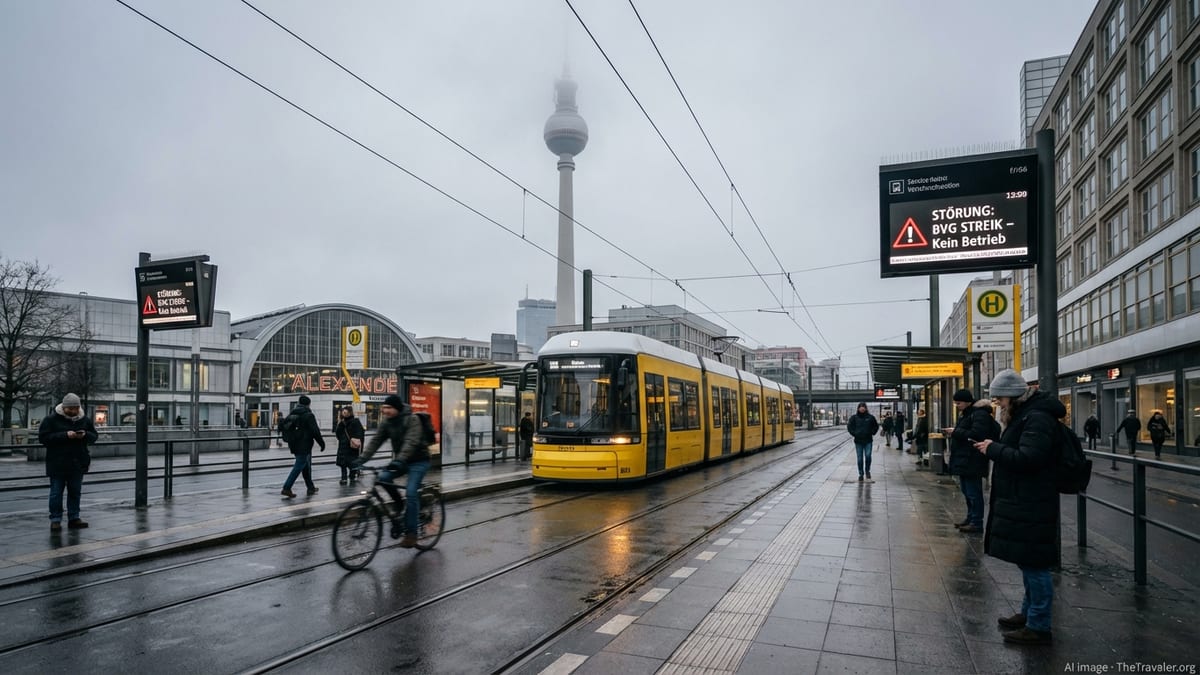
Strike Timeline and Where Disruption Will Hit Hardest
The nationwide walkout, called by the powerful Verdi public sector union, begins in the early hours of Friday, February 27, and will run through late on Saturday, February 28. In many regions, services are expected to be severely reduced or come to a complete standstill for the full 48 hours, with only limited emergency timetables in place, if at all.
Berlin, Munich and Hamburg are among the hardest-hit cities, with municipal transport authorities warning that most bus, tram and underground services will be cancelled. In Berlin, passengers are being told to expect almost a complete shutdown of BVG-run U-Bahn and tram lines, as well as extensive gaps in bus coverage. Similar warnings have been issued in Hamburg and Munich, where local networks are preparing for near-total paralysis during the strike period.
The disruption will not be confined to Germany’s largest hubs. Cities including Frankfurt, Cologne, Düsseldorf, Stuttgart, Dortmund and Leipzig, as well as many mid-sized regional centres, are facing widespread cancellations on local routes. In North Rhine-Westphalia, almost all major urban networks are affected, while strikes in Hesse, Saxony-Anhalt and other federal states will ripple out to surrounding towns and suburban areas.
Although some regions may keep a handful of lines operating at longer intervals, authorities stress that travelers should not rely on normal timetables. The picture will also vary by city, with some networks halting services almost entirely and others attempting to maintain a skeletal service during peak hours only.
What Is and Is Not Affected: Buses, Trams and Urban Rail
The core of the industrial action targets locally operated public transport: municipal buses, street-level trams and city underground or light rail systems. These services form the backbone of everyday mobility in German cities, carrying millions of passengers on commuting, shopping and airport-access routes that tourists frequently use.
In practical terms, visitors to Berlin can expect U-Bahn trains and most trams to be out of service, alongside many bus routes. In Munich and Hamburg, metro-style services and trams will be heavily curtailed, leaving suburbs and outlying neighbourhoods with almost no public options. Airport buses in several cities, which are often run by municipal operators, are also likely to be hit, complicating transfers to and from flight terminals.
By contrast, long-distance and regional rail services operated by Deutsche Bahn are currently expected to run largely as scheduled. This includes the S-Bahn commuter networks in many metropolitan areas, as well as regional express and long-distance ICE and IC trains. However, even if these lines are not formally on strike, they are likely to be under intense pressure as passengers shift from local networks to national rail in search of alternatives.
Travelers should also note that some cross-border services, particularly regional trains and buses linking German cities with neighbouring countries such as the Czech Republic, may see knock-on disruption. Overcrowding, delays and occasional cancellations are possible where international routes interface with affected local transport hubs.
Why Workers Are Walking Out Now
The 48-hour stoppage follows months of tense negotiations between Verdi and municipal employers over working hours, rest periods and compensation. The union, which represents around 100,000 local transport employees across roughly 150 companies nationwide, argues that chronic staff shortages, demanding shift patterns and modest pay have left networks on the brink.
Union officials say that drivers and depot staff are working increasingly unsustainable schedules, with early starts, split shifts and late-night duties eroding rest time and fuelling burnout. They are demanding shorter weekly working hours, tighter limits on shift lengths, longer breaks between shifts and higher bonuses for night and weekend work.
Employers, for their part, point to the strained finances of many city-run transport operators, which have been grappling with rising costs and long-term investment needs. Municipal associations argue that meeting all of Verdi’s demands in full would require either substantial public subsidies or fare increases, both of which face political resistance.
The two sides remain far apart after previous warning strikes, including a one-day nationwide action earlier in February that already brought many networks close to a standstill. Verdi leaders say they now see no alternative but to escalate to a full 48-hour shutdown to increase pressure at the bargaining table.
How Tourists and Business Travelers Can Navigate the Shutdown
For visitors currently in Germany or arriving during the strike period, careful planning will be essential. Travellers should first check whether their journeys can be covered by Deutsche Bahn-operated S-Bahn and regional trains, which in many cities still provide a basic backbone of service. In Berlin, for example, several S-Bahn lines will continue to run even as the U-Bahn largely shuts down, though they may be crowded and subject to minor delays.
Taxis and ride-hailing services are expected to see surging demand, particularly around major railway stations and airports at peak arrival times. Travellers should budget extra time and higher costs for these options, especially in the mornings and early evenings. Hotel concierges and conference organisers may be able to pre-book taxis or arrange private shuttles, but last-minute availability cannot be guaranteed.
In many cities, cycling and walking will become more important for short urban trips. Germany’s major hubs have extensive bike-lane networks and, in some cases, local bike-sharing schemes that will remain in operation. Visitors should nevertheless be prepared for colder late-winter weather in late February and plan appropriate clothing, as conditions can be damp and windy.
Those with tight connections, such as onward flights or international train departures, are strongly advised to leave significantly earlier than usual and, where possible, to route journeys along rail corridors that are not directly affected by the strike. If a crucial leg of your trip depends on a municipal bus, tram or metro line, consider adjusting your plans now, including moving to accommodation closer to mainline stations or airports.
What This Means for Upcoming Trips to Germany
For travellers with plans later this spring and summer, the immediate 48-hour strike will not necessarily derail itineraries, but it does highlight growing uncertainty around Germany’s urban transport networks. The current dispute is part of a broader wave of labour actions across sectors, and further warning strikes or negotiations-related disruptions cannot be ruled out if talks continue to stall.
Prospective visitors should monitor news from German transport authorities and their airlines, rail operators and tour providers in the weeks ahead. Flexible booking options, including refundable or changeable tickets and hotel reservations, can provide a safety net if further stoppages are announced close to departure dates.
Travel insurers may treat strike-related disruption differently depending on the policy and when it was purchased. Those with upcoming trips should review the fine print of their coverage, paying particular attention to clauses on industrial action, missed connections and alternative transport costs. Where necessary, upgrading to more comprehensive coverage ahead of travel can offer additional protection.
Despite the turmoil, tourism officials stress that Germany remains accessible, especially via its long-distance rail and air networks, which continue to operate. For visitors willing to build extra time into their schedules and remain flexible on the ground, the country’s cultural attractions, business hubs and winter events are still within reach, even as its public transport workers press their case for better working conditions.