

More news on this day
Germany is rapidly emerging as a central hub in Europe’s revival of night trains, joining Italy, the United Kingdom, France, Belgium and other countries in rolling out new overnight sleeper routes that promise hotel-style comfort, cross-border connectivity and a lower-carbon alternative to short-haul flights.
Get the latest news straight to your inbox!
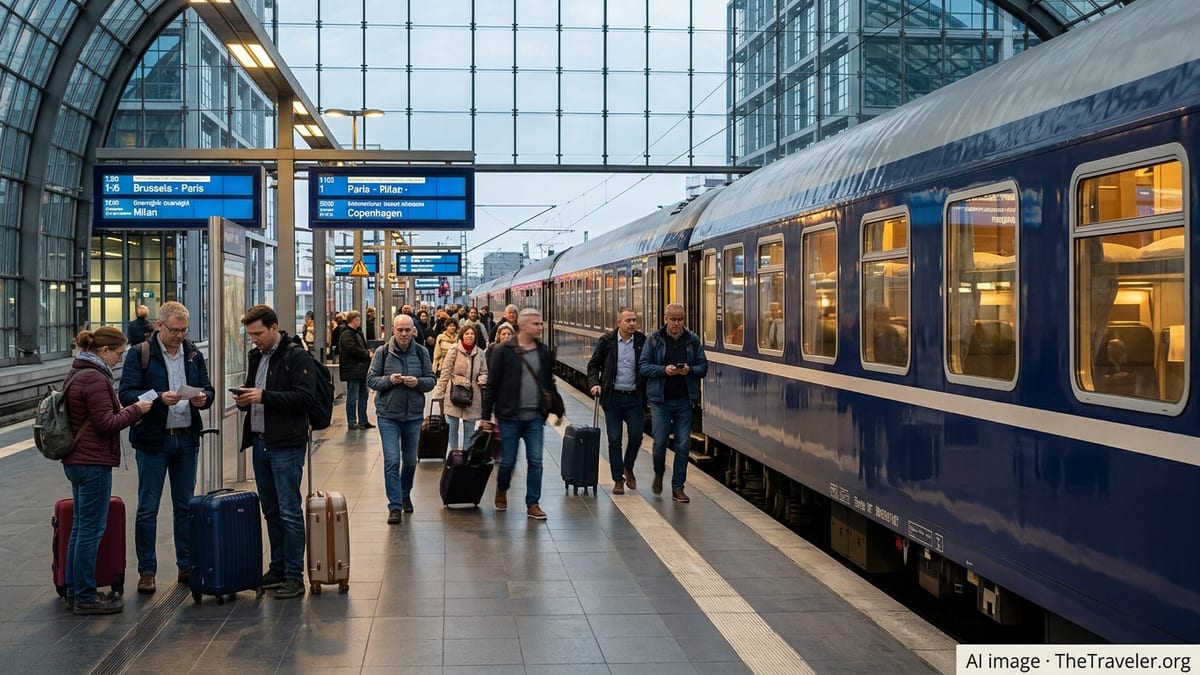
Germany at the Heart of Europe’s Night-Train Revival
Across the continent, new overnight services are redrawing the rail map, and Germany increasingly sits at the core of this network. Publicly available information shows that new-generation Nightjet services operated by Austria’s ÖBB now link Germany with Italy and Switzerland on key north–south axes, while independent operator European Sleeper continues to add German cities to its expanding web of routes connecting Belgium, the Netherlands, France and Central Europe.
According to recent specialist rail coverage, Nightjet’s modern sleeper trains are already in regular circulation on corridors such as Vienna and Munich toward northern Italy, with upgraded coaches scheduled to be fully deployed by the end of 2025. These trains, running at up to 230 km/h, give Germany’s major hubs overnight links into the Alps and onward to cities including Milan and Venice, strengthening its role as the main overland gateway between Central Europe and the Mediterranean.
Reports on new timetable filings indicate that Germany’s network will deepen again in 2026 as additional overnight paths are carved through the country. A planned Basel–Frankfurt–Hamburg–Copenhagen night train, funded as a Swiss-backed EuroNight service, is set to carry passengers through Germany to Scandinavia, while other proposals would create more north–south and east–west links that use German tracks as the spine of a 21st‑century sleeper grid.
These developments follow several years of experimentation, adjustments and route changes, including the end of some state-backed night services and their replacement by privately operated trains. Industry observers note that, despite setbacks, the overall trend points toward more cross-border overnights and a growing consensus that Germany’s central position makes it indispensable to any coherent European sleeper network.
New Cross-Border Routes Connecting Italy, France, Belgium and the UK
For travelers, the most visible change is a new generation of cross-border sleepers that stitch together Germany and its neighbors. Rail industry briefings highlight overnight services linking Brussels and Amsterdam with German cities such as Berlin, Dresden and Hamburg, often continuing toward Prague or the Italian Alps. Seasonal trains from Belgium through Germany to Verona and Venice, introduced in early 2025, have been promoted as a direct, climate-friendly pathway to Italy’s northern lakes and Dolomite gateways.
To the west, published plans from Belgian-Dutch cooperative European Sleeper point to a revived Paris–Berlin night train from March 2026, this time routed and marketed independently of the discontinued state-operated overnight between the two capitals. The service is expected to work closely with German infrastructure managers to secure regular paths into Berlin, effectively re-establishing a marquee cross-border sleeper that ties France’s capital back into Germany’s long-distance night grid.
Further north, the United Kingdom’s sleeper renaissance has unfolded largely on domestic tracks, with high-end offerings such as the Britannic Explorer adding new prestige to overnight rail. While these trains do not currently cross into mainland Europe, rail commentators argue that the combination of upgraded UK sleepers and expanding continental routes into Germany, France and Belgium makes rail-plus-ferry or rail-plus-Eurostar combinations increasingly appealing for travelers looking to build multi-country overnight itineraries.
Belgium’s role as a western anchor for the night network has grown in parallel. Brussels now functions as a key starting point for several overnight services passing through Germany, positioning the city as a practical embarkation hub for travelers from the UK, France and the Low Countries who want to reach German, Austrian, Czech or Italian destinations before breakfast.
Comfort Upgrades Bring Hotel-Style Travel by Rail
Alongside new routes, operators are investing heavily in comfort to compete with budget hotels and low-cost airlines. ÖBB’s Nightjet fleet is introducing redesigned sleeper and couchette cars featuring private cabins, en-suite showers in selected classes, improved sound insulation, and modern touches such as Wi‑Fi, mood lighting and inductive phone charging. Travel reports describe these trains as a step change from older rolling stock that long defined the image of European night trains.
European Sleeper and other independent operators are moving in a similar direction, refurbishing leased coaches with upgraded bedding, refreshed interiors and more flexible compartment configurations. Some trains now offer “mini cabins” or pod-style berths intended for solo travelers, alongside traditional shared couchettes and classic sleeper compartments. Publicly available pricing information suggests that entry-level seats remain competitive with daytime fares, while private sleepers target travelers who might otherwise book a city hotel.
Onboard experience has become a key selling point. Published reviews highlight details such as freshly brewed morning coffee served at the compartment door, secure baggage space at eye level or under bunks, and redesigned corridors that feel more open and well lit. The combination of privacy, service and the novelty of waking up in a new country is being marketed as a form of “rolling boutique hotel,” particularly on routes linking Germany with Italy, Austria and France.
These enhancements are crucial for attracting a wider audience beyond rail enthusiasts. Industry analyses indicate that younger travelers, families and business passengers are more inclined to choose an overnight train when they can count on dependable Wi‑Fi, power outlets and a good night’s sleep in modern cabins, rather than basic couchettes that recall the austerity of older night services.
Accessibility, Climate Goals and the Future Night Network
The new wave of sleepers also intersects with broader policy goals on climate and accessibility. Comparative emissions data from European agencies consistently show that long-distance trains generate significantly lower greenhouse gas emissions per passenger than short-haul flights. Governments and operators in Germany, France, Italy and other participating countries have cited these findings when justifying public funding, timetable priority and rolling-stock investments for overnight routes.
Accessibility is another emerging focus. Design documentation for new-generation sleepers highlights low-floor entry sections, accessible toilets and compartments adapted for wheelchair users, as well as visual and audio information systems. While implementation varies between operators and routes, disability advocacy groups across Europe have welcomed the direction of travel, even as they continue to call for more consistent standards and staff training.
Publicly available information on European Union funding tools, such as the Connecting Europe Facility, indicates that several pilot night services involving Germany and neighboring countries have received support to test new cross-border models. The intention is to demonstrate that well-timed overnights with modern comfort can divert passengers from planes to tracks, especially on city pairs where the journey time overnight is competitive with a late-evening departure and early-morning arrival by air.
Analysts caution that challenges remain, from capacity constraints on busy German main lines to the complexity of coordinating track access across multiple national infrastructure managers. Still, timetables published for 2025 and 2026 point toward a denser overnight mesh, with Germany’s east–west and north–south corridors acting as the backbone of an emerging network that could, in time, link up to one hundred cities in a single interconnected system of sleepers.
What This Means for Travelers Planning European Adventures
For travelers planning multi-country trips, the practical implications are significant. Instead of flying between major hubs and booking separate hotel nights, passengers can now piece together itineraries that use Germany as a central pivot: boarding in Brussels, Paris or Amsterdam in the evening, sleeping through Germany, and arriving in Prague, Vienna or the Italian Alps the next morning.
Travel guides increasingly recommend pairing these night trains with regional daytime services for flexible, stopover-heavy journeys. A traveler might, for example, take an overnight from Brussels through Cologne and Munich to northern Italy, then use local trains to explore the Dolomites or the lakes region, before returning via another night route to Hamburg or Berlin and onward to Scandinavia.
Advance-booking information suggests that demand can be strong on popular departure dates, particularly in summer and around holidays. Rail commentators advise securing sleeper compartments well ahead of time for September alpine trips, Christmas market tours in Germany, or spring journeys that combine Paris, Berlin and Prague on a single ticket chain.
As more services launch through 2026, Germany’s reinforced place within Europe’s night-train map is expected to make rail-based adventures more accessible to a wider audience. With the promise of waking up to new skylines and fewer airport transfers, the continent’s revived sleepers are positioning themselves as a defining travel experience for the coming decade.