

Siem Reap is compact enough to feel intimate yet spread out enough that you will rely on wheels to get between its markets, hotels and, of course, the Angkor temples. Tuk-tuks clatter past colonial shopfronts, cyclists glide along riverfront paths, and a new airport 50 kilometers away has reshaped how visitors arrive and depart.
Choosing the right way to get around affects not just your budget but also your comfort, safety and experience of the city. This guide walks you through tuk-tuks, bicycles and other transport options, with up to date practical tips for navigating Siem Reap in 2026.
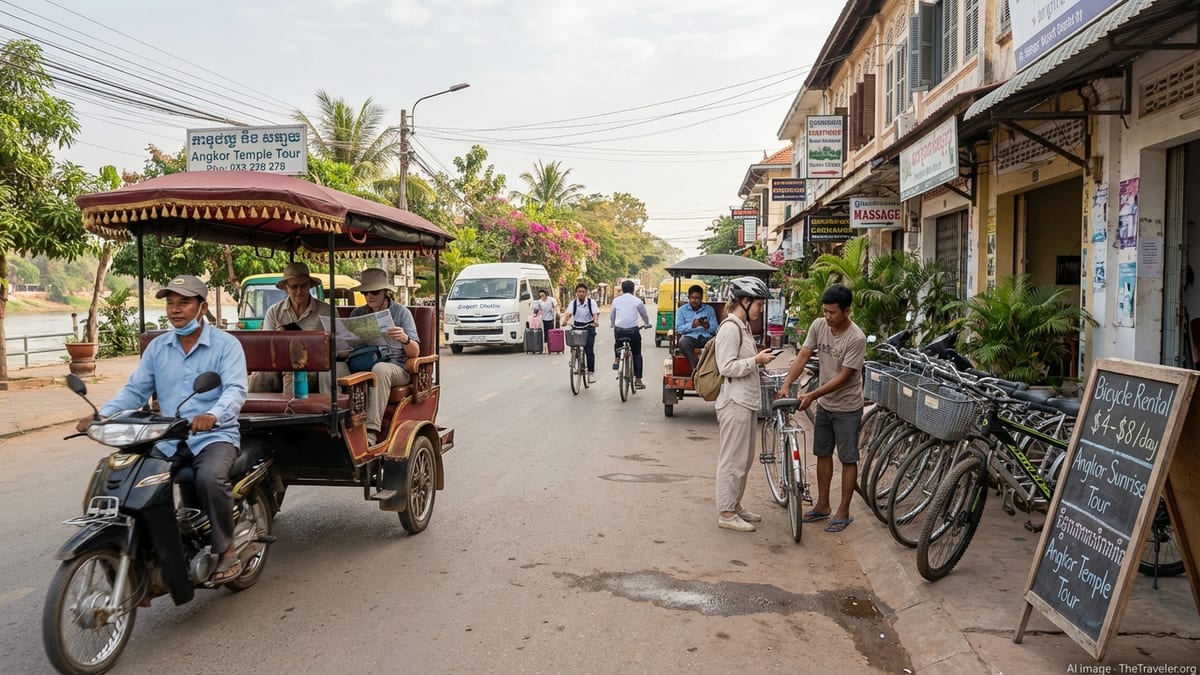
Understanding Siem Reap’s Transport Landscape Today
Siem Reap has changed significantly since the opening of Siem Reap Angkor International Airport in late 2023, which replaced the old airport just a short hop from town. Transfers now take around 45 to 90 minutes each way by road, and that single shift has pushed up the cost and importance of planning your rides in advance. Shuttle buses, private cars, vans and tuk-tuks all compete for the growing flow of visitors heading into the city’s central districts around Pub Street, Taphul and Wat Bo.
Within the city itself, distances remain manageable. The Old Market and Pub Street area sits at the heart of town, with hotel clusters spreading east along the river and north along the road toward Angkor Wat. Most in-town journeys are only a few kilometers and can be covered quickly by tuk-tuk or bicycle. Heavy traffic is rare outside of peak hours, although the streets can feel busy near major intersections and school zones.
Tuk-tuks remain the most visible and popular way to get around Siem Reap, especially for visitors heading to Angkor Archaeological Park. At the same time, cycling infrastructure has quietly improved, particularly inside the park, where new bike paths and largely flat terrain make two-wheeled exploration more appealing than ever. Ride-hailing apps, shared shuttles and traditional taxis now round out a mixed transport ecosystem that caters to every budget and comfort level.
For travelers, the main challenge is not a lack of options but knowing which one fits each situation. A $2 tuk-tuk may be perfect for dinner in town but a poor choice for a long, dusty run to the new airport at midday. Likewise, cycling is brilliant at sunrise among the temples, but less sensible in the harsh afternoon heat if you are not acclimatized. Understanding these nuances helps you make smarter, more enjoyable choices.
Tuk-Tuks: Siem Reap’s Signature Ride
The classic Siem Reap tuk-tuk is a small motorbike pulling a covered trailer with side benches, known locally as a remorque. Newer Indian-style three-wheelers have joined them on the streets, especially through ride-hailing apps, but the feel is the same: open-air, breezy and social. Drivers often decorate their vehicles, and many work freelance from street corners, hotel fronts and temple gates.
For short trips within town, tuk-tuks are both affordable and flexible. Typical ballpark prices, as reported by recent visitors, range from about 1 to 2 US dollars for a very short hop of 1 to 2 kilometers and 2 to 3 dollars for slightly longer journeys across town. For round-trip outings with waiting time, such as going from your hotel to a restaurant or show and back, 4 to 7 dollars is common. Full or half-day hires to Angkor temples often fall in the 15 to 20 dollar range depending on distance and the number of stops.
Tuk-tuk prices are usually quoted per vehicle, not per person, which makes them especially good value for couples or small groups. Negotiation is expected if you are hailing on the street, but the goal should be to arrive at a fair price rather than the absolute rock bottom. Most drivers speak at least some English and are happy to agree a price before departure. Try to carry small, clean US dollar bills or Cambodian riel, as damaged notes may be refused.
One advantage of using the same driver for several days is consistency. Many travelers hire a driver they like for a full temple day or multiple days, exchanging numbers to arrange pick-ups later. Drivers generally know all the key attractions and can suggest itineraries, photo stops and local eateries. Tipping is not obligatory but is appreciated, especially for long days in hot weather or very early sunrise starts.
How to Use Tuk-Tuks Safely and Fairly
Riding in a tuk-tuk is straightforward, but a few habits can keep the experience smooth. Always agree the fare before you get in, particularly for longer trips or multi-stop tours. Clarify whether the price is for a one-way ride, round trip or includes waiting time at specific sights. For temple days, specify if the price includes sunrise or sunset, and whether side trips to places like the floating villages are part of the deal.
Safety-wise, tuk-tuks in Siem Reap generally move at modest speeds, and accidents are relatively rare on the central streets. Still, it is wise to hold onto your belongings and keep bags on your lap or next to you rather than at the open edge, especially when driving through busier areas. At night, ensure that your tuk-tuk has working lights and that the driver does not appear overly tired or impaired.
In recent years, some drivers have partnered with shops, massage parlors and restaurants, receiving small commissions if they bring in customers. This is common across Southeast Asia and is not necessarily a problem as long as you remain comfortable declining unwanted stops. If you prefer a direct journey with no detours, simply state this clearly when you negotiate the fare.
Respect and patience go a long way. Many drivers work long days in hot, dusty conditions, and fuel and maintenance costs have risen in line with Cambodia’s broader inflation. Paying a fair rate and offering a small tip for good service helps keep the system sustainable and fosters the warm, personal connections that make tuk-tuk travel memorable.
From Airport to Town: Shuttles, Taxis and Long Tuk-Tuks
The biggest single transport decision most visitors face is how to travel between Siem Reap Angkor International Airport and the city. The new airport lies roughly 50 kilometers from town, and the journey time ranges from about 45 minutes in a private car on clear roads to as much as 90 minutes in a tuk-tuk or shared shuttle when traffic or intermediate stops are involved.
Shared shuttle buses are currently the most budget friendly option. Recent schedules show airport shuttles costing in the range of 8 to 9 US dollars per person, with several departures throughout the day in each direction. These shuttles usually have fixed pick up and drop off points in central Siem Reap, sometimes with arrangements for hotel transfers or onward rides at extra cost. They are comfortable enough for most travelers, though luggage limits typically apply.
Private airport taxis and cars cost more but offer door to door convenience and air conditioned comfort. Reports from late 2024 and early 2025 indicate typical one way fares of around 20 to 30 dollars for a private car from the airport to a hotel near Pub Street, with slightly higher rates quoted by some hotels and tour agencies. Vans able to carry larger groups and more luggage understandably cost more per vehicle but can work out cheaper per person for families or small tour groups.
For those who prefer the open air, tuk-tuks do operate the airport route, though they are slower and can be tiring in midday heat. Long transfers by tuk-tuk are commonly quoted from about 15 to 25 dollars one way depending on season, negotiation and whether the driver must make the return journey empty. If you choose this option, consider travel at cooler times of day and bring water, a hat and a light scarf or mask against dust.
Ride-Hailing Apps, Taxis and When To Use Them
In addition to traditional street-hail tuk-tuks and prearranged cars, ride-hailing apps have become a useful part of the transport mix in Siem Reap. Services such as Grab operate in the city, offering both small three wheeler tuk-tuks and regular cars. For solo travelers and couples, app-based options can simplify price negotiation and provide a sense of security through digital receipts and driver ratings.
Prices through apps are usually comparable to or slightly below what you might negotiate on the street for short trips, though they can fluctuate with demand and traffic. One detail to note: app listings may distinguish between smaller urban tuk-tuks and larger remorque style vehicles. If you are traveling as more than one person with luggage, it is safer to choose a larger option to avoid cramped conditions or luggage not fitting inside the vehicle.
Traditional metered taxis are less common than tuk-tuks in the central city, but they cluster around the airport, bus stations and certain hotels. Some hotels and guesthouses maintain relationships with specific drivers and can arrange transfers at set rates. This can be convenient at unusual hours or if you have specific needs such as a child seat or significant amounts of luggage. As always, confirm the total fare before you depart.
For longer day trips beyond the immediate Angkor area, such as to Phnom Kulen Mountain or further floating villages on the Tonle Sap, a private car or van is usually recommended over a tuk-tuk. Steeper roads, longer distances and exposed conditions make enclosed vehicles not only more comfortable but also safer. Tour operators and hotel desks can help source reputable drivers experienced with these routes.
Cycling in Siem Reap and Angkor
Cycling is one of the most rewarding ways to experience Siem Reap, especially within the Angkor Archaeological Park. The terrain is almost completely flat, and in recent years a network of dedicated bicycle tracks has been developed inside the park, making riding safer and more enjoyable for a wide range of fitness levels. Sunrise and late afternoon rides are particularly atmospheric, with cooler temperatures and softer light on the ancient stone.
Bike rental is easy and inexpensive. Many guesthouses and mid range hotels provide bicycles either free or for a nominal daily fee. Dedicated rental shops across town, including along Wat Bo Road and in central neighborhoods, offer everything from simple city bikes to proper mountain bikes. Typical rental prices in 2026 run from about 2 to 8 dollars per day depending on the type and quality of bike, with helmets and locks often included. Some operators offer delivery and pick up services within town as part of the rental.
Guided cycling tours around Angkor remain popular and can cost from about 40 to 90 dollars per day including bike hire. While more expensive than independent rental, these tours provide route planning, mechanical support, water and sometimes meals, which can be reassuring if you are less confident about navigation or bike maintenance. Many tours start early to catch sunrise at Angkor Wat and then loop through lesser visited temples along shaded trails.
Before setting out, purchase your Angkor pass from the official ticket office on Road 60 or online through the authorized system. Current standard prices for park entry, as of early 2026, are around 37 dollars for a one day pass, 62 dollars for three days and 72 dollars for seven days. Cycling inside the park is permitted, but stay on designated tracks, respect signage and never ride over stonework or within fragile temple structures.
Staying Safe and Comfortable on Two Wheels
Cycling in Siem Reap is accessible, but the tropical climate demands some preparation. Daytime temperatures regularly climb into the mid 30s Celsius, with high humidity and intense sun. Plan your longest rides for early morning or late afternoon, taking a long lunch break or returning to town during the harshest midday hours. Carry water, wear sunscreen and consider light, breathable clothing that covers shoulders and knees to satisfy both comfort and temple dress codes.
Helmets may not be worn by all locals, but they are strongly recommended for visitors and are typically included with quality rentals. Adjust your bike properly before setting out: check brakes, tire pressure and seat height, and ensure you have a working bell or horn. At night or during early starts, use front and rear lights or reflective gear, as street lighting can be inconsistent once you leave central areas.
Navigation is relatively easy. Major roads from town to Angkor Wat, such as Charles de Gaulle Street, are straightforward, and inside the park you will find signposts leading to key temples. Many riders download offline maps before arrival in case mobile data coverage becomes patchy. Tour operators and rental shops usually provide paper maps as well. When in doubt, ask local staff or park guards; tourism is central to the local economy, and people are used to assisting visitors.
Security for your bike is simple common sense. Use a lock whenever you leave the bike unattended, even for a short photo stop. At major temples there are informal parking areas where attendants keep an eye on bikes and tuk-tuks. It is courteous to buy a drink or pay a small fee if someone clearly watches your bicycle for an extended time. Avoid leaving valuables in a bike basket; carry them with you in a daypack instead.
Other Ways to Get Around: Walking, Motorbikes and Buses
Central Siem Reap is walkable, and you will likely spend a fair amount of time on foot within the Old Market, Pub Street and riverside areas. Pavements can be uneven and sometimes obstructed by parked scooters or street vendors, so wear sturdy sandals or shoes. At night the main tourist streets are well lit and busy, but as in any city, keeping an eye on your belongings and avoiding unlit alleys is sensible.
Motorbike rental is less prominent in Siem Reap than in some other Southeast Asian destinations, partly due to local regulations and safety concerns around mixing inexperienced riders with local traffic patterns. Some rental shops and guesthouses do offer small automatic scooters, but visitors should consider whether they are confident riding in mixed traffic and fully understand insurance and licensing requirements. For most tourists, the combination of tuk-tuk, shuttle and bicycle removes the need to drive themselves.
City buses in Siem Reap are limited, and most visitors will not use public buses within the town. Long distance buses and minivans, however, connect Siem Reap with Phnom Penh, Battambang and cross-border routes to Thailand. These intercity services depart from bus stations or tour offices on the outskirts of town and are best arranged through hotels or reputable travel agents. For day-to-day getting around, tuk-tuks and bikes remain far more convenient.
One growing niche is organized transport bundled with tours: an evening tuk-tuk service to the circus or night market, for example, or a day tour that includes vehicle, guide and entrance arrangements. These packages often provide good value if you would otherwise pay separately for multiple rides, and they simplify logistics when time is short.
Money, Etiquette and Practical Tips for Transport
Cash still rules most transport transactions in Siem Reap. Tuk-tuk drivers, bike rental shops and small tour operators usually accept US dollars and Cambodian riel, quoting prices in dollars and returning change in either currency. Bring a supply of small notes: 1, 2 and 5 dollar bills are especially handy for short rides and tips. Larger notes can be broken at hotels, larger restaurants and supermarkets.
When negotiating with tuk-tuk drivers, it helps to have a sense of reasonable current prices before you start. Ask your hotel staff for guidance on typical fares to common destinations, or observe what other travelers are paying. Bargaining is normal but should remain friendly. If the first price seems too high, counter with a lower figure that still feels fair. Once you agree, stick to it and avoid haggling again at the end of the ride.
Cultural etiquette is straightforward but important. Smile, be patient with language barriers and avoid raising your voice if there is a misunderstanding. Using a map or showing a location on your phone can help clarify destinations, especially if your hotel or restaurant has a similar name to another business. Dress modestly when heading to temples, covering shoulders and knees; this is a sign of respect and is sometimes enforced at the entrances to certain sacred areas.
Finally, build in extra time for movement, especially for airport transfers and temple sunrise missions. For flights, allow at least four hours between hotel departure and scheduled takeoff to account for traffic, check-in and security. For sunrise at Angkor Wat, leaving town around 4:30 am is common, giving enough time to buy or check your park pass, ride to the temple and find a viewing spot before the sky brightens. For everything else, the relaxed pace of Siem Reap means there is usually little need to rush.
The Takeaway
Getting around Siem Reap is part of the experience rather than just a logistical necessity. Tuk-tuks deliver the quintessential Cambodian ride, weaving between temples and markets with open sides and casual conversation. Bicycles offer a quiet, low impact way to wander Angkor’s sprawling ruins at your own rhythm, while shuttles and private cars now play a critical role in bridging the longer distance to the new international airport.
The key to navigating this evolving transport landscape is matching the right vehicle to each journey. Use tuk-tuks for flexible in-town hops and relaxed temple days, shuttles or taxis for the airport run, and bicycles for early morning exploration on flat, shaded roads. Pay fairly, tip when service is good, and keep your own comfort and safety in mind when choosing the time of day and mode of travel.
With a bit of planning and an open mind, you will find that movement around Siem Reap enhances your trip: dawn breezes on a bike path, laughing with a tuk-tuk driver over shared mispronunciations, or watching the countryside slip by from an air conditioned shuttle as you arrive or depart. In a city built between past and present, the journey from place to place is one of the most memorable parts of the story.
FAQ
Q1. How much should I expect to pay for a tuk-tuk ride within Siem Reap?
For short in town rides of 1 to 2 kilometers, a typical fare is about 1 to 2 US dollars per tuk-tuk. For slightly longer cross-town journeys, 2 to 3 dollars is common, and round-trip evening transfers with waiting time usually fall between 4 and 7 dollars for the vehicle.
Q2. What does an airport transfer from Siem Reap Angkor International Airport to town cost?
Shared shuttle buses generally cost around 8 to 9 US dollars per person one way, while private cars or taxis from the airport to a central hotel typically run from about 20 to 30 dollars per vehicle. Long tuk-tuk rides on this route are often in the 15 to 25 dollar range, but they take longer and are less comfortable in the heat.
Q3. Is it safe to ride a tuk-tuk at night in Siem Reap?
Most visitors find tuk-tuks safe at night in the central parts of Siem Reap, especially around the river, Old Market and Pub Street. Choose tuk-tuks with working lights, agree the fare in advance and avoid carrying valuables in open view. If you feel uncomfortable, ask your hotel to call a trusted driver or use a ride-hailing app.
Q4. Can I cycle to Angkor Wat on my own, or do I need a tour?
You can absolutely cycle to Angkor Wat independently. The temple is roughly 7 kilometers from central Siem Reap, the route is mostly flat and there are clear signs. You only need a valid Angkor pass and a suitable bike. Guided tours add value in the form of storytelling, route planning and mechanical support, but they are not mandatory.
Q5. What are current Angkor pass prices for visiting the temples?
As of early 2026, standard Angkor Archaeological Park passes cost about 37 US dollars for one day, 62 dollars for three days and 72 dollars for seven days. These prices are per person and do not include bike rental or tuk-tuk costs. Always purchase passes from the official ticket office or authorized online system.
Q6. Is motorbike rental recommended for tourists in Siem Reap?
Motorbike rental does exist but is less prominent than in some neighboring countries. Between local driving styles, variable road conditions and insurance issues, many visitors choose not to ride themselves. For most trips, tuk-tuks, bicycles, shuttles and private cars provide ample flexibility without the risks associated with self-driving a scooter.
Q7. Do ride-hailing apps work reliably in Siem Reap?
Ride-hailing apps operate in Siem Reap and can be a convenient option for booking both cars and smaller tuk-tuks, especially within the city. Availability is generally good in central areas, though coverage may thin out late at night or on the outskirts. Prices are typically clear upfront, which minimizes negotiation.
Q8. What should I wear when cycling to and around the temples?
Wear light, breathable clothing that covers your shoulders and knees, both for sun protection and to meet temple dress codes. Closed shoes or sturdy sandals work better than flip-flops for pedaling. A hat, sunglasses and sunscreen are important, and a light scarf can double as sun cover and dust protection.
Q9. How far in advance should I leave for the airport from my hotel?
Given that the new airport is around 50 kilometers away, it is wise to leave your hotel at least four hours before your scheduled departure time. This allows for the 45 to 90 minute drive, possible traffic, check-in, security and any unexpected delays en route.
Q10. Do I need to tip tuk-tuk drivers and other transport providers?
Tipping is not strictly required but is very much appreciated. For short tuk-tuk rides, rounding up the fare or adding 1 dollar for especially helpful service is common. For full-day temple tours or long airport runs, a few extra dollars on top of the agreed price is a generous but still modest way to say thank you.