

More news on this day
Gia Lai, a mountainous province in Vietnam’s Central Highlands long known mainly to domestic travelers, is emerging as a new frontier for South Korean tourists as aviation upgrades, large-scale festivals, and cultural tourism projects begin to reshape its visitor landscape.
Get the latest news straight to your inbox!
New Connectivity and Aviation Upgrades in the Central Highlands
For South Korean travelers, access has historically been the main barrier to exploring Gia Lai. While there is still no direct commercial route from Seoul to Pleiku, publicly available flight data and travel industry schedules show that expanding connections through Ho Chi Minh City, Da Nang, and Quy Nhon are steadily improving access to the Central Highlands. Low cost carriers and full-service airlines now operate multiple daily flights from these hubs to Pleiku Airport, making same-day connections from South Korea increasingly practical during peak seasons.
Reports on Vietnam’s broader tourism performance indicate that South Korea has become one of the country’s leading source markets, encouraging provincial authorities across Vietnam to compete for Korean visitors. Within this context, Gia Lai is investing heavily in transport infrastructure that indirectly benefits international travelers. Provincial planning documents describe new and upgraded highways linking Pleiku to coastal gateways and neighboring highland provinces, shortening overland journeys and opening up multi-destination itineraries that combine beach stays with cooler mountain escapes.
Travel industry analyses and local media coverage also highlight Pleiku Airport’s role in future tourism growth. While still modest in size compared with major hubs, the airport has undergone phased improvements and is central to long-term plans that envision larger aircraft, new domestic routes and, eventually, the potential for charter services from Northeast Asia during peak festival periods. For now, Korean visitors typically route via Ho Chi Minh City, Hanoi, Da Nang, or Nha Trang, then connect onward to Pleiku for the final leg.
For travelers planning a visit in the next one to two years, this means that flexible routing is essential. Booking multi-city tickets into a Vietnamese gateway and out of another, then adding a domestic round-trip to Pleiku, often yields the smoothest itineraries. Because schedules can shift seasonally, visitors should verify current domestic timetables and allow buffer time between international and internal flights.
National Tourism Year 2026 and the Rising Festival Calendar
Gia Lai has been selected to host Vietnam’s National Tourism Year 2026, a flagship nationwide program that rotates between provinces and typically brings intensive infrastructure investment, destination marketing and a dense calendar of cultural events. Recent Vietnamese-language coverage indicates that Gia Lai is preparing more than 200 associated activities and events over the year, ranging from opening and closing ceremonies to themed festivals, sports competitions and trade fairs centered on tourism.
One of the most anticipated highlights is an international gong festival expected to be a key attraction of the 2026 program. The Central Highlands is the heartland of the Space of Gong Culture, a UNESCO-recognized heritage element, and Gia Lai plans to showcase gong performances, traditional rituals and cross-cultural exchanges that can appeal to foreign visitors interested in music and indigenous traditions. For South Korean tourists, this offers a rare opportunity to see large-scale gong ensembles and community performances in their original highland context rather than in urban theaters.
Preparations for National Tourism Year build on existing regional events that already draw domestic travelers. Coverage of recent tourism weeks and cultural festivals in Gia Lai describes programs combining traditional art, folk games, local gastronomy and specialty products. In particular, autumn wild-sunflower viewing around Pleiku, often packaged as “wild sunflower week,” has become a signature seasonal attraction, with photo spots along roads and coffee plantations providing natural backdrops for social media-friendly images that resonate strongly with younger travelers from East Asia.
Visitors considering a 2026 trip should keep in mind that festival dates and programming are still being finalized and may change closer to the event. However, it is clear that Gia Lai is positioning National Tourism Year as its biggest tourism push to date, which is likely to result in more frequent charter tours, wider Korean-language promotion and possibly targeted airfare and package discounts from regional travel agencies.
Cultural Tourism and Community Experiences for Korean Visitors
Beyond major events, Gia Lai is gradually building a portfolio of cultural tourism products that align with what many South Korean travelers look for in Vietnam: authentic local experiences, photogenic scenery and short, manageable excursions that can be combined with established destinations. Coverage of recent provincial tourism plans points to growing investment in rural and community-based tourism, with support for ethnic minority villages to develop homestays, handicraft showrooms and small-scale visitor services.
Publicly available information from Vietnam’s rural tourism program shows that Gia Lai has approved projects to enhance basic infrastructure in villages, including community houses, display spaces for traditional weaving and showrooms for local specialties. These initiatives are designed to help visitors engage with the culture of the Ba Na, Jrai and other groups through demonstrations of gong performances, weaving, communal house architecture and traditional cuisine. For South Korean travelers already familiar with Vietnam’s coastal cities, such experiences offer a contrasting highland perspective.
Travel guides aimed at international markets describe new community-based tourism sites in Gia Lai where visitors can stay overnight, participate in farm activities, or trek to nearby viewpoints. This focus on immersive but low-impact tourism aligns with broader trends among Korean travelers who increasingly seek smaller-group, nature-oriented trips rather than only shopping and urban sightseeing. However, facilities remain relatively simple compared with major resorts, so travelers should be prepared for basic amenities, language barriers outside major towns and the need for local guides.
To make the most of these experiences, Korean visitors often rely on Vietnamese or Korean tour operators that partner with community destinations in Gia Lai. Joining an organized excursion from Pleiku can ease logistics such as transport, translation and coordination with village hosts, while still allowing ample free time for independent exploration and photography.
Signature Landscapes, Eco-Tourism and Safety Considerations
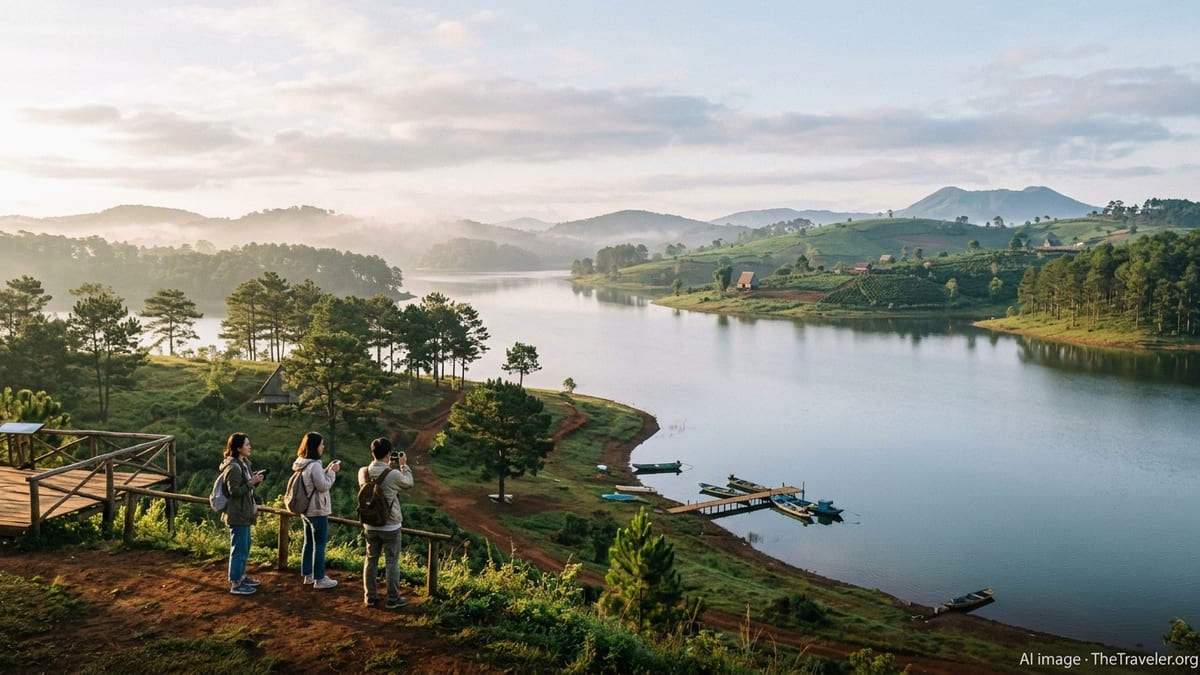
Gia Lai’s natural landscapes are a major part of its appeal, and current tourism development plans emphasize eco-tourism corridors that connect existing attractions with new viewpoints and service areas. Local media coverage highlights projects such as the Bien Ho – Chu Dang Ya tourism complex, which envisions a large-scale resort and ecological leisure area across more than 6,000 hectares near Pleiku. The area is known for its volcanic cone, pine-covered hills and lakes, offering cooler temperatures and wide panoramas that contrast with the coastal heat many Korean visitors experience elsewhere in Vietnam.
Elsewhere in the province, waterfalls, reservoirs and conservation areas are being positioned as anchors for trekking and soft-adventure tourism. Independent travel reports describe routes that combine forest walks, motorbike access and guided hikes to reach major falls. While such activities can be highly rewarding, recent incident reports from the Central Highlands underscore the importance of monitoring weather conditions, especially during the rainy season when storms can trigger falling branches, slippery trails and sudden changes in water levels.
South Korean travelers used to well-developed national parks at home should be aware that some natural sites in Gia Lai still lack the structured safety infrastructure and extensive signage found in more mature destinations. Visitors are strongly advised to use licensed local guides for remote hikes, wear appropriate footwear, carry rain protection and avoid visiting forested areas during or immediately after heavy rain. Checking regional weather forecasts and heeding on-the-ground advice can significantly reduce risks.
At the same time, Gia Lai’s emphasis on eco-tourism brings opportunities for responsible travel. Choosing operators that limit group sizes, support local communities and adhere to conservation guidelines helps ensure that growth in Korean arrivals does not place undue pressure on fragile highland ecosystems.
Practical Tips: Timing, Climate and On-the-Ground Experience
For South Korean tourists planning a first trip to Gia Lai, timing is a central decision. The dry season, typically from November to April, is generally regarded as the most comfortable period for outdoor activities, with clearer skies and cooler highland temperatures that can drop significantly in the evening. This period also coincides with many cultural events, including wild-sunflower viewing in late autumn and a cluster of festivals scheduled around the year-end and early spring holidays.
The build-up to National Tourism Year 2026 means that the 2025 to 2026 seasons are likely to see more organized tours and promotions targeting foreign markets. Travelers looking for a quieter experience might consider visiting slightly before peak festival periods, when infrastructure improvements are already in place but crowds remain manageable. Conversely, those who prioritize performances and events may wish to time their trip to coincide with headline festivals such as the international gong program once exact dates become publicly available.
On the ground, Pleiku serves as the main hub, offering a growing selection of hotels, cafés and restaurants, some of which have begun catering to Korean tastes with familiar dishes and Korean-language menus in response to broader Vietnam-wide trends. However, once outside the city, options quickly become simpler and more local. Cash remains important in rural areas, mobile connectivity can be patchy, and English and Korean proficiency are less common than in major coastal destinations, reinforcing the value of basic Vietnamese phrases or a local guide.
For visitors willing to navigate these challenges, Gia Lai currently offers something rare in Vietnam’s increasingly popular destinations: a sense of discovery. With aviation links gradually improving, large-scale festivals on the horizon and cultural tourism initiatives expanding, the province is opening new doors for South Korean travelers seeking a highland experience that feels both emerging and deeply rooted in local tradition.