

More news on this day
Scotland is grappling with severe travel disruption after a burst of heavy snow over Glasgow and central regions in the wake of Storm Dave left tourists stranded, closed major routes and triggered widespread delays across the country’s transport network.
Get the latest news straight to your inbox!
From Wind to Whiteout After Storm Dave
The latest turbulence for travellers follows days of intense wind and rain linked to Storm Dave, which brought gusts reported at more than 90 miles per hour in parts of Wales and Northern Ireland before tracking north into Scotland. As the core of the system shifted and official high-wind warnings began to ease, colder air over the central belt combined with lingering moisture to produce sudden snow and blizzard-like conditions.
Publicly available information from national forecasters indicates that snow bands focused particularly on the Glasgow area and higher ground across the central belt and southern Highlands, creating sharp regional contrasts. Lower-lying coastal locations reported rain and slush, while upland routes were rapidly buried under drifting snow, catching many Easter holiday travellers on the move.
Transport guidance issued in the days before the storm had highlighted the risk of disruption across road, rail, air and ferry services over the holiday weekend. The developing snow event, however, arrived just as many people believed the worst of Storm Dave had passed, intensifying the impact on tourists already in transit and those arriving for short city breaks in Glasgow and other Scottish destinations.
Local coverage describes scenes of reduced visibility, snow-covered streets and slow-moving traffic in and around Glasgow, contrasting with images of earlier coastal battering from high seas and crosswinds elsewhere in the UK. The combination has turned what was forecast mainly as a wind event into a broader winter-weather episode for Scotland’s biggest urban area.
Road Closures Snarl Key Scottish Routes
Road travel has been among the hardest-hit sectors as snow and leftover debris from Storm Dave combined to create hazardous conditions. Police travel advisories issued alongside Met Office amber warnings urged drivers not to ignore road-closure signs, with particular concern for exposed trunk routes and upland passes that are prone to drifting snow and sudden ice.
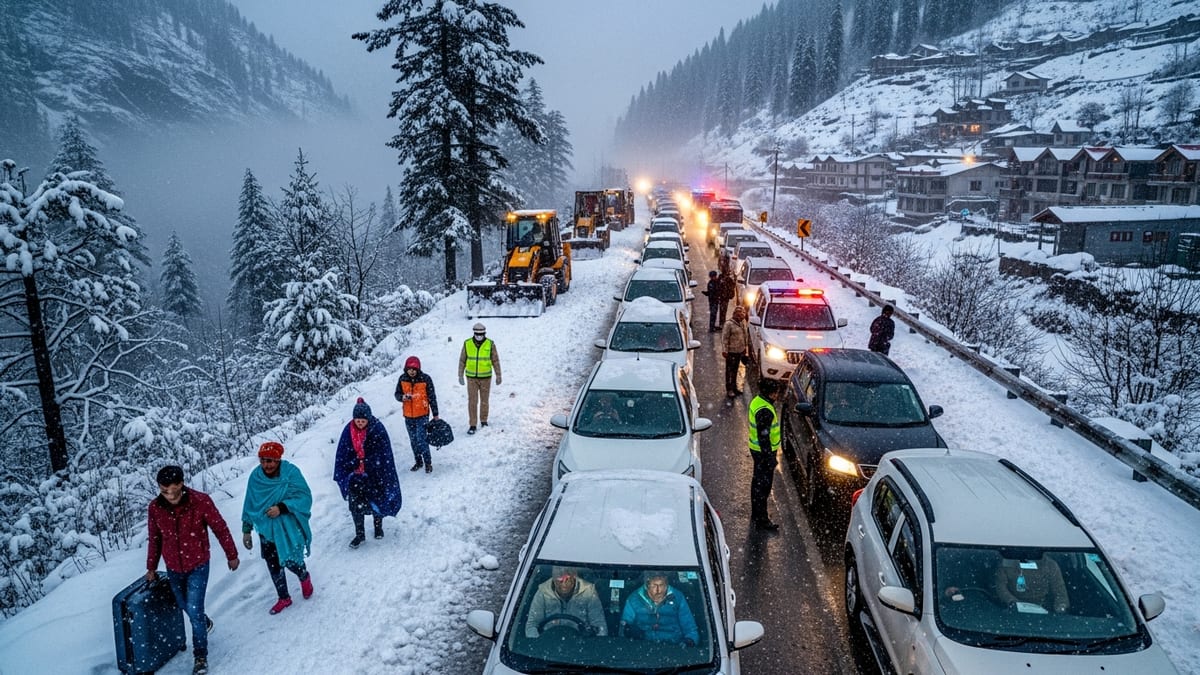
Reports from Traffic Scotland and regional media point to full or partial closures on sections of important arteries, including stretches of the A82 and A85 through western and central Scotland, where a mix of fallen trees, collisions and compacted snow brought traffic to a standstill. In some locations, snowploughs and gritters struggled to keep pace with rapidly deteriorating conditions, especially after dark.
Tourists travelling between Glasgow, the Highlands and popular lochside destinations have faced lengthy diversions or overnight delays. Some drivers were forced to abandon non-essential journeys as visibility dropped and roadside facilities reached capacity. Social media posts and local travel updates have highlighted queues at service areas and impromptu rest stops as visitors waited for conditions to improve.
Urban routes in and around Glasgow have also experienced disruption, with slushy accumulations and standing water on untreated surfaces reducing speeds and increasing the risk of minor collisions. Public information channels have recommended that visitors use real-time traffic updates and avoid rural shortcuts, which can quickly become impassable in wintry squalls.
Flights Delayed as Snow and Crosswinds Hit Glasgow
Air travel into and out of Scotland’s central belt has also been unsettled by the post-storm snow and lingering crosswinds. Published coverage indicates that Glasgow Airport experienced a combination of runway de-icing operations, aircraft repositioning and knock-on effects from earlier Storm Dave disruptions elsewhere in the UK and Ireland.
Some short-haul services were delayed or cancelled as airlines adjusted schedules around gusty conditions and low visibility, with passengers advised to check flight status before travelling. While the level of disruption has been less severe than during historic winter storms, the timing over the Easter getaway has amplified the impact for tourists on tight itineraries.
Scenes shared through broadcasters and news outlets show aircraft landing and departing in swirling snow showers, while terminal concourses host a mix of holidaymakers in ski gear, city-break visitors and returning residents. Staff at ground level have faced the challenge of maintaining safe operations in rapidly changing conditions, from slippery apron surfaces to shifting wind directions.
Edinburgh and smaller regional airports have reported more limited snow impacts but remain affected by air-traffic control restrictions and aircraft rotations linked to the wider Storm Dave pattern. Travellers moving onward from Glasgow to island destinations have also had to navigate ferry and regional flight adjustments, increasing the complexity of multi-leg journeys.
Rail, Ferry and City Transport Under Strain
Beyond roads and runways, Scotland’s wider transport network has felt the strain of Storm Dave’s aftermath. Rail operators serving Glasgow and cross-border routes have introduced reduced timetables and temporary speed restrictions in areas exposed to high winds, fallen branches and drifting snow. Some local services around the central belt have been suspended or turned back short of their full routes while crews clear obstructions and check infrastructure.
Travellers heading to and from Oban, Fort William and other gateway towns for Highlands excursions have reported missed connections and longer than expected journey times. Replacement buses have been difficult to organise on certain corridors where road conditions remain marginal, leaving some tourists waiting in stations for extended periods.
On the west coast, ferry links have seen a mixture of outright cancellations and weather-related delays. Reports from regional broadcasters note that several Caledonian MacBrayne sailings were disrupted by residual swell, crosswinds and poor visibility, complicating travel plans for visitors booked onto island stays. Those able to sail have often faced choppy crossings and modified timetables.
Within Glasgow itself, local buses and suburban trains have continued to operate but with scattered delays and diversions as street-level conditions shift. Publicly available travel alerts suggest that services can change at short notice, prompting reminders for visitors to build in extra time and keep ticketing apps or information screens close at hand.
Advice for Tourists Navigating the Disruption
For tourists currently in Scotland or planning imminent arrivals, travel and tourism bodies are urging a cautious but measured response. Guidance emerging from official channels encourages visitors to monitor Met Office updates, local news and operator-specific feeds for the latest on weather patterns and route availability, rather than assuming conditions are uniform across the country.
Those driving rental cars are being advised to familiarise themselves with winter driving practices, particularly if unused to snow and ice. Recommendations include avoiding non-essential journeys on high routes, carrying warm clothing and basic supplies in the vehicle, and sticking to primary roads that are more likely to be gritted and patrolled. Travellers are also encouraged to check insurance and breakdown-cover details before setting off.
For air passengers, airlines and airports are promoting online check-in and real-time status tracking to reduce pressure on terminal desks. Tourists with connecting rail or bus journeys are being reminded to allow greater buffer times between modes, especially where onward links involve rural areas or ferry ports that may still be affected by Storm Dave’s legacy.
Despite the disruption, many attractions in Glasgow and other major cities remain open, offering indoor alternatives while conditions stabilise. Tourism organisations suggest that visitors stay flexible, adapt itineraries around the weather and, where possible, support local businesses that continue to operate amid a challenging start to the Easter holiday period for Scotland’s travel network.