

More news on this day
Glenapp Castle, the five-star baronial estate on Scotland’s Ayrshire coast, has expanded its luxury accommodation portfolio with the launch of The Nest, a new wellness-focused treehouse suite designed to tap into rising demand for nature-led retreats.
Get the latest news straight to your inbox!
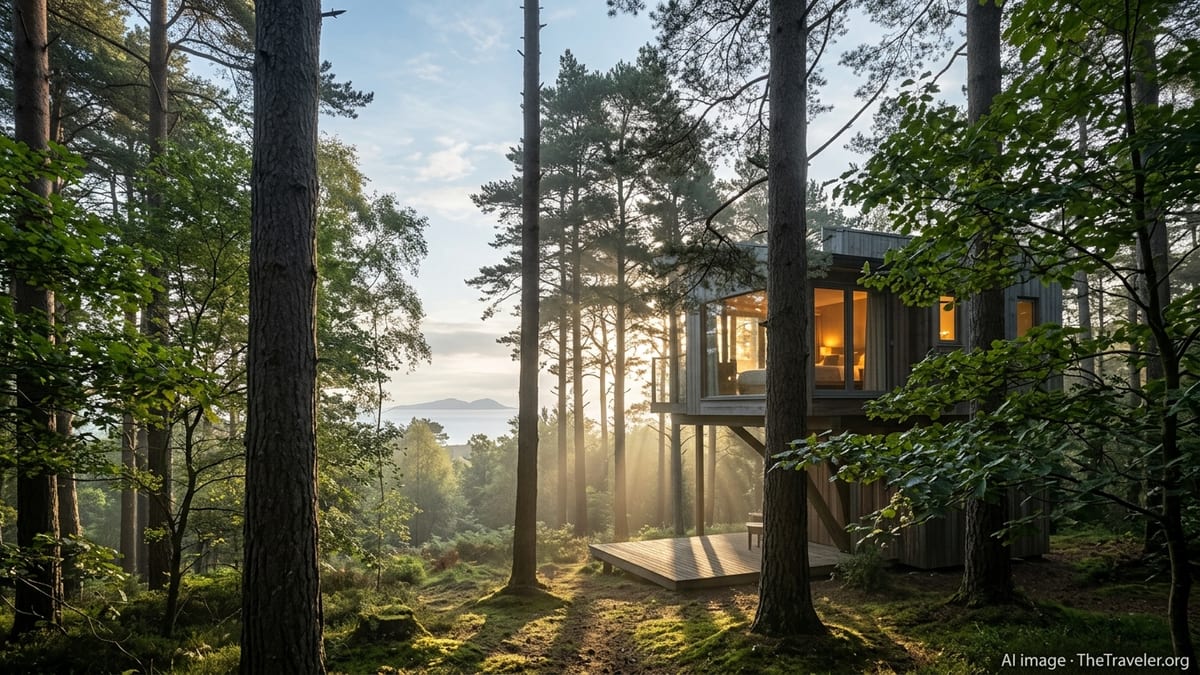
A Secluded Treehouse Retreat Above the Ayrshire Coast
Set within Glenapp Castle’s extensive private estate near Ballantrae, The Nest has been created as an elevated hideaway positioned amid mature woodland with views towards the Firth of Clyde. Publicly available descriptions of the property highlight its dramatic coastal outlook and expansive grounds, which now provide the backdrop for a more intimate, nature-immersive stay.
The castle itself, built in 1870 in the Scottish Baronial style and operating as a luxury hotel since 2000, has long attracted guests for its turrets, walled gardens and sea views towards Ailsa Craig, Arran and the Mull of Kintyre. The Nest extends that appeal beyond the main building, giving overnight visitors an option to experience the landscape from a more secluded vantage point while remaining connected to the estate’s services and experiences.
Positioned to feel separate from the castle yet close enough for easy access to dining and concierge support, the new suite aligns with a broader move among heritage hotels to diversify beyond traditional rooms and suites. The addition is expected to appeal to couples and small parties seeking privacy, coastal scenery and proximity to outdoor activities in southwest Scotland.
While detailed floor plans have not been widely circulated, promotional material for Glenapp Castle consistently emphasises views over gardens, woodland and sea. The Nest is understood to build on those strengths, framing the surrounding canopy and coastline from an elevated, cabin-style structure that differs markedly from the hotel’s grand public rooms.
Wellness at the Core of Glenapp’s New Suite Concept
The Nest has been positioned as a wellness-focused addition, reflecting the castle’s existing emphasis on restorative breaks that combine fresh air, outdoor pursuits and refined comfort. Information available on Glenapp Castle and partner platforms points to a range of activities from forest walks and coastal excursions to spa and relaxation options, which together underpin the property’s wellbeing credentials.
Within this context, the new suite is aimed at guests seeking slower-paced stays centred on relaxation, sleep and time in nature rather than purely formal castle experiences. The wider estate’s quiet woodland, sea air and dark skies already lend themselves to digital downtime, and The Nest appears designed to make those qualities a central part of the stay rather than a backdrop.
Wellness-led hospitality across Scotland has increasingly focused on proximity to natural landscapes, and Glenapp Castle sits within a region recognised for its biosphere and scenic coastline. The Nest leverages that positioning by providing a sanctuary-like space where guests can retreat after days spent walking in nearby woodland, exploring the shore or joining boat trips arranged through the hotel.
Reports on Glenapp Castle’s current facilities also note access to spa and wellness services on the main estate, which are expected to complement the new accommodation. Guests staying in The Nest are likely to combine in-suite privacy with treatments, gourmet dining and curated outdoor experiences crafted by the castle’s team.
Strengthening a Diversified Luxury Suite Portfolio
The launch of The Nest follows Glenapp Castle’s earlier expansion into distinctive top-tier accommodation, including its rooftop penthouse suite, which spans the entire top floor of the castle and has been highlighted internationally for its size and amenities. That penthouse already offers a private sauna, treatment room, media spaces and sweeping rooftop views, positioning the property within the upper tier of Scottish hotel suites.
By introducing a treehouse-style option, the estate is widening its spectrum of experiences from grand, multi-room castle living to intimate, nature-facing stays. The Nest is expected to sit alongside the penthouse and the castle’s existing collection of individually designed rooms and suites, giving travel planners and guests more choice across group stays, family trips and romantic escapes.
Industry observers note that luxury properties in rural Scotland are increasingly investing in signature suites and standalone lodgings to differentiate themselves in a competitive market. Glenapp Castle’s move aligns with that trend, adding a high-impact accommodation type that is distinct from its historic interiors but still tied closely to the estate’s story and setting.
The timing of the addition comes as high-end travellers continue to seek more private, flexible spaces, particularly for celebrations, short retreats and multi-stop itineraries around Scotland. The Nest is positioned to capture that demand by pairing a standalone structure with access to a five-star restaurant, curated activities and concierge support that can be tailored to individual preferences.
Nature-Led Experiences in a Historic Estate Setting
Glenapp Castle occupies more than 100 acres of grounds, including formal Italianate gardens, woodland and lawns, with routes leading towards coastal viewpoints. Published reviews and hotel descriptions underline the drama of arriving via a mile-long drive through dense forest before the castle comes into view, a sense of revelation that is now extended through the treehouse concept.
The Nest gives guests a vantage point within this landscape, with likely views across canopies, gardens and the sea beyond. The wider area is known for coastal walks, wildlife-watching and access to nearby attractions such as Galloway Forest Park and the surrounding biosphere, which can be built into wellness-focused itineraries that start and end in the quiet of the suite.
Travel coverage of Glenapp Castle has also drawn attention to its boat excursions, countryside activities and tailored experiences arranged through its concierge services. Guests staying in The Nest can combine those outward-looking adventures with inward-focused time in a secluded setting, a combination that reflects current preferences for trips mixing activity and rest.
For the estate, the treehouse suite reinforces a narrative in which the historic castle is only one part of a broader destination that includes gardens, woodland, coastline and sea. The Nest translates that narrative into a tangible overnight experience, giving visitors the option to inhabit the landscape as much as the architecture.
Positioning Glenapp Among Leading Scottish Retreats
The introduction of The Nest contributes to Glenapp Castle’s positioning among Scotland’s notable country house hotels, many of which are expanding beyond traditional room categories in response to evolving guest expectations. The property has already appeared in travel features and hotel collections that spotlight its heritage, service style and secluded location on the Ayrshire coast.
By adding a wellness-driven, design-forward suite, Glenapp is likely to attract fresh attention from luxury tour operators, travel advisors and independent travellers seeking distinct accommodation types for Scotland itineraries. The Nest gives the estate a talking point that aligns with broader trends such as treehouse lodging, forest bathing and nature-based wellbeing escapes.
Observers of the high-end travel sector in the United Kingdom note continuing interest in experiences that feel both exclusive and grounded in local landscapes. With its tree-framed position, proximity to coastal views and access to the castle’s services, The Nest has been introduced as Glenapp Castle’s answer to that demand, reinforcing the property’s reputation as a discreet retreat in southwest Scotland.
As the new suite enters the booking cycle alongside the castle’s established rooms and penthouse, its performance will offer an indication of how strongly wellness-focused, nature-immersive accommodation resonates with guests choosing Ayrshire as an alternative to more familiar Scottish hotspots.