

More news on this day
Hawthorn’s Glenferrie Road is preparing for one of Melbourne’s biggest community gatherings, with the Glenferrie Festival 2026 expected to draw more than eighty thousand visitors for a full day of free entertainment, food and family-friendly activities on Sunday 29 March.
Get the latest news straight to your inbox!
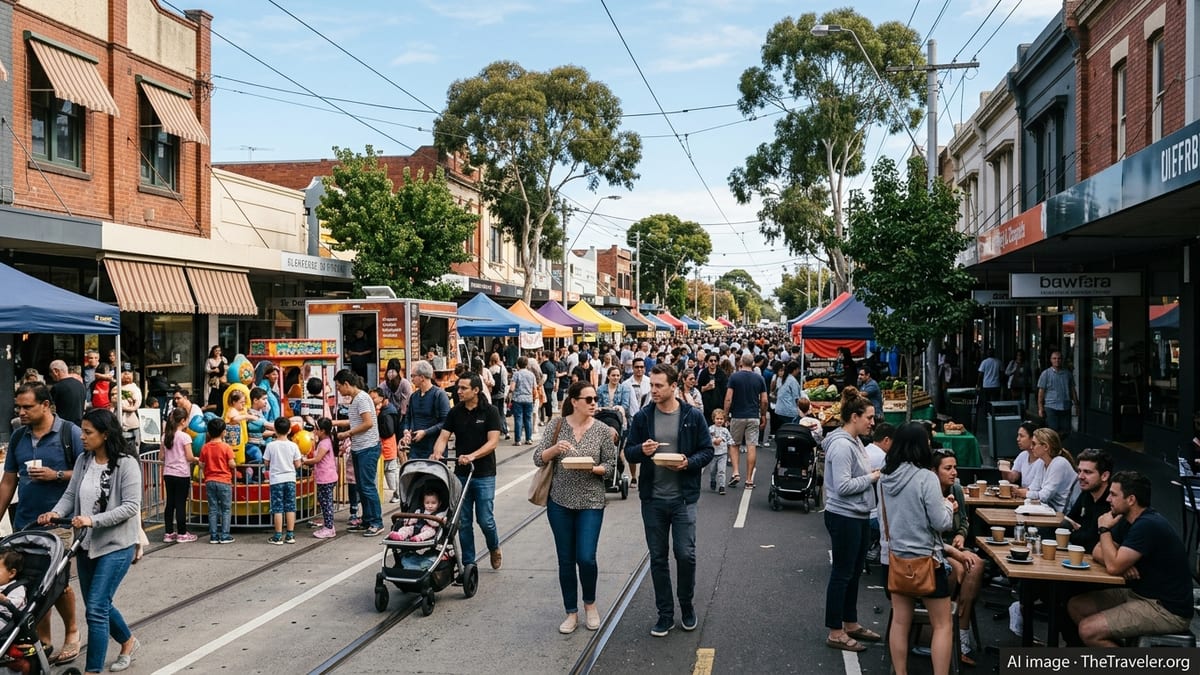
Major Melbourne Street Festival Locked In for Late March
Publicly available event information shows that the Glenferrie Festival will return on Sunday 29 March 2026, running from 11 am to 5 pm along Glenferrie Road in Hawthorn between Barkers Road and Burwood Road. The event is presented as a free, non-ticketed celebration that invites residents and visitors from across Melbourne to explore one of the city’s best-known shopping and dining strips.
The festival is described in council and event listings as one of Melbourne’s established community street festivals, regularly attracting large crowds for its mix of food, music, retail offers and children’s activities. Recent references to foot traffic in excess of 80,000 people at previous editions provide the basis for expectations that similar or higher numbers could attend in 2026 as Hawthorn’s population and Melbourne’s overall events calendar continue to grow.
Glenferrie Road will be closed to traffic for the duration of the event, creating a pedestrian-only corridor lined with stalls, performance areas and amusement zones. Service change notices indicate that tram movements will be adjusted on the day to accommodate the road closure, underlining the scale and logistical complexity of the festival footprint.
Free Entertainment and Live Music Across Multiple Zones
According to current programming outlines, Glenferrie Festival 2026 will feature a full schedule of free live entertainment spread along the length of the street. Stage performances are expected to include local and Melbourne-based acts, with previous and upcoming lineups highlighting jazz, funk and world music ensembles alongside contemporary bands and community performers.
Roaming artists, buskers and interactive performers are anticipated to fill the gaps between the main stages, contributing to a continuous soundscape that runs the length of the precinct. This model has been used at earlier editions of the festival, creating a series of overlapping entertainment zones rather than a single central performance hub, and allowing visitors to encounter music and performance as they move between food, retail and activity areas.
Event descriptions emphasise that all scheduled entertainment at Glenferrie Festival 2026 will be free to enjoy, reinforcing the event’s position within Melbourne’s strong tradition of open-access community festivals. Residents of surrounding suburbs are expected to arrive on foot and by public transport, while the broader metropolitan audience is likely to include families and groups seeking low-cost cultural activities in the late March window, which also coincides with the Melbourne Food and Wine Festival program.
Street Food, Local Dining and Market-Style Stalls
Food is expected to be a major drawcard in 2026, with the Glenferrie Traders Association and the City of Boroondara promoting the festival as a showcase of the precinct’s hospitality and specialty food businesses. Glenferrie Road is known for a dense concentration of cafes, casual eateries, bars and specialty grocers, many of which are anticipated to extend trading onto the street or offer festival-specific menus and tastings.
Alongside bricks-and-mortar venues, publicly available event outlines indicate that more than 100 stalls will line the street, combining local traders with visiting market vendors and food trucks. This mix is expected to include global street food, dessert stands, coffee vendors and artisanal producers, mirroring the diverse culinary profile seen at comparable suburban festivals across Melbourne.
Visitors are likely to experience a continuous corridor of food and retail offers from Barkers Road to Burwood Road, with shaded seating areas and informal resting points integrated into the layout. With the event positioned during early autumn, organisers appear to be planning for mild daytime conditions that encourage extended dwell times on the street, supporting higher spending across both festival stalls and established Glenferrie Road businesses.
Family-Friendly Activities and Community Focus
The Glenferrie Festival has built a reputation as a family-oriented event, and information for the 2026 edition points to a similar emphasis. Planned attractions include amusement rides, children’s play zones and structured activities suitable for younger visitors, creating dedicated spaces where families can spend extended periods without leaving the festival footprint.
Community and information stalls, often staffed by local clubs, cultural groups and service organisations, are also expected to return. These stalls provide opportunities for residents to learn about sporting clubs, volunteer programs, cultural associations and local services, reinforcing the festival’s role as a platform for community engagement as well as entertainment.
The presence of school groups, community bands and local performance ensembles in earlier lineups suggests that 2026 will again include contributions from within the Boroondara community. This blend of professional and grassroots participation positions the Glenferrie Festival as both a destination event for visitors from across the city and a focal point for local identity and pride in Hawthorn.
Transport, Access and Managing Big-Crowd Expectations
With attendance expectations above eighty thousand people, transport and crowd management will be central considerations for the 2026 festival. Service notices already indicate that tram operations along Glenferrie Road will be modified on Sunday 29 March to accommodate road closures and large volumes of pedestrians, with replacement arrangements in place across parts of the day.
Event listings encourage visitors to use public transport, with Hawthorn and Glenferrie stations providing rail access within walking distance of the festival zone, and nearby tram routes on adjacent corridors offering alternatives to driving. Local parking is expected to be limited, particularly on side streets close to the event footprint, which historically encourages festivalgoers to arrive by train, tram, bicycle or on foot.
Local business and community commentary in recent years has highlighted both the economic benefits and operational challenges of such a large-scale street closure, including the costs associated with traffic management, safety, power supply and compliance. The continuation of the festival into 2026 suggests that key stakeholders have maintained support for the event as a flagship occasion for Glenferrie Road, even as attendance numbers and logistical requirements rise.
With free entry, a strong entertainment program and a concentration of food and family activities within a compact, highly walkable strip, Glenferrie Festival 2026 is positioned to remain one of inner Melbourne’s standout community events, and Hawthorn businesses are preparing for a significant influx of visitors when the street transforms into a festival precinct on 29 March.