

More news on this day
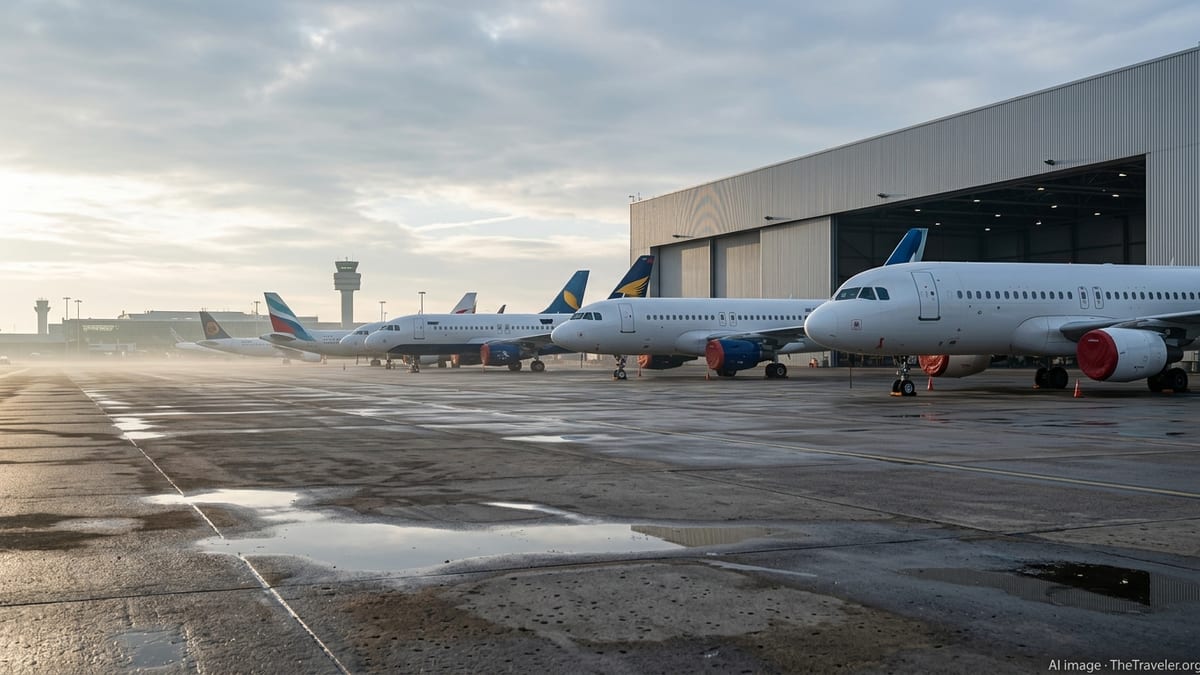
In hangars from Washington State to Toulouse and Shanghai, some of the world’s most advanced passenger jets are sitting silent, their wings never touching scheduled service as legal disputes, regulatory hurdles and certification delays turn brand-new aircraft into very expensive gliders.
Get the latest news straight to your inbox!
A New Era of Planes, Stuck on the Ground
The latest generation of commercial aircraft promises longer range, lower fuel burn and quieter cabins, but many of these jets remain grounded or heavily restricted by regulatory processes. Publicly available information shows that, in the wake of high-profile safety crises, authorities have tightened oversight of new designs and derivatives, slowing the path from factory floor to passenger service.
Industry reports indicate that this tougher scrutiny has had a cascading effect. Test fleets can fly, but they often cannot log the official flight hours required for certification credit until regulators formally authorize the work. That gap between engineering readiness and regulatory approval is where months, and sometimes years, accumulate.
As a result, airlines that once banked on rapid fleet renewal are now juggling older aircraft for longer, revising network plans and, in some cases, seeking legal remedies when promised capacity fails to materialize. For travelers, the impact is felt less in the type of aircraft on the boarding pass and more in the form of thinner schedules, higher load factors and fewer nonstop options on long routes.
Boeing’s 777X and MAX Variants Face a Moving Finish Line
No program illustrates the new reality more clearly than Boeing’s 777X, billed as the world’s largest and most efficient twin-engine widebody. After a serious test-flight incident and subsequent groundings of the test fleet, the flagship jet has faced multiple schedule resets as the certification bar rose higher. Recent coverage in aviation trade publications notes that the first delivery has slipped yet again, with the program now working toward a second-half-of-the-decade entry into service, subject to regulatory sign-off.
Boeing is also contending with drawn-out certification campaigns for the 737 MAX 7 and 737 MAX 10, smaller and larger variants of its best-selling narrowbody family. Public disclosures and financial filings describe how the Federal Aviation Administration capped overall MAX production and required enhancements to flight crew alerting systems before the stretched MAX 10 can be approved. The aircraft can be assembled and even flown in test campaigns, but without final approvals, they cannot carry paying passengers.
The financial implications are significant. Each delay pushes revenue recognition further out, while airlines holding delivery slots must decide whether to wait, switch to alternative models or seek compensation. Legal risks also rise as customers weigh contract terms that specify performance, timing and regulatory status. Even when technical issues are not newly discovered, the heightened documentation and test requirements extend timelines and keep completed airframes parked.
These challenges underline how safety-driven reforms, launched in response to past accidents, are reshaping the commercial realities of widebody and single-aisle development. The certification process, once largely predictable in duration, has become a critical variable for manufacturers and route planners alike.
Airbus A321XLR and the Quiet Spread of Regulatory Friction
Airbus, which has generally benefited from its rival’s setbacks, is not immune to ground-bound gliders. The long-range A321XLR, a single-aisle jet designed to open thin transatlantic and long overwater routes, has itself encountered certification-related headwinds. Published coverage points to evolving safety standards for fuel-tank and fuselage integration as one factor that prompted design refinements and contributed to delays in regulatory approval.
Individual airline deliveries have exposed additional bottlenecks. Reports on early A321XLR handovers to carriers in North America refer to brand-new aircraft being accepted but not immediately placed into service due to outstanding certification milestones and a shortage of approved cabin equipment. In practical terms, that leaves multimillion-dollar jets sitting on ramps or in hangars, technically complete but commercially unusable.
From a legal perspective, these situations blur the line between operational delay and contractual breach. If an aircraft is delivered physically but cannot yet be used as intended on specific long-range missions, parties may dispute whether performance guarantees have been met. Analysts note that airlines, lessors and manufacturers are increasingly turning to detailed side letters and amendment agreements to clarify which regulatory conditions must be satisfied, and by when.
The A321XLR story underscores how even well-established manufacturers face a more fragmented certification environment, with differing expectations among national regulators and shifting interpretations of safety rules that were originally designed around older aircraft layouts.
China’s C919 and the Global Patchwork of Certification Law
Beyond the established duopoly, China’s Comac C919 offers another example of cutting-edge airframes grounded by paperwork rather than performance. The narrowbody jet has entered domestic service with Chinese carriers, yet a lack of foreign approvals means it remains largely absent from skies beyond the country’s borders. Aviation analysts quoted in recent international coverage say that without validation from agencies such as the European Union Aviation Safety Agency or the Federal Aviation Administration, the C919 cannot compete meaningfully in Western markets.
This fragmented certification landscape carries real legal and commercial consequences. Each regulator applies its own standards and may require additional tests, documentation or design changes before recognizing another authority’s type certificate. In the C919’s case, experts point to the need for a more comprehensive review of integrated systems and manufacturing practices before validation can be granted, a process that could stretch over several years.
Trade tensions and export-control policies add further complexity. Publicly available commentary from industry lawyers suggests that when political factors slow or complicate technical validation, manufacturers and potential foreign customers must navigate a mix of aviation law, trade rules and domestic regulatory mandates. Orders can be announced but remain effectively frozen until the legal pathways for certification and component sourcing become clearer.
For travelers, the immediate impact is less visible, but over time, constrained international certification limits competition on major routes and can keep ticket prices higher than they might otherwise be in a more open, multi-manufacturer market.
When Regulation, Litigation and Travel Plans Collide
The stricter post-crisis regulatory environment has also spilled into broader legal arenas, from consumer lawsuits after mass disruptions to disputes between airlines and suppliers over compliance with new safety equipment rules. A recent petition from a regional airline association in the United States, for example, warned that delays in certifying new safety devices for cabin crew seating could push smaller carriers out of regulatory compliance, potentially forcing them to ground aircraft despite having willing passengers and available crews.
At the same time, major network carriers continue to adjust schedules around fleets that are waiting on new models or cabin refits tied to certification work. Public records and investor presentations show that airlines are stretching the lives of older jets, leasing additional capacity or cutting marginal routes when new aircraft do not arrive as planned. Those strategic decisions are often shaped by contract clauses that specify remedies for delayed deliveries, including penalties, concessions or the right to walk away from part of an order.
The legal aftershocks of high-profile safety incidents have also reached the courtroom in the form of wrongful death suits, product liability claims and actions against regulators themselves. While those cases relate primarily to legacy accidents rather than today’s test fleets, their outcomes influence how aggressively authorities supervise new certifications and how cautiously manufacturers structure future programs.
For travelers looking up at these cutting-edge jets sitting motionless near terminal windows, the reasons are rarely obvious. Yet behind each silent airframe is a dense web of regulation, litigation and contract law that increasingly determines when, or even whether, the world’s newest planes move from gliders in the hangar to regular fixtures in the global travel network.